
One-Line Hook
One medical emoji can express a hospital visit, recovery, concern, or support in just a few characters.
Introduction
You receive a message saying, “My surgery is tomorrow,” and want to respond with something caring. Or perhaps a friend posts a hospital update, and you are searching for the right emoji to show support without saying too much. That’s where surgery-related emojis can help.
There isn’t one official emoji specifically named the surgery emoji. Instead, people use medical and healthcare emojis such as 🏥, 🩺, 🩹, and 🧑⚕️ to talk about operations, hospital visits, doctors, and recovery. The best choice depends on what you want to communicate.
A hospital emoji might describe a medical appointment, while a bandage emoji can suggest healing or an injury. A heart with a bandage ❤️🩹 may express emotional or physical recovery. On WhatsApp, Instagram, TikTok, and other platforms, context plays an important role in understanding these symbols.
In this guide, you’ll learn surgery emoji meanings, related emoji combinations, texting examples, platform-specific uses, and copy-paste options. Let’s explore how to choose the right medical emoji for your message. 🩺
Standout Snippet
The right medical emoji can turn a simple message into a thoughtful expression of care and support. ❤️🩹
What Does the Surgery Emoji Mean? 🏥
When people search for the surgery emoji, they usually want a symbol connected to an operation, hospital treatment, medical care, or recovery. However, no single emoji universally represents surgery. Different medical symbols communicate different parts of the experience.

The 🏥 hospital emoji is useful when discussing a hospital stay, an operation location, or a medical appointment. For example, “Heading to the hospital tomorrow 🏥” gives a clear setting without explaining every detail.
The 🩺 stethoscope emoji is associated with doctors, examinations, and healthcare. Someone might use it while discussing a medical checkup or thanking a healthcare professional. The 💉 syringe emoji can relate to injections, treatment, or medical procedures, although it does not automatically mean surgery.
The 🩹 adhesive bandage emoji often suggests an injury, first aid, or physical healing. Meanwhile, ❤️🩹 heart with bandage can express recovery, emotional support, or healing after a difficult experience.
Context matters significantly. A person sending 🏥 before an operation may be sharing important news. A friend using ❤️🩹 after surgery may be offering encouragement. In a casual conversation, medical emojis can also appear in jokes or exaggerated reactions, depending on the surrounding message.
The relationship between sender and receiver matters, too. A doctor might use 🩺 professionally, while a family member might use ❤️🩹 to show affection. These interpretations are common possibilities, not fixed rules. Wording, culture, platform design, and personal communication habits can all affect meaning.
Surgery-Related Emoji Meaning Table
| Emoji | Core meaning | Possible misread | Best used when |
| 🏥 | Hospital or medical facility | Hospital emergency | Discussing hospital visits or treatment |
| 🩺 | Medical examination or healthcare | Doctor-specific symbol | Talking about checkups or doctors |
| 🩹 | Bandage, injury, or healing | Minor injury only | Discussing first aid or recovery |
| 💉 | Injection or medical treatment | Surgery itself | Talking about injections or procedures |
| 🧑⚕️ | Healthcare professional | Specific doctor | Referring to medical staff |
| 👨⚕️ | Man healthcare professional | Particular doctor | Discussing a male medical worker |
| 👩⚕️ | Woman healthcare professional | Particular doctor | Discussing a female medical worker |
| 😷 | Face mask or illness-related context | Serious illness | Discussing healthcare or protection |
| 🛌 | Rest or staying in bed | Hospital admission | Talking about recovery and rest |
| ❤️🩹 | Healing and emotional support | Romantic heartbreak | Showing care during recovery |
10 Surgery-Related Emoji Cards
🏥 Hospital
Meaning: A hospital, medical facility, or healthcare visit.
Example 1: I have to visit the hospital tomorrow 🏥
Example 2: Mom is recovering at the hospital 🏥
🩺 Stethoscope
Meaning: Medical care, examinations, doctors, and healthcare.
Example 1: Time for my regular checkup 🩺
Example 2: Thank you for taking such good care of us 🩺
🩹 Adhesive Bandage
Meaning: First aid, minor injuries, and physical healing.
Example 1: A little rest and a bandage should help 🩹
Example 2: Sending wishes for a smooth recovery 🩹
💉 Syringe
Meaning: Injections, medical procedures, or healthcare treatment.
Example 1: Getting my vaccination today 💉
Example 2: The doctor explained the treatment clearly 💉
🧑⚕️ Healthcare Worker
Meaning: A healthcare professional or medical worker.
Example 1: Grateful for every healthcare worker 🧑⚕️
Example 2: The medical team has been incredibly helpful 🧑⚕️
👨⚕️ Man Healthcare Worker
Meaning: A male healthcare professional or doctor.
Example 1: The doctor explained everything patiently 👨⚕️
Example 2: Thank you for your kindness and support 👨⚕️
👩⚕️ Woman Healthcare Worker
Meaning: A female healthcare professional or doctor.
Example 1: She is an excellent doctor 👩⚕️
Example 2: Thank you for helping me feel comfortable 👩⚕️
😷 Face with Medical Mask
Meaning: A medical mask, illness-related situation, or health protection.
Example 1: Taking extra precautions today 😷
Example 2: Resting at home while I recover 😷
🛌 Person in Bed
Meaning: Rest, recovery, illness, or staying in bed.
Example 1: Taking it easy after treatment 🛌
Example 2: Doctor says I need plenty of rest 🛌
❤️🩹 Mending Heart
Meaning: Healing, care, emotional recovery, or encouragement.
Example 1: Wishing you strength and a peaceful recovery ❤️🩹
Example 2: Sending you love while you heal ❤️🩹
How to Use the Surgery Emoji the Right Way 🩺
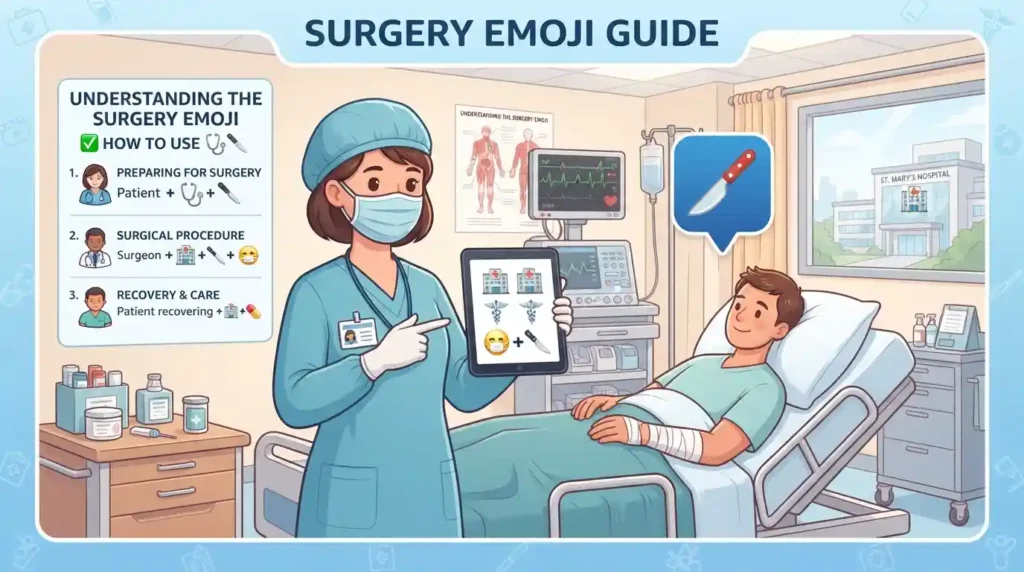
Medical emojis work best when they support the message rather than replace important information. The appropriate symbol depends on whether you’re discussing a hospital visit, an operation, a healthcare professional, or recovery.
WhatsApp 💬
On WhatsApp, surgery-related emojis commonly appear in personal conversations, family group chats, and supportive messages. Someone preparing for an operation might send 🏥 to explain where they are going. A friend could reply with ❤️🩹 to show care.
Examples:
- “My surgery is scheduled for tomorrow 🏥”
- “Wishing you a safe procedure and smooth recovery ❤️🩹”
- “Please take plenty of rest 🛌”
In family conversations, a short message can feel more personal when paired with a thoughtful emoji. However, don’t rely on an emoji alone when someone needs clear medical information.
Instagram 📸
Instagram users may include medical emojis in captions, comments, or stories about health journeys, recovery, and appreciation for medical staff.
For example, someone sharing a recovery update might write:
“Taking things one day at a time. ❤️🩹”
A supportive comment could say:
“Sending strength and positive thoughts 🩹”
Medical emojis can work in personal posts, but sensitive health information deserves respectful communication. Avoid using medical symbols to make fun of another person’s serious condition.
TikTok 🎵
On TikTok, medical emojis may appear in captions, comments, storytelling videos, or recovery-related content. Their tone can vary depending on the video.
A creator discussing an upcoming procedure might use 🏥 in a caption. A humorous video about being nervous before a medical appointment could use 😷 or 💉, depending on the context.
The same emoji can feel supportive in one comment and sarcastic in another. Read the surrounding content before assuming the creator’s intention.
Facebook posts and Messenger conversations often involve family updates, health announcements, and recovery messages. A hospital emoji can accompany an update, while ❤️🩹 can communicate encouragement.
For example:
“Thank you everyone for checking on me. I appreciate your support ❤️🩹”
Keep the message appropriate to the person’s situation, particularly when discussing serious health matters.
Do’s and Don’ts
Do:
- Use emojis to support your message.
- Consider your relationship with the receiver.
- Pay attention to context.
- Match the emoji with your tone.
- Check how an emoji appears on different devices.
Don’t:
- Use medical emojis randomly.
- Assume everyone interprets them identically.
- Overload a serious message with emojis.
- Combine unrelated symbols without purpose.
- Assume a medical emoji automatically has a romantic meaning.
Why Does the Surgery Emoji Look Different on iPhone and Android? 📱
You may notice that the same medical emoji looks slightly different on an iPhone, Android phone, or computer. This happens because emojis are based on Unicode standards, while individual technology companies design their own visual versions.
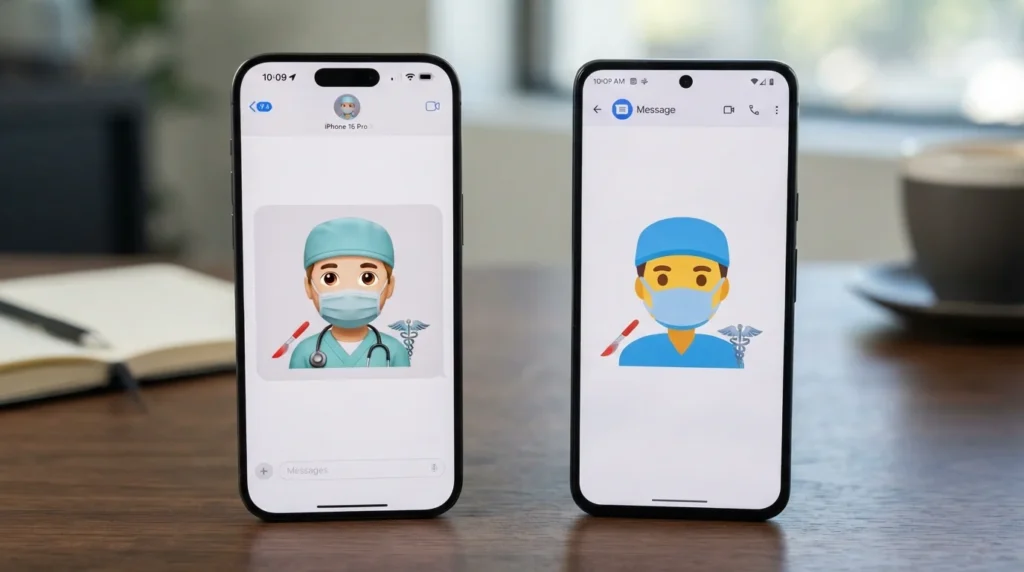
Unicode assigns a standardized character to an emoji. Companies such as Apple, Google, Samsung, and Microsoft can then create their own artwork for that character.
As a result, you might notice differences in:
- Shape and proportions
- Colors
- Facial expressions
- Design details
- Size and visual style
For example, the 🏥 emoji may have a slightly different building design across platforms. The underlying emoji character remains the same, even when the artwork changes.
This distinction matters when communicating about medical topics. A sender and receiver may see slightly different designs, but they can generally understand the same basic symbol.
Not every device supports every emoji in the same way. Older operating systems may show an empty box or an unsupported character instead. Updating your device can improve emoji compatibility.
There is no universal visual design that every platform must use. Unicode helps maintain consistency in encoding, while individual platforms control their artwork.
Best Surgery Emoji Combos, Copy & Paste 🩹
The following combinations use closely related medical and supportive emojis. They can be copied into messages, captions, and comments.
Romantic ❤️
1.👉 ❤️🩹🏥: Use this to show love and support during a partner’s recovery.
2.👉 ❤️🩹: Send this when expressing affection and care after an injury.
3.👉 ❤️🩹🛌: Use this for a loving message encouraging rest.
Cute 🥰
1.👉 🩹❤️🩹: Use this for a gentle recovery message.
2.👉 🏥❤️: Send this when checking on someone you care about.
3.👉 🩺❤️: Use this to appreciate someone’s healthcare support.
Flirty 😉
1.👉 ❤️🩹😉: Use this only when the conversation already has a playful tone.
2.👉 🩺😉: A lighthearted combination for a familiar, casual chat.
3.👉 🩹❤️: Use this in a playful message when the context is appropriate.
Missing Someone 💭
1.👉 🏥❤️🩹: Use this when you miss someone recovering in hospital.
2.👉 🛌❤️: Send this to someone you wish could feel better soon.
3.👉 ❤️🩹🩹: Use this to express continued care during healing.
Good Night 🌙
1.👉 🛌❤️🩹: A thoughtful good night message for someone recovering.
2.👉 🏥❤️: Use this when wishing someone peace during a hospital stay.
3.👉 🩹❤️🩹: Send this as a gentle reminder to rest and recover.
Trending Surgery-Related Emojis in 2026 📱
Medical emojis continue to appear in everyday digital communication, especially when people discuss healthcare, hospital visits, recovery, and personal experiences. However, usage varies by community, platform, and conversation.

The emojis below are commonly recognizable medical symbols. Their inclusion here does not establish an official ranking or verified trend measurement.
🏥 Hospital
The hospital emoji is useful for short updates, captions, and messages about medical appointments or hospital visits. It offers a clear visual reference when the surrounding text provides additional information.
❤️🩹 Mending Heart
The mending heart is often used in supportive communication. People may include it in recovery wishes, encouraging comments, and messages to someone facing a difficult period.
🩹 Adhesive Bandage
The bandage emoji can appear in posts and conversations about injuries, first aid, and healing. Its meaning usually becomes clearer when paired with words describing the situation.
🩺 Stethoscope
The stethoscope is associated with healthcare professionals, examinations, and medical discussions. It can be used in educational content, appreciation posts, and casual messages.
| Emoji | Why commonly used | Who uses it | Platform |
| 🏥 | Hospital and treatment references | Patients, families, creators | WhatsApp, Instagram, Facebook |
| ❤️🩹 | Support and recovery messages | Friends, families, communities | Messaging, comments |
| 🩹 | Injury and healing references | General users | Captions, chats, posts |
| 🩺 | Medical and healthcare context | Healthcare workers, general users | Educational posts, messages |
Emoji usage continues to evolve as people adapt familiar symbols to new conversations and online communities.
Surgery Emoji Meaning in Different Contexts 💬
The same medical emoji can communicate different tones depending on the relationship, wording, and situation. Understanding context helps you choose a symbol that fits your message.
Romantic Conversations ❤️
When a partner is preparing for surgery, ❤️🩹 can express affection and emotional support. A message such as “I’m thinking of you and wishing you a smooth recovery ❤️🩹” feels more personal than sending a symbol without any words.
The emoji does not automatically create romantic meaning. The relationship and surrounding message determine that tone.
Friendship
Friends may use 🏥 or 🩹 when checking on someone after an injury or procedure.
Example:
“Hey, how are you feeling today? 🩹”
A familiar friendship can make short messages feel natural, but serious situations may require more direct communication.
Family
Family members often use medical emojis alongside updates about appointments, recovery, and hospital visits.
Example:
“Grandma is resting today 🛌❤️”
The words explain the situation, while the emojis add warmth.
Professional Communication
In workplace or healthcare-related communication, a medical emoji may be appropriate in informal settings, but it should not replace clear information.
For example, a casual message to a colleague might say:
“I’ll be away for a medical appointment today 🩺”
For formal medical instructions, rely on precise language instead of emojis.
Texting
In texting, emoji meaning depends heavily on the message surrounding it. 🏥 may communicate a location, while ❤️🩹 can convey encouragement.
Consider:
“Everything went well ❤️🩹”
The exact interpretation depends on what happened earlier in the conversation.
Social Media Comments
Comments using medical emojis can express support or acknowledgment. A simple ❤️🩹 may be appropriate under a recovery update, while a longer supportive message may be more meaningful for a close friend.
Captions
Creators can use 🩹 or 🏥 in captions about personal experiences, provided the symbol fits the content. Avoid assuming that every medical emoji indicates a serious condition.
How to Copy and Paste the Surgery Emoji 📋
Because there is no single official surgery emoji, you can copy a related medical symbol that matches your message.
Copy and paste:
🏥 🩺 🩹 💉 ❤️🩹 🧑⚕️
To use one:
- Select the emoji you want.
- Copy it using your device’s copy function.
- Open WhatsApp, Instagram, TikTok, or another app.
- Paste the emoji into your message, comment, or caption.
You can also use your phone’s emoji keyboard to find related medical symbols. Availability and visual appearance may differ between devices.
FAQs
1. What is the most popular surgery emoji?
There is no officially designated surgery emoji. 🏥 is a practical choice for hospital-related messages, while 🩺, 🩹, and ❤️🩹 can communicate different medical or recovery-related ideas.
2. What does 🏥 mean when someone sends it?
The hospital emoji commonly refers to a hospital, medical visit, or healthcare setting. Its meaning depends on the message and situation, not gender stereotypes.
3. Why do emojis look different on iPhone vs Android?
Unicode standardizes emoji characters, but Apple, Google, Samsung, and other companies design their own artwork. This causes differences in appearance across devices.
4. Are surgery-related emojis used differently in other countries?
Interpretations can vary with cultural context, online communities, and personal communication habits. The surrounding message is important when understanding a medical emoji.
Conclusion
Surgery-related emojis help people discuss hospital visits, healthcare, recovery, and support in everyday digital conversations.
Since there is no single official surgery emoji, choose a symbol that matches your intended meaning.
Use medical emojis thoughtfully, consider the situation, and pair them with clear words when needed. ❤️🩹