One-line hook:
One small blue flag can instantly add a European touch to a message. 🇪🇺
If someone sends you the EU flag emoji 🇪🇺, you may understand the general idea right away, but the exact message can depend on the conversation. The emoji represents the European Union, and people commonly use it when talking about Europe, EU countries, European identity, travel, institutions, events, or topics connected with the European Union. 🇪🇺💙
You might see it in a WhatsApp conversation about a trip to Europe, an Instagram caption about European culture, or a TikTok comment discussing an EU-related topic. It can also appear beside other flag emojis when someone is talking about several European countries.
The EU flag emoji is usually informational rather than emotional, although people can give it a friendly, proud, supportive, humorous, or political tone depending on context. Its meaning can also shift based on who sends it and what words appear around it. ⭐
Sometimes a single flag is enough to show where a conversation, journey, or idea is heading. 🇪🇺
What Does the EU Flag Emoji 🇪🇺 Mean?
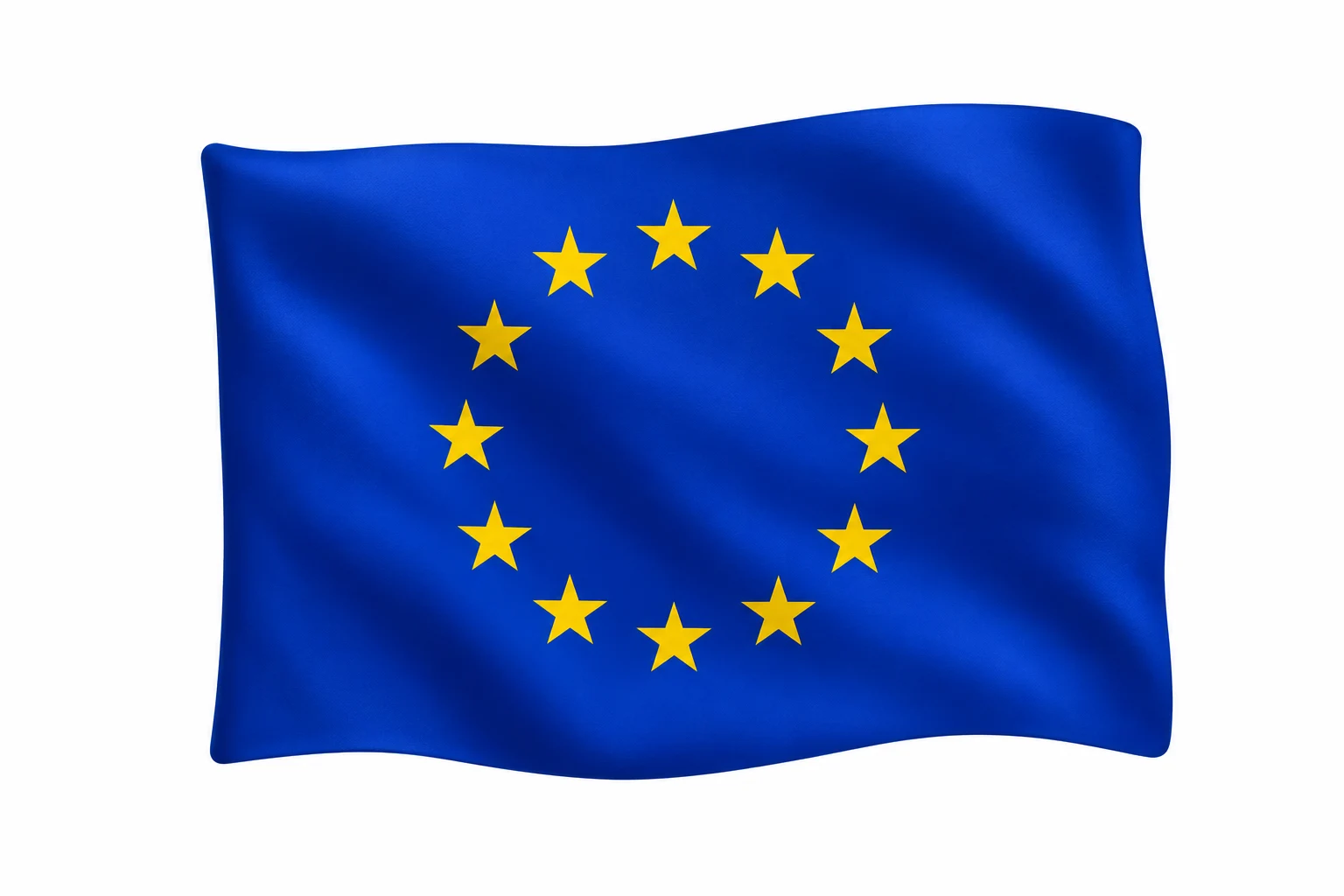
The EU flag emoji 🇪🇺 represents the European Union. Visually, it is a blue flag featuring a circle of 12 yellow stars. In everyday digital communication, people use it as a compact symbol for the European Union, European institutions, EU-related news, travel, cooperation, or broader conversations about Europe. 🇪🇺
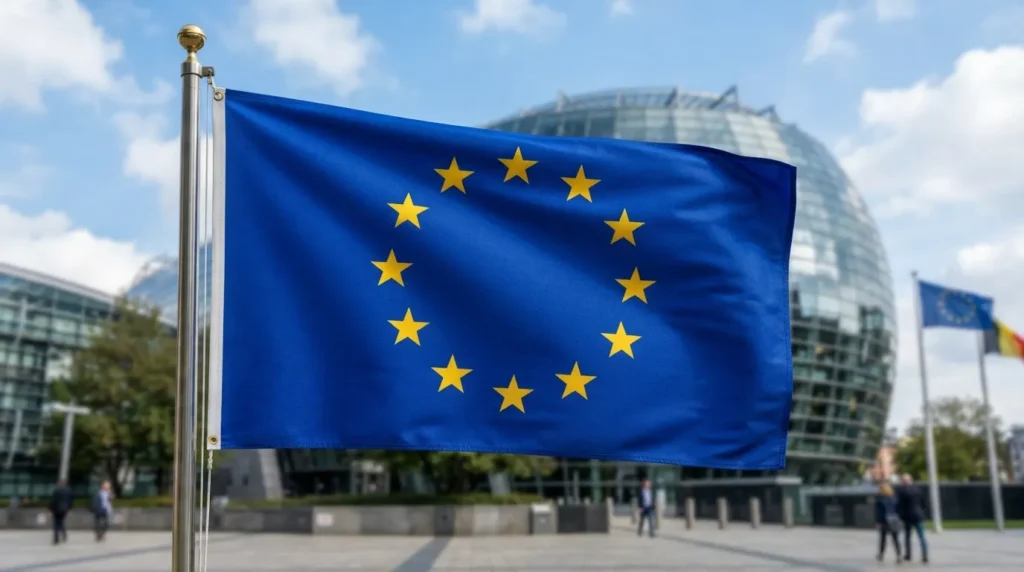
In texting, the emoji can simply mean “European Union” or “EU.” Someone might add it to a message about visiting an EU country, studying in Europe, working with European organizations, or discussing an EU-related topic. On social media, it may appear in captions, comments, profiles, and posts where users want to make the subject immediately recognizable.
Context matters. A person writing “Heading to Europe soon 🇪🇺” may be using the emoji casually as a European travel symbol. Another person using “EU policy 🇪🇺” is probably referring specifically to the European Union. In a political discussion, the same symbol may carry a more serious or opinion-based tone.
The EU flag can also appear alongside related symbols such as 🇪🇺💙, 🇪🇺✨, or 🇪🇺✈️. These combinations can make a message feel supportive, celebratory, travel-related, or simply visual.
It is also useful to distinguish the EU from Europe as a continent. Not every European country is a member of the European Union, so the emoji is not always a precise replacement for every use of the word “Europe.”
| Emoji | Core meaning | Possible misread | Best used when |
| 🇪🇺 | European Union | Europe in general | EU-related topics |
| 💙 | Blue, affection, support | Romantic feeling | Friendly or supportive messages |
| ⭐ | Star, highlight, achievement | Literal star | Emphasis or celebration |
| ✨ | Sparkle, excitement | Decorative filler | Celebratory captions |
| ✈️ | Travel, flight | Literal flight only | European travel |
| 🗺️ | Map, geography | Trip planning | Location discussions |
| 🌍 | World, global topics | Europe specifically | International context |
| 🏛️ | Institution, history | Literal building | Government or historical topics |
| 📍 | Location | Permanent residence | Places and destinations |
| 🎉 | Celebration | Party only | Events and achievements |
Emoji Cards
🇪🇺 European Union Flag
Meaning: The European Union, EU institutions, or EU-related topics.
Example 1: Learning more about the EU 🇪🇺
Example 2: Our project now works across the EU 🇪🇺
💙 Blue Heart
Meaning: Affection, support, loyalty, or a calm emotional tone.
Example 1: Proud of our European community 💙
Example 2: Sending some European love 💙
⭐ Star
Meaning: A highlight, special moment, recognition, or positive emphasis.
Example 1: A special European experience ⭐
Example 2: Celebrating a great achievement ⭐
✨ Sparkles
Meaning: Excitement, celebration, freshness, or visual emphasis.
Example 1: A beautiful European adventure ✨
Example 2: New chapter in Europe ✨
✈️ Airplane
Meaning: Flying, travel, holidays, or an upcoming journey.
Example 1: Flying to Europe tomorrow ✈️
Example 2: Next stop, Europe ✈️
🗺️ World Map
Meaning: Geography, destinations, routes, or exploring places.
Example 1: Planning our European route 🗺️
Example 2: So many places left to explore 🗺️
🌍 Globe Showing Europe-Africa
Meaning: Global travel, geography, and international subjects.
Example 1: Connecting with people around the world 🌍
Example 2: European and global connections 🌍
🏛️ Classical Building
Meaning: Institutions, government, history, architecture, or formal places.
Example 1: Visiting historic European institutions 🏛️
Example 2: A day surrounded by history 🏛️
📍 Round Pushpin
Meaning: A location, destination, meeting place, or point of interest.
Example 1: Our next European destination 📍
Example 2: Meet us here 📍
🎉 Party Popper
Meaning: Celebration, excitement, milestones, or special events.
Example 1: Celebrating our European event 🎉
Example 2: A memorable day with friends 🎉
How to Use the EU Flag Emoji 🇪🇺 the Right Way
The EU flag emoji 🇪🇺 works best when the surrounding message makes its meaning clear. On WhatsApp, you can use it in personal chats when discussing European travel, studying abroad, EU-related work, news, events, or plans. For example, “I finally booked my trip to Europe 🇪🇺✈️” makes the travel context obvious. In a family group, it can accompany a simple update such as “We are visiting several European cities this summer 🇪🇺.”
On Instagram, the emoji can fit naturally into captions about European destinations, architecture, food, culture, travel photography, or events. A caption such as “Three cities, one unforgettable journey 🇪🇺✨” gives it a travel-focused tone. It can also work in comments when reacting to someone else’s European trip.
TikTok users may use the emoji in captions and comments around travel videos, European lifestyle content, educational clips, cultural discussions, or humorous observations. Its meaning can be straightforward or playful depending on the video. A creator discussing European travel might use “Europe is calling 🇪🇺✈️,” while a humorous video could use the flag as part of a joke understood from the surrounding content.
On Facebook, the emoji can appear in posts, comments, and Messenger conversations. It may be particularly useful for event announcements, travel updates, educational discussions, and community conversations.
The key is not to treat the emoji as automatically emotional or political. Its tone comes from context. A flag beside a travel sentence is usually descriptive, while the same flag in a policy discussion may signal a specific institutional subject.
Do and Don’t
Do:
- Use 🇪🇺 when the European Union is genuinely relevant.
- Add context when your meaning could be unclear.
- Pair it with travel symbols when discussing trips.
- Consider the tone of the conversation.
- Remember that platform designs can vary.
Don’t:
- Assume 🇪🇺 means every European country.
- Use it randomly just because a topic involves Europe.
- Assume it automatically expresses political support.
- Treat it as interchangeable with every European flag.
- Overload a serious discussion with decorative emojis.
Why Does the EU Flag Emoji 🇪🇺 Look Different on iPhone and Android?
The EU flag emoji 🇪🇺 can look slightly different depending on the device, operating system, app, or font being used. This is normal for emojis. The underlying emoji character is standardized through Unicode, but companies such as Apple, Google, Samsung, and Microsoft can create their own visual artwork for displaying that character.
You may notice differences in the shade of blue, the shape and spacing of the stars, proportions, rendering style, or overall appearance. One device might make the stars appear slightly larger or brighter, while another may use a different blue tone. These visual differences do not necessarily mean that you are looking at a different emoji.
The important distinction is between the emoji character and its visual design. Unicode provides a standardized way for systems to represent and exchange characters. Individual platforms then decide how those characters should look on their products.
This is why someone can send 🇪🇺 from an iPhone and have it appear slightly different when viewed on an Android phone. The recipient is still seeing the same underlying EU flag emoji.
App behavior can also affect appearance. WhatsApp, Instagram, TikTok, Facebook, browsers, and other services may use different rendering systems depending on the device and software environment.
So, if your EU flag looks a little different from a friend’s EU flag, there is usually no need to worry. The visual design may vary while the intended character remains the same.
For practical communication, this means you should focus on the surrounding words and context rather than tiny visual differences. The blue color, circular stars, and overall flag design are enough for most users to recognize the intended symbol. 🇪🇺
Best EU Flag Emoji Combos, Copy & Paste
Romantic ❤️
1.👉 🇪🇺💙 — Use this for affection connected with a European trip or shared experience.
2.👉 🇪🇺✨💙 — Use this for a sweet European memory.
3.👉 🇪🇺✈️💙 — Use this when traveling with someone special.
Cute 🥰
1.👉 🇪🇺✨ — Use this for a cheerful European moment.
2.👉 🇪🇺💙✨ — Use this for a warm and positive caption.
3.👉 🇪🇺🌍✨ — Use this for a cute travel or global post.
Flirty 😉
1.👉 🇪🇺😉✨ — Use this for a playful European-themed message.
2.👉 🇪🇺💙😉 — Use this for a lighthearted personal chat.
3.👉 🇪🇺✈️😉 — Use this when teasing someone about a future trip.
Missing Someone 💭
1.👉 🇪🇺💙💭 — Use this when thinking about someone connected with Europe.
2.👉 🇪🇺✈️💭 — Use this when remembering a past journey.
3.👉 🇪🇺✨💭 — Use this for a nostalgic European memory.
Good Night 🌙
1.👉 🇪🇺💙✨ — Use this for a warm good-night message after a European-themed conversation.
2.👉 🇪🇺🌍✨ — Use this for a peaceful travel-themed post.
3.👉 🇪🇺💙🌙 — Use this for a gentle nighttime message.
Trending EU Flag Emoji in 2026
The EU flag emoji 🇪🇺 continues to appear in online conversations where users need a compact visual reference to the European Union. It is especially useful in travel discussions, international communication, educational content, European events, institutional topics, and social media posts connected with Europe.
Rather than treating “trending” as a fixed ranking, it is more accurate to look at the contexts where the emoji naturally appears. Travel creators may combine 🇪🇺 with ✈️ or 🗺️ when discussing destinations. Educational accounts can use 🇪🇺 alongside institutional or historical subjects. Everyday users may simply add it to a caption to identify a European setting.
On WhatsApp and Messenger, the emoji often works as a quick visual shortcut. Instagram captions can use it to reinforce a European theme, while TikTok comments may use it as a reaction to travel or Europe-related videos. Facebook posts can combine it with location and event-related symbols.
| Emoji | Why trending | Who uses it | Platform |
| 🇪🇺 | EU-related identity and topics | General users | WhatsApp, Instagram |
| ✈️ | Travel and European journeys | Travelers | TikTok, Instagram |
| 🗺️ | Destinations and geography | Travel users | Instagram, Facebook |
| 💙 | Supportive visual pairing | General users | WhatsApp, TikTok |
The important point is that emoji usage changes with online conversations, trends, communities, and individual habits. An emoji that is common in one type of content may be less noticeable in another.
EU Flag Emoji Meaning in Different Contexts
The meaning of 🇪🇺 becomes clearer when you consider the situation around it. In a romantic conversation, the emoji may simply identify a shared destination or European trip. For example, “Can’t wait for our trip 🇪🇺✈️” is primarily about travel, even though the surrounding relationship gives the message a personal tone.
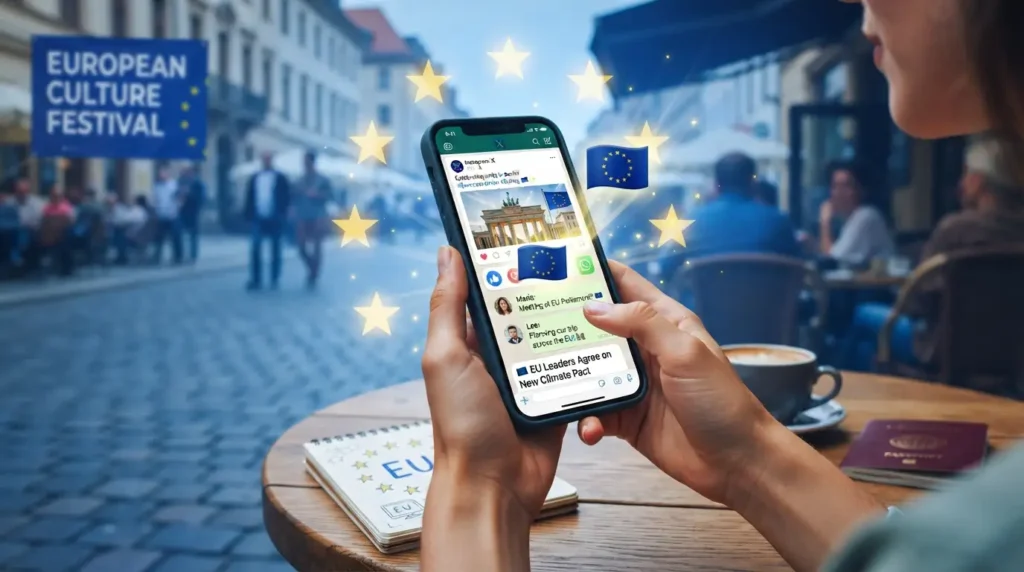
Between friends, 🇪🇺 can be casual and descriptive. Someone might send “Which European city should we visit next? 🇪🇺” as a simple travel question. The emoji adds visual context without changing the sentence dramatically.
In family conversations, it may appear in discussions about vacations, studying abroad, relatives living in Europe, or upcoming journeys. Here, the tone is usually practical and personal.
Professional communication requires a little more care. In a casual workplace chat, 🇪🇺 may be useful in a message about an EU event or European project. In a formal email or official document, however, plain wording is often clearer than relying on an emoji.
In social media comments, the same symbol can be more expressive. A person may comment “Europe! 🇪🇺✨” on a travel video, where the emoji functions almost like visual punctuation.
In captions, it can help establish a location or theme. “Weekend in Europe 🇪🇺🗺️” gives readers an immediate visual cue.
The emoji should not automatically be interpreted as political approval or disagreement. A person can use 🇪🇺 simply because the subject concerns the European Union. Likewise, using it in a travel context does not necessarily communicate a particular political position.
How to Copy and Paste the EU Flag Emoji
If you want to use the EU flag emoji 🇪🇺, the easiest option is to copy it directly from this page:
🇪🇺
On a phone, press and hold the emoji, select the copy option, and then paste it wherever you need it. You can use it in WhatsApp messages, Instagram captions, TikTok comments, Facebook posts, Messenger chats, and many other apps.
You can also find it through your device’s emoji keyboard. Search options vary by keyboard and operating system, so typing terms such as “EU,” “European Union,” or looking through the flag section may help.
On desktop computers, the easiest method is often copying the emoji from a webpage or another message and pasting it into the target application.
Remember that the exact visual appearance may change after you paste it because the receiving platform or device controls how the emoji is rendered. The character remains the same even when the artwork looks slightly different.
FAQs
1. What is the most popular EU flag emoji?
The standard EU flag emoji is 🇪🇺. It represents the European Union and is commonly used in messages, captions, comments, and posts about EU-related topics.
2. What does 🇪🇺 mean when someone sends it?
It usually refers to the European Union or an EU-related subject. The exact tone depends on the surrounding words, conversation, and relationship between the people communicating.
3. Why do emojis look different on iPhone vs Android?
Unicode provides the underlying emoji character, while companies create their own visual designs. As a result, 🇪🇺 can look slightly different across Apple, Google, Samsung, Microsoft, and other platforms.
4. Are EU flag emojis used differently in other countries?
Usage can vary between communities and cultures. People may use 🇪🇺 for travel, geography, institutions, identity, or other EU-related conversations, so context is important.
Conclusion
The EU flag emoji 🇪🇺 is a simple way to reference the European Union in digital conversations. Its meaning is usually clear, but the surrounding message determines whether the tone is practical, friendly, celebratory, travel-related, or more serious.
Use it where it genuinely adds context, and remember that emoji interpretation is not always universal. A little context can make your message much clearer. 🇪🇺✨