One-line Hook
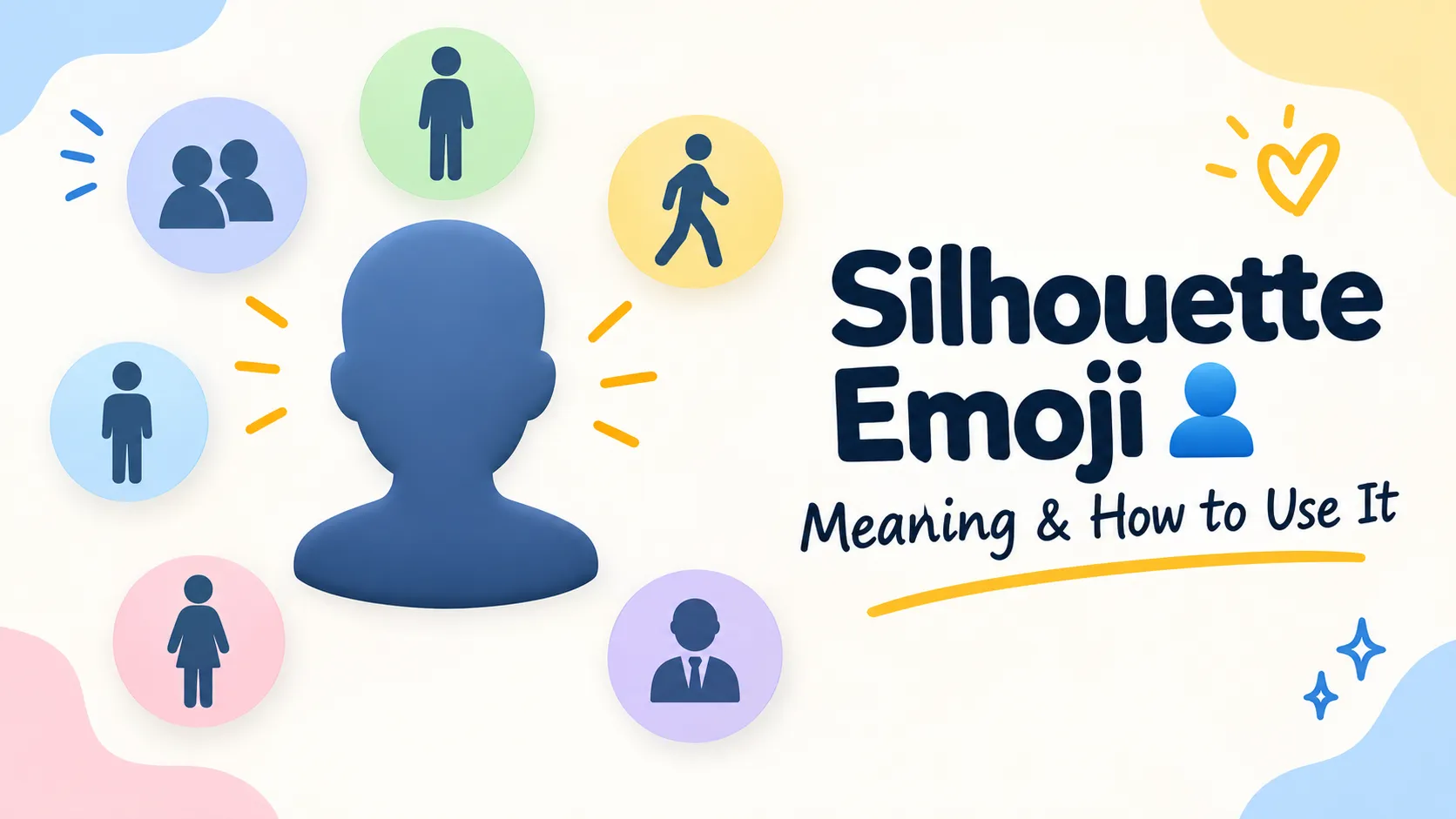
Sometimes a simple human outline says more than a detailed face ever could.
Introduction
You see a mysterious profile picture, an unnamed account, or a message about someone, and suddenly you need an emoji that represents a person without showing too much detail. That is where the silhouette emoji 👤 can fit naturally. It usually represents a person, human identity, profile, or anonymous figure, but its exact meaning depends on the conversation.
Unlike expressive face emojis, 👤 does not show a strong emotion. That makes it useful when you want to talk about a person without adding happiness, sadness, romance, or another specific feeling. You might see it in chats, social media posts, profile-related discussions, comments, or messages about an unknown person. Related symbols such as 👥 can suggest multiple people, while 🧍 can show a standing person.
The wording around the emoji matters. A message like “New profile 👤” feels different from “Who is this person? 👤”. Context, relationship, platform, and personal style can all influence how someone reads it.
Standout Snippet
The silhouette emoji 👤 keeps the focus on the person or identity without revealing a specific emotion.
What Does Silhouette Emoji Mean?

The silhouette emoji 👤, officially known as “Bust in Silhouette,” generally represents a human figure, person, profile, or identity. It is a simple head-and-shoulders outline rather than a detailed face, so it can feel neutral, private, mysterious, or informational. In texting, someone may use 👤 when referring to a person without naming them, talking about an account or profile, or simply adding a human symbol to a message. It can also suggest anonymity when the identity of someone is unknown or intentionally not shown. On social media, the same symbol may appear in conversations about profiles, users, followers, characters, or unidentified people. Related symbols can slightly change the idea. 👥 can suggest a group or two people, while 🧍 represents a standing person. 🚶 adds movement, and 🕴️ can give the human figure a more formal or stylized appearance. These differences matter when choosing an emoji. A message such as “Someone viewed my profile 👤” can feel informational, while “Who is that 👤?” may sound curious or mysterious. It does not automatically mean romance, secrecy, or suspicion. The surrounding words provide the emotional direction. In casual conversations, 👤 can simply mean “person” or “user.” In a serious conversation, it may represent an unnamed individual. On some devices, the design can look slightly different because platforms create their own artwork for Unicode emoji characters. The underlying character remains the same. As with other emoji symbols, there is no single interpretation that works in every conversation. The sender’s wording, relationship with the receiver, cultural background, platform, and overall tone can influence how 👤 is understood. That neutral quality is actually what makes the silhouette emoji useful when a detailed facial expression would add more emotion than you intend.
Silhouette Emoji Meaning Table
| Emoji | Core meaning | Possible misread | Best used when |
| 👤 | Person, identity, profile | Anonymous or secretive person | Talking about one person |
| 👥 | People, group, users | Crowd or social group | Referring to multiple people |
| 🧑 | Person, individual | Generic human | General references to a person |
| 🧍 | Standing person | Waiting or posing | Showing a person physically |
| 🧍♂️ | Man standing | Male-specific reference | Referring to a man |
| 🧍♀️ | Woman standing | Female-specific reference | Referring to a woman |
| 🚶 | Person walking | Leaving or traveling | Talking about movement |
| 🚶♂️ | Man walking | Male traveler | Showing a walking man |
| 🚶♀️ | Woman walking | Female traveler | Showing a walking woman |
| 🕴️ | Person in suit | Formal or business context | Stylish or formal references |
Silhouette Emoji Cards
👤 Bust in Silhouette
Meaning: A person, profile, identity, or anonymous human figure.
Example 1: Someone new followed me 👤
Example 2: Check the profile 👤
👥 Busts in Silhouette
Meaning: Two people, multiple users, or a group.
Example 1: We need more people for this 👥
Example 2: Meet the new team 👥
🧑 Person
Meaning: A general human figure without specifying gender.
Example 1: Ask a person nearby 🧑
Example 2: Every person has a story 🧑
🧍 Person Standing
Meaning: A person shown standing still.
Example 1: Just standing here 🧍
Example 2: Me waiting for the reply 🧍
🧍♂️ Man Standing
Meaning: A standing male figure.
Example 1: He is right there 🧍♂️
Example 2: That guy was waiting outside 🧍♂️
🧍♀️ Woman Standing
Meaning: A standing female figure.
Example 1: She is waiting here 🧍♀️
Example 2: That woman helped me 🧍♀️
🚶 Person Walking
Meaning: A person walking or moving away.
Example 1: Going for a walk 🚶
Example 2: Just walking home 🚶
🚶♂️ Man Walking
Meaning: A male figure who is walking or traveling.
Example 1: He is heading home 🚶♂️
Example 2: Walking toward the station 🚶♂️
🚶♀️ Woman Walking
Meaning: A female figure who is walking or traveling.
Example 1: She is walking over 🚶♀️
Example 2: Taking a quiet walk 🚶♀️
🕴️ Person in Suit Levitating
Meaning: A stylized person in formal clothing with a playful appearance.
Example 1: Business mode today 🕴️
Example 2: Keeping it formal 🕴️
How to Use Silhouette Emoji the Right Way
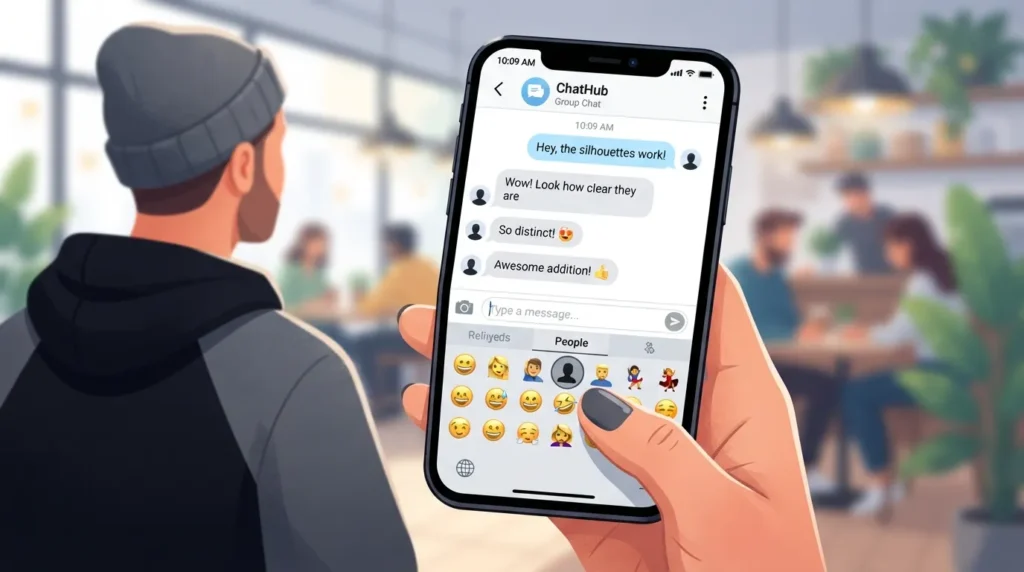
The silhouette emoji works best when the human figure itself is more important than a specific emotion. Because 👤 is visually neutral, it can fit several kinds of everyday communication.
WhatsApp 💬
In WhatsApp chats, 👤 can refer to a person, profile, user, or unnamed individual. For example:
“Someone new joined 👤”
You can also use it when discussing a social profile:
“Check that account 👤”
In family or friendship chats, it may simply act as a visual reference to one person. Since it does not automatically communicate affection or humor, the surrounding words usually carry the emotional tone.
Instagram 📸
Instagram emojis often become part of captions, comments, bios, and conversations about accounts. 👤 can work when discussing a profile, follower, creator, or unidentified person.
For example:
“New account 👤”
“Who is behind this profile? 👤”
For aesthetic content, a silhouette can also create a minimal or mysterious visual feeling without requiring a dramatic face emoji.
TikTok 🎵
On TikTok, 👤 can appear in captions and comments when people refer to a person, character, user, or mysterious figure. It can also be used playfully when the identity of someone in a video is not being specified.
For example:
“Someone needs to explain this 👤”
“Me trying to figure out who that was 👤”
The same emoji can sound serious or humorous depending on the words around it.
On Facebook, 👤 can work in posts, comments, and Messenger conversations about people, profiles, accounts, or users. A simple message such as “New profile 👤” is fairly neutral, while “Who is this person? 👤” creates curiosity.
Do’s and Don’ts
Do:
- Use 👤 when the idea of a person or identity is central.
- Consider your relationship with the receiver.
- Let the surrounding words establish the tone.
- Use related symbols when you need to show several people 👥.
- Check how the emoji appears on your device before posting.
Don’t:
- Assume 👤 automatically means mystery or secrecy.
- Use it as a guaranteed romantic signal.
- Add unrelated emojis just to make a message look decorative.
- Assume everyone will interpret a silhouette in exactly the same way.
- Overload serious conversations with unnecessary emoji combinations.
Why Does Silhouette Emoji Look Different on iPhone and Android?
If you send 👤 from an iPhone to an Android phone, the symbol may look slightly different. That does not necessarily mean you sent a different emoji.
The reason is Unicode. Unicode provides standardized characters that allow devices and apps to recognize the same emoji character. Companies then create their own visual artwork for those characters.
Apple, Google, Samsung, Microsoft, and other technology companies can therefore display the same Unicode emoji with different artwork.
You may notice differences in:
- Shape
- Size
- Color
- Outline
- Head and shoulders
- Overall visual style
For the silhouette emoji, the basic human-profile concept remains recognizable even when the artwork changes.
This is important when interpreting messages. A slightly different design does not automatically create a different meaning. The underlying character is generally the same, while the platform determines how it is drawn.
The same principle applies to other people-related emojis such as 👥, 🧑, and 🧍. Your friend may see a design that looks a little different from yours, but the Unicode character can still be the same.
So if an emoji looks slightly different on an iPhone, Android phone, computer, or social media app, do not immediately assume that the sender intended a different message. Look at the wording and conversation first.
Best Silhouette Emoji Combos, Copy & Paste

Romantic ❤️
1.👉 👤❤️ — Use this when referring warmly to a special person.
2.👉 ❤️👤 — Use this for a simple person-focused romantic message.
3.👉 👤✨ — Use this when someone stands out in a sweet way.
Cute 🥰
1.👉 👤🥰 — Use this for a cute message about someone.
2.👉 👤✨🥰 — Use this for a warm, affectionate mention.
3.👉 👥🥰 — Use this when talking about people you care about.
Flirty 😉
1.👉 👤😉 — Use this when the message has a playful tone.
2.👉 👤✨😉 — Use this for a light, teasing reference.
3.👉 🧑😉 — Use this when playfully referring to someone.
Missing Someone 💭
1.👉 👤💭 — Use this when someone is on your mind.
2.👉 👤❤️💭 — Use this for a warm missing-you message.
3.👉 👤✨💭 — Use this for a softer, thoughtful mood.
Good Night 🌙
1.👉 👤🌙 — Use this when wishing someone good night.
2.👉 👤✨🌙 — Use this for a calm nighttime message.
3.👉 👤❤️🌙 — Use this for a warm good-night message to someone special.
Trending Silhouette Emoji in 2026
In 2026, people-related emoji symbols continue to fit naturally into casual online communication because they can represent people, profiles, groups, and identity without forcing a strong facial emotion. The silhouette emoji 👤 is particularly useful when a conversation focuses on a person or account rather than an emotional reaction.
👤
It commonly appears in conversations involving profiles, users, identity, or unnamed people. Its neutral appearance makes it flexible across WhatsApp, Instagram comments, captions, and casual messages.
👥
This symbol is useful when the subject changes from one person to multiple people. It can fit group-related posts, team conversations, social discussions, and references to users.
🧍
The standing-person emoji gives a more physical sense of a human presence. It can work in humorous reactions, casual captions, and messages about simply standing or waiting.
🚶
The walking figure adds movement. It can suggest going somewhere, leaving, walking home, or simply being out and about.
| Emoji | Why trending | Who uses it | Platform |
| 👤 | Simple identity reference | Everyday users and creators | WhatsApp, Instagram |
| 👥 | Represents multiple people | Groups and communities | Facebook, WhatsApp |
| 🧍 | Simple human reaction | Casual chat users | TikTok, messaging |
| 🚶 | Adds movement | Everyday communicators | Captions, chats |
The important point is that emoji usage keeps changing with online communication, so the meaning people attach to a symbol can shift with trends, communities, and context.
Silhouette Emoji Meaning in Different Contexts
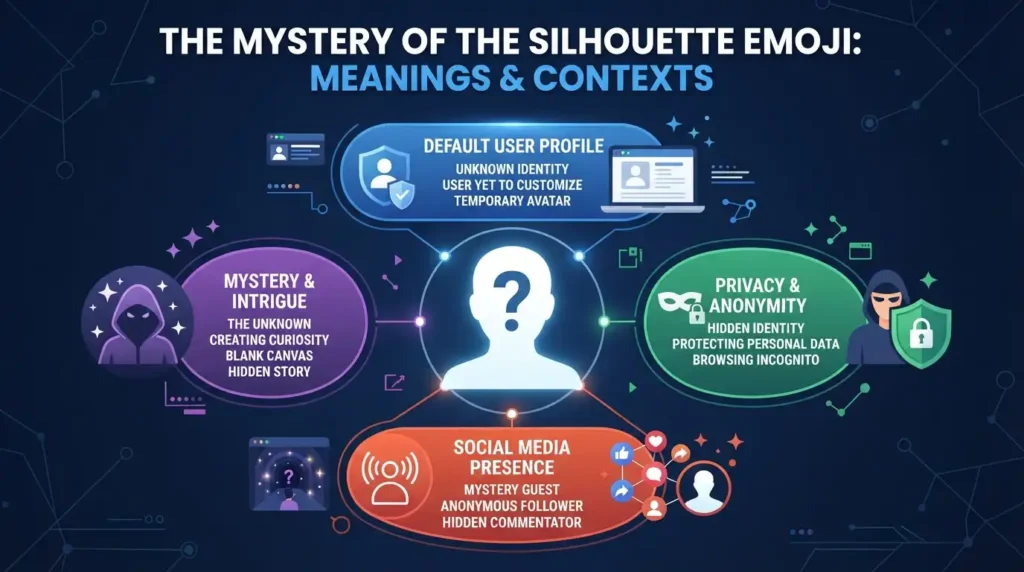
The same 👤 can feel different depending on the situation.
Romantic Conversations
In a romantic chat, 👤 may simply represent the person being discussed. The romantic feeling usually comes from the surrounding words or other symbols, rather than from 👤 itself.
“I keep thinking about you 👤❤️”
Here, the heart provides much of the affectionate tone.
Friendship
Among friends, 👤 can be a neutral way to refer to someone.
“Guess who I saw today 👤”
The message creates curiosity without necessarily suggesting anything serious.
Family
In family chats, the emoji can refer to a person without needing to specify a strong emotion.
“Someone forgot their keys 👤”
The surrounding message gives the emoji its meaning.
Professional or Casual Communication
In a work-related conversation, 👤 can visually represent a person, user, profile, or participant.
“Please contact the new user 👤”
Because the emoji is relatively neutral, it can sometimes work better than an expressive face in a straightforward message.
Texting
In ordinary texting, 👤 can mean “person,” “someone,” “user,” or “this individual.” It is especially useful when the sender does not want to attach a particular emotion to the person being discussed.
Social Media Comments
In comments, 👤 can add a quick visual reference to a person or account.
“Who is this 👤?”
The question creates curiosity, while the silhouette reinforces the idea of an unidentified person.
Captions
A silhouette can also create a minimal visual style in a caption.
“Just another day 👤✨”
Here, the symbol is more aesthetic than literal. That is a good reminder that emojis can sometimes contribute to mood rather than provide a precise definition.
How to Copy and Paste Silhouette Emoji
Want to use the silhouette emoji right away?
Copy this: 👤
You can select 👤, copy it, and paste it into WhatsApp, Instagram, TikTok, Facebook, Messenger, comments, captions, or ordinary text messages.
On most phones, you can also find people-related symbols through the emoji keyboard. Search for terms such as “person” or browse the people and body section.
You can copy the emoji by pressing and holding it on a phone, or by selecting it with your mouse on a computer.
For quick use, here it is again:
👤
FAQs
1. What is the most popular silhouette emoji?
👤 is the most direct silhouette-style emoji for representing a single person, profile, or human identity. Its neutral appearance makes it flexible in everyday messages.
2. What does 👤 mean when someone sends it?
It usually refers to a person, profile, user, or human identity. The exact meaning depends on the words, relationship, and situation. It does not automatically have a romantic or secretive meaning.
3. Why do emojis look different on iPhone vs Android?
Unicode helps devices recognize the same emoji character, while companies such as Apple, Google, and Samsung create their own artwork. This can make the same emoji look different across devices.
4. Are silhouette emojis used differently in other countries?
Emoji interpretation can vary between cultures, communities, age groups, and online spaces. However, it is better to consider the specific conversation than assume that everyone in a particular country interprets 👤 in one fixed way.
Conclusion
The silhouette emoji 👤 is a simple way to represent a person, identity, profile, or unnamed individual without adding a strong facial emotion. Its meaning becomes clearer when you consider the words and situation around it.
Use it naturally in chats, captions, comments, and social media when a neutral human reference fits. 👤✨
If you’d like, I can also create the 16:9 featured image for this “Silhouette Emoji” article.