One little owl can instantly say, “I’m learning a language.” 🦉📚
You may have seen people use the Duolingo emoji in a caption, comment, text, or language-learning joke and wondered what it actually means. In most casual online conversations, the phrase points to the owl associated with Duolingo, while the standard owl emoji 🦉 is the easiest copy-and-paste symbol people use to represent it. 💚
The meaning can be simple, such as studying Spanish, practicing vocabulary, or keeping up with a language-learning routine. It can also be playful. Someone might use 🦉 to joke about a difficult lesson, a long learning streak, or the familiar feeling of being reminded to practice. 📚🔥
As with other emoji meanings, context matters. A message from a friend can feel funny and casual, while the same emoji in an Instagram caption may simply identify a language-learning post.
The Duolingo emoji turns a tiny owl into a quick symbol for language learning, practice, and playful motivation. 🦉💚
What Does the Duolingo Emoji Mean?
The Duolingo emoji 🦉 usually represents Duolingo, language learning, studying, vocabulary practice, or the playful side of keeping a learning routine. The standard 🦉 emoji officially represents an owl, but online users can give it a more specific meaning when the surrounding conversation is about Duolingo or language study.
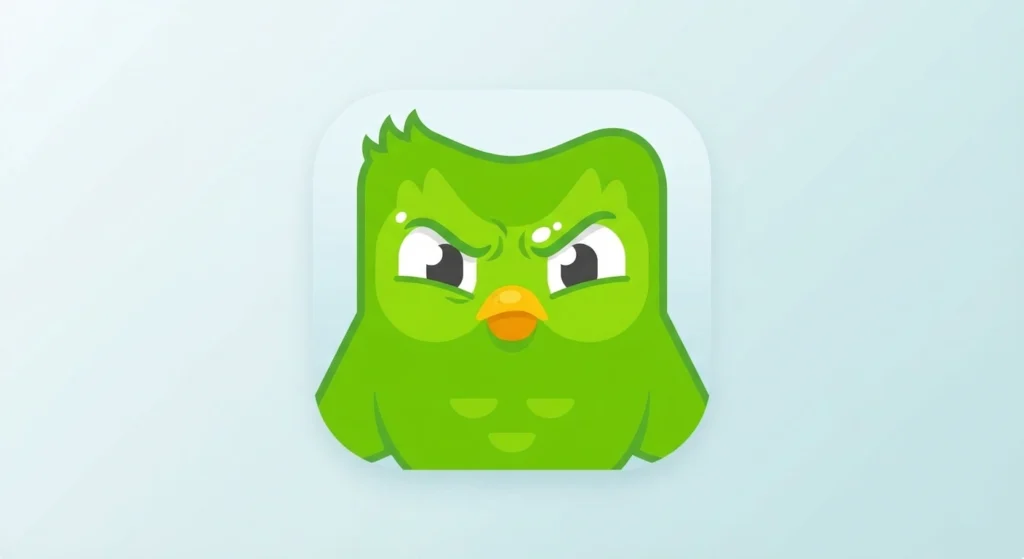
The most obvious use is to say, “I’m using Duolingo.” For example, someone might post “Back to Spanish practice 🦉📚” or “Trying to keep my streak alive 🦉🔥.” Here, the owl is not being used mainly to talk about birds. It acts as a visual reference to the language-learning app.
In texting, 🦉 can also make a study message feel lighter. “I need to do my lesson 🦉” sounds more playful than simply saying, “I need to study.” With 📚 or 📝, the meaning becomes even clearer.
On social media, the emoji may appear in captions about language goals, vocabulary, learning progress, or funny experiences with lessons. 💚 can add a visual connection to Duolingo’s recognizable brand color, while 🎓 can emphasize education.
The relationship between sender and receiver matters too. A friend might send “Did your owl remind you yet? 🦉😂” as a joke. A language-learning partner could use 🦉📚 as a simple reminder to practice.
There are also alternate interpretations. The standard owl emoji can mean wisdom, nighttime activity, birds, or simply an owl. It does not automatically mean Duolingo. Unicode itself notes that emoji can have different meanings depending on language, culture, and context.
| Emoji | Core meaning | Possible misread | Best used when |
| 🦉 | Duolingo, owl, learning | Just a bird | Language-learning posts |
| 💚 | Friendly support, green branding | Romantic feeling | Duolingo-related messages |
| 📚 | Study and learning | Schoolwork only | Lessons and study goals |
| 📝 | Practice and notes | Formal writing | Exercises and vocabulary |
| 🎓 | Education and achievement | Graduation | Learning milestones |
| 🌍 | Languages and the world | Travel only | Learning languages |
| 🗣️ | Speaking and conversation | Talking generally | Speaking practice |
| 🧠 | Memory and learning | Intelligence only | Vocabulary and study |
| 🔥 | Motivation or strong progress | Literal fire | Streaks and goals |
| 😂 | Humor and laughter | Simple amusement | Funny learning moments |
🦉 Owl
Meaning: A recognizable shorthand for Duolingo, language learning, or an actual owl.
Example 1: Back to my Spanish lesson 🦉
Example 2: The owl is reminding me again 😂🦉
💚 Green Heart
Meaning: Friendly support, affection, encouragement, or a visual connection with Duolingo.
Example 1: Keeping my language streak alive 💚
Example 2: Spanish practice tonight 🦉💚
📚 Books
Meaning: Studying, reading, lessons, vocabulary, and learning.
Example 1: Time for another lesson 📚
Example 2: My weekend plans are basically books and Spanish 📚
📝 Memo
Meaning: Practice, written exercises, notes, and language study.
Example 1: Writing down my new words 📝
Example 2: Vocabulary practice is going well today 📝🦉
🎓 Graduation Cap
Meaning: Education, achievement, progress, and reaching a learning goal.
Example 1: Finally finished that course 🎓
Example 2: One more step toward fluency 🎓🦉
🌍 Globe Showing Europe-Africa
Meaning: Languages, international communication, and learning about different parts of the world.
Example 1: Learning a new language opens doors 🌍
Example 2: Spanish today, French next 🌍📚
🗣️ Speaking Head
Meaning: Speaking, conversation practice, pronunciation, and communication.
Example 1: I need more speaking practice 🗣️
Example 2: Time to actually use what I learned 🗣️🦉
🧠 Brain
Meaning: Memory, concentration, learning, and mental practice.
Example 1: My brain needs a vocabulary break 🧠😂
Example 2: Trying to remember all these words 🧠📝
🔥 Fire
Meaning: Motivation, excitement, impressive progress, or a strong learning streak.
Example 1: Ten days without missing a lesson 🔥
Example 2: My study streak is going strong 🦉🔥
😂 Face with Tears of Joy
Meaning: Humor, playful frustration, and funny reactions.
Example 1: I forgot the easiest word again 😂
Example 2: That lesson humbled me 😂🦉
How to Use the Duolingo Emoji the Right Way
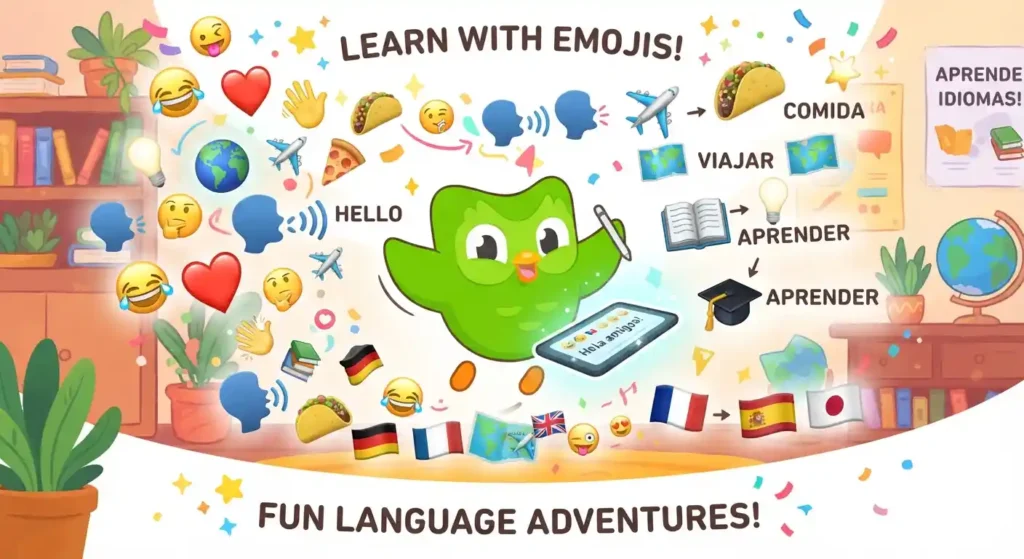
WhatsApp 💬
On WhatsApp, 🦉 works well in personal chats when you are talking about language lessons, vocabulary, or a learning streak. It can be especially useful between friends who already understand the Duolingo reference.
For example, you could write, “Have you done your lesson today? 🦉” as a playful reminder. A friend might answer, “Not yet 😂,” turning the emoji into part of an inside joke.
You can also combine it with 📚 for studying, 📝 for practice, or 🗣️ for conversation work. Family members can use it when encouraging someone who is learning a new language.
Instagram 📸
On Instagram, the Duolingo emoji fits naturally into captions about language goals, study routines, progress updates, and funny learning experiences. A caption such as “Trying to make Spanish part of my daily routine 🦉📚” immediately gives readers context.
It can also appear in comments. If someone posts about completing a language course, 🦉🎓 can work as a simple supportive response.
For aesthetic study posts, combinations such as 📚🦉💚 can create a recognizable language-learning theme without needing a long explanation.
TikTok 🎵
TikTok gives the Duolingo emoji a more playful role. It can appear in captions, comments, reaction posts, and jokes about learning languages.
A creator making a video about forgetting vocabulary might use 🦉😂. Someone showing a long study streak could use 🦉🔥. The same owl can therefore move from a straightforward brand reference to a humorous symbol depending on the video.
On Facebook, 🦉 can be used in posts, comments, and Messenger conversations about language learning. It works particularly well when the audience already knows the Duolingo reference.
The key is context. If you simply post 🦉 without any language-learning connection, some people may interpret it literally as an owl.
Do and Don’t
Do:
- Use 🦉 when the Duolingo or language-learning context is clear.
- Pair it with 📚, 📝, or 🗣️ when extra context helps.
- Consider your relationship with the receiver.
- Match the emoji with the tone of your message.
- Remember that emoji designs can vary between devices.
Don’t:
- Assume 🦉 always means Duolingo.
- Use a large collection of unrelated emojis.
- Treat the emoji as automatically romantic.
- Overload a serious message with playful symbols.
- Assume every person will recognize the same brand reference.
Why Does the Duolingo Emoji Look Different on iPhone and Android?
There is an important distinction here. The Duo mascot is a branded character, while 🦉 is a standard Unicode emoji. Unicode defines the underlying emoji character, but companies such as Apple, Google, Samsung, and Microsoft can create their own visual designs.
That means the owl may have slightly different colors, proportions, eyes, details, or styling depending on the device or platform. The underlying character can still be the same 🦉.
This is why someone using an iPhone and someone using Android may see noticeably different versions of an emoji. The difference does not necessarily mean that one person sent a different emoji.
Duo itself is different again because it is a brand character rather than a universal Unicode emoji. If you see an actual illustrated Duo sticker or custom image, its appearance can be much more specific to the service, platform, sticker pack, or custom emoji system.
For everyday messaging, the easiest universal copy-and-paste option is therefore:
🦉
It may look slightly different on different devices, but it remains the standard owl emoji.
Best Duolingo Emoji Combos, Copy & Paste
Romantic ❤️
1.👉 🦉💚🌍, Use this for a sweet message about learning a language together.
2.👉 📚💚🦉, Use this for a cute study message between two people.
3.👉 🗣️💚🌍, Use this when practicing a language with someone special.
Cute 🥰
1.👉 🦉📚💚, Use this for a friendly language-learning post.
2.👉 🦉😂📚, Use this after a funny or difficult lesson.
3.👉 🦉📝💚, Use this for a cute study update.
Flirty 😉
1.👉 🗣️💚🦉, Use this for playful conversation practice.
2.👉 🌍🗣️💚, Use this when talking about learning a language together.
3.👉 🦉🔥💚, Use this for playful praise about someone’s learning streak.
Missing Someone 💭
1.👉 🦉💚🌍, Use this when connecting language learning with someone far away.
2.👉 📚🦉💚, Use this for a friendly “thinking of you” study message.
3.👉 🗣️🌍💚, Use this when you miss chatting with someone in another language.
Good Night 🌙
1.👉 🦉📚💚, Use this after finishing a late study session.
2.👉 🦉📝💚, Use this when saying good night after language practice.
3.👉 🧠📚🦉, Use this for a playful late-night study message.
Trending Duolingo Emoji in 2026
The Duolingo emoji is not a single official Unicode character, so “trending Duolingo emoji” is better understood as a group of symbols people use to communicate the Duolingo and language-learning idea.
The most useful ones remain 🦉, 💚, 📚, and 🗣️. They work because each adds a different part of the idea. The owl points toward Duolingo, the green heart adds a friendly or supportive feeling, books suggest study, and the speaking emoji points toward actual conversation.
In 2026, emoji use continues to be highly contextual. A language-learning creator may use 🦉📚 in a caption, while a friend might use 🦉😂 in a joke about forgetting vocabulary. The same symbols can therefore feel educational, humorous, motivational, or casual.
| Emoji | Why trending | Who uses it | Platform |
| 🦉 | Quick Duolingo reference | Learners and creators | TikTok, Instagram, WhatsApp |
| 💚 | Supportive and brand-associated feeling | Friends and learners | Instagram, WhatsApp |
| 📚 | Clear study reference | Students and creators | Instagram, Facebook |
| 🗣️ | Conversation and speaking | Language learners | TikTok, messaging |
Duolingo also has a history of using custom emoji within its own workplace culture, showing how branded emoji can develop meanings beyond the standard Unicode set.
The broader lesson is simple: emoji meanings keep evolving as online communities reuse familiar symbols in new ways.
Duolingo Emoji Meaning in Different Contexts
Romantic conversations
In a romantic chat, 🦉 can become a cute reference to learning a language together. Adding 💚 may make the message feel warmer, but the emoji alone does not establish romantic intent.
For example:
“Ready for our next lesson? 🦉💚”
The relationship and conversation around it determine the tone.
Friendship
Among friends, 🦉 is often more playful. Someone might send:
“Did you practice today? 🦉😂”
Here, the emoji works almost like a shared joke.
Family
A parent, sibling, or relative might use 🦉 when encouraging someone to continue studying. “Keep going with Spanish 🦉📚” is supportive without being overly formal.
Professional or casual communication
In a formal workplace message, 🦉 may be unnecessary unless the team is discussing Duolingo or language training. In a casual team chat, however, it can make a learning reminder feel friendlier.
Texting
Texting is where context matters most. A single 🦉 could mean an owl, Duolingo, studying, or simply an inside joke. A message such as “Lesson done 🦉🔥” makes the intended meaning much clearer.
Social media comments
In comments, 🦉 can function as a quick reaction to a language-learning post. Pairing it with 📚 or 🗣️ helps readers understand the reference immediately.
Captions
In captions, the emoji can be used as a visual shortcut. “Thirty days of Spanish 🦉🔥” tells a small story without needing a long explanation.
How to Copy and Paste the Duolingo Emoji
The easiest standard emoji to represent Duolingo is:
🦉
You can select the emoji above, copy it, and paste it wherever you want.
It works in WhatsApp chats and status updates, Instagram captions and comments, TikTok captions and comments, Facebook posts, Messenger, and many other apps that support standard emoji.
You can also copy useful combinations such as:
🦉📚💚
or
🦉🔥
Remember that the standard owl is not the same thing as a custom illustrated Duo sticker. If you want the exact Duo character, you generally need an image, sticker, or custom emoji supplied by the relevant platform or service.
FAQ
1. What is the most popular Duolingo emoji?
The owl emoji 🦉 is the clearest standard emoji associated with Duolingo because Duo is represented as an owl. It is also easy to copy and paste across platforms.
2. What does 🦉 mean when someone sends it?
It can mean an owl, Duolingo, language learning, or a related inside joke. The surrounding words and relationship between the people help determine the intended meaning.
3. Why do emojis look different on iPhone vs Android?
Apple, Google, Samsung, and other platforms create their own visual designs for Unicode emoji. The artwork can therefore differ even when the underlying emoji character is the same.
4. Are Duolingo emojis used differently in other countries?
They can be. Emoji interpretation can change with language, culture, community habits, and context. A Duolingo-related use may be widely understood in one online community but less obvious in another.
Conclusion
The Duolingo emoji 🦉 is a simple way to represent Duo, language learning, study sessions, and playful learning moments. 💚
Use it with context, especially when your audience may not immediately connect an owl with Duolingo.
For quick copy and paste, 🦉 is the easiest standard choice, while combinations like 🦉📚💚 make the language-learning meaning even clearer.