One-line Hook
You saw something you probably shouldn’t have, but you still couldn’t look away. 🫣
Introduction
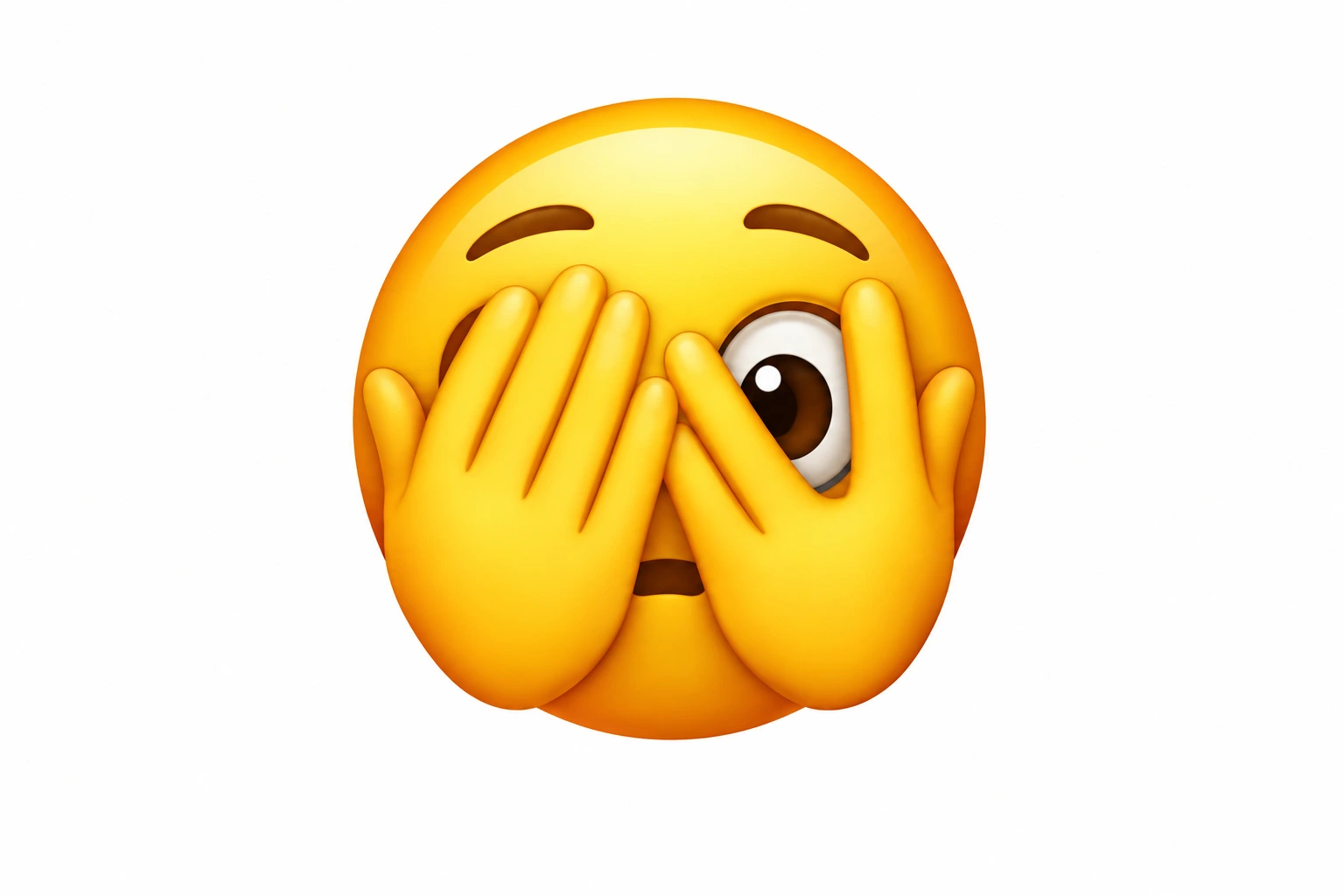
The cover eye emoji 🫣 is perfect for those moments when you feel shy, embarrassed, nervous, awkward, or a little too curious to completely look away. It shows a face peeking through covered hands, which gives it a playful feeling of “I can’t watch this, but I absolutely am.”
People use 🫣 in texting, WhatsApp chats, Instagram comments, TikTok captions, and everyday online conversations to soften an emotional reaction. Someone might send it after admitting a crush, seeing an embarrassing photo, reading gossip, or waiting nervously for a reply. It can also suggest playful shyness or cautious curiosity. 😳
Like many emoji symbols, the exact meaning depends on the conversation. A close friend may use 🫣 jokingly, while someone you like could use it to make a flirty message feel more bashful. The words around it, your relationship with the sender, and the situation all matter. 💬
7. Standout Snippet
Sometimes 🫣 means “I’m shy,” sometimes “I can’t believe this,” and sometimes simply “I’m looking anyway.”
What Does the Cover Eye Emoji Mean? 🫣
The cover eye emoji 🫣, officially known as Face with Peeking Eye, usually represents a mixture of shyness, embarrassment, nervousness, curiosity, and awkward amusement. Its visual idea is simple: the person is hiding behind their hands while peeking through their fingers. That makes it especially useful when you want to show a reaction without sounding too serious. 🫣
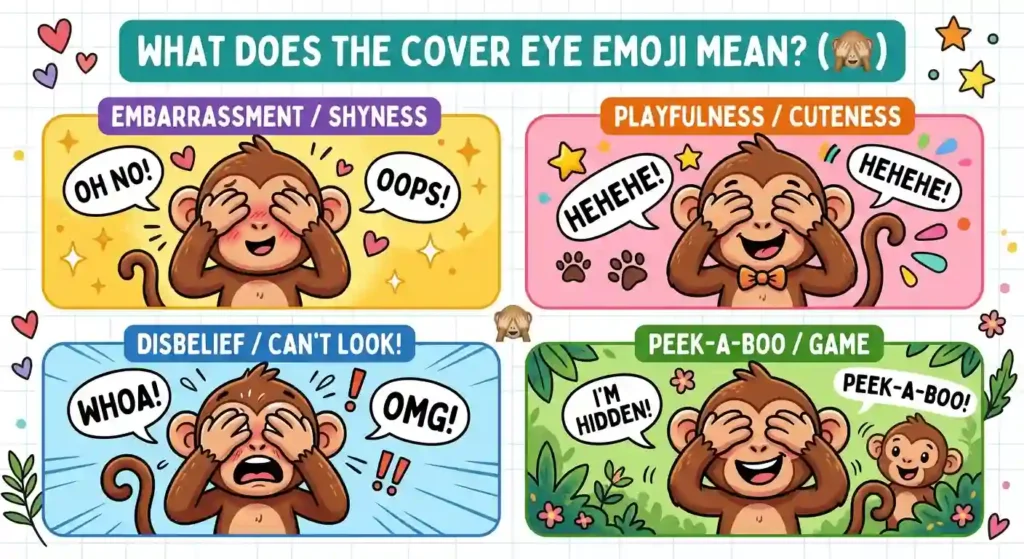
In texting, 🫣 can mean “I’m embarrassed,” “I’m nervous,” “I don’t want to see this,” or “I’m secretly watching.” For example, if a friend sends an unexpectedly romantic message, replying with 🫣 can communicate playful embarrassment without needing a long explanation.
On social media, the emoji often works as a reaction. Someone may comment 🫣 under a dramatic relationship post, an attractive photo, an awkward video, or a confession. The same symbol can feel cute, humorous, shy, or slightly flirty depending on the surrounding content.
The relationship between sender and receiver matters too. From a close friend, 🫣 may simply be funny. From a romantic interest, it can suggest bashfulness or attraction, but it should not automatically be interpreted as a confession of romantic feelings. Context is more reliable than the emoji alone. Other related expressions, such as 👀, 🙈, 😳, 🥺, and 🤭, can create slightly different shades of reaction.
| Emoji | Core meaning | Possible misread | Best used when |
| 🫣 | Shy, nervous, peeking | Fear or discomfort | Awkward or bashful moments |
| 🙈 | Embarrassment, avoiding sight | Childish reaction | Funny embarrassment |
| 👀 | Watching, noticing | Suspicion | Curiosity or attention |
| 😳 | Shock, embarrassment | Strong romantic reaction | Surprising moments |
| 🤭 | Suppressed laugh or reaction | Sarcasm | Playful teasing |
| 🥺 | Pleading, vulnerability | Sadness | Soft emotional moments |
Emoji Cards
🫣 Face with Peeking Eye
Meaning: Shyness, nervousness, embarrassment, or curious peeking.
Example 1: I actually sent the message 🫣
Example 2: Okay, I’m reading the comments now 🫣
🙈 See-No-Evil Monkey
Meaning: Embarrassment, playful avoidance, or not wanting to look.
Example 1: Please don’t show me the video 🙈
Example 2: I can’t believe I said that 🙈
👀 Eyes
Meaning: Attention, curiosity, interest, or watching something closely.
Example 1: Wait, what happened next? 👀
Example 2: I’m listening, tell me everything 👀
😳 Flushed Face
Meaning: Shock, embarrassment, nervousness, or being caught off guard.
Example 1: You really said that in front of everyone? 😳
Example 2: I wasn’t ready for that compliment 😳
🤭 Face with Hand Over Mouth
Meaning: A suppressed laugh, surprise, or playful reaction.
Example 1: I probably shouldn’t laugh, but 🤭
Example 2: You actually posted it? 🤭
🥺 Pleading Face
Meaning: Vulnerability, sweetness, pleading, or an emotional appeal.
Example 1: Can we stay a little longer? 🥺
Example 2: Please tell me you’re joking 🥺
😊 Smiling Face with Smiling Eyes
Meaning: Warmth, friendliness, happiness, or gentle affection.
Example 1: That was really sweet of you 😊
Example 2: I’m glad you came 😊
😅 Grinning Face with Sweat
Meaning: Nervous relief, awkwardness, or laughing through an uncomfortable moment.
Example 1: I forgot the deadline was today 😅
Example 2: That conversation got awkward fast 😅
😉 Winking Face
Meaning: Playfulness, teasing, or a hint of flirtation.
Example 1: Maybe I have a surprise for you 😉
Example 2: You know what I mean 😉
🥰 Smiling Face with Hearts
Meaning: Affection, warmth, happiness, or feeling touched.
Example 1: That’s honestly so sweet 🥰
Example 2: I loved your message 🥰
How to Use the Cover Eye Emoji the Right Way 🫣
The best way to use 🫣 is to let the surrounding message provide the meaning. It works particularly well when your words express something that feels embarrassing, surprising, shy, or slightly awkward.
WhatsApp 💬
In personal chats, 🫣 can make a confession feel less intense. “I might have checked your profile again 🫣” sounds playful rather than overly serious. Friends can also use it when discussing gossip, embarrassing memories, or unexpected news.
In family conversations, it can work for harmless embarrassment. A relative sharing an old childhood photo might receive a playful 🫣. For WhatsApp Status updates, the emoji can add a shy or teasing tone without requiring extra words.
Instagram 📸
Instagram emojis often carry a reaction-based meaning. You might see 🫣 in comments under a romantic post, a dramatic Reel, or a surprisingly personal caption. It can also work in captions when the creator wants to acknowledge that something feels bold or embarrassing.
For example: “Finally posting this photo 🫣” tells followers that the person feels slightly nervous about sharing it. The emoji makes the caption feel more human and less formal.
TikTok 🎵
On TikTok, 🫣 can work particularly well with humor, awkward situations, crush-related content, and dramatic reactions. A user might comment 🫣 when a video becomes unexpectedly romantic or when someone does something embarrassing.
It can also be used ironically. A person may write “Me pretending I didn’t watch the whole thing 🫣” to make their curiosity part of the joke.
Facebook posts and comments can use 🫣 in much the same way. It is useful for reacting to surprising announcements, playful teasing, personal stories, and awkward memories. In Messenger, it can make a nervous or shy response feel lighter.
The key is moderation. One well-placed 🫣 usually communicates more naturally than a long string of identical emojis.
Do and Don’t
Do:
- Match 🫣 with the emotional tone of your message.
- Use it when you want to soften embarrassment.
- Consider your relationship with the receiver.
- Let context explain whether the reaction is shy, funny, or curious.
- Remember that emoji designs can vary between devices.
Don’t:
- Assume 🫣 always means romantic interest.
- Use it randomly in serious conversations.
- Expect every person to interpret it exactly the same way.
- Overload a message with repeated emojis.
- Treat one emoji as proof of someone’s feelings.
Why Does the Cover Eye Emoji Look Different on iPhone and Android? 📱
You may notice that 🫣 does not look exactly the same on every phone, computer, or messaging platform. That’s normal. Emojis are standardized through Unicode, which gives compatible systems a common character and meaning. However, companies create their own artwork for those characters.
Apple, Google, Samsung, Microsoft, and other platforms can therefore give 🫣 slightly different visual treatments. The hands, eyes, facial proportions, colors, shading, and overall expression may vary. One version might look more nervous, while another may appear more playful.
The important point is that these visual differences do not necessarily create a completely different emoji. The underlying Unicode character is still the same. Your phone is simply displaying its platform’s artwork.
This matters because emoji meaning can sometimes feel slightly different depending on appearance. If a friend sends 🫣 from one device and you view it on another, you may notice differences in expression or proportions. Even so, the broad idea remains connected to peeking, shyness, embarrassment, and nervous curiosity.
There is no single platform design that should automatically be considered the “correct” visual version. Unicode provides the standard character, while individual platforms decide how that character is illustrated.
Best Cover Eye Emoji Combos: Copy & Paste 🫣
Romantic ❤️
🫣🥰😉, Use this for a shy romantic reaction.
🫣❤️🥰, Use this when affection feels a little embarrassing.
😉🫣❤️, Use this for playful romantic teasing.
Cute 🥰
🫣🥰😊, Use this after receiving a sweet compliment.
🥺🫣🥰, Use this for a soft and bashful reaction.
🫣😊🥰, Use this when something makes you smile shyly.
Flirty 😉
🫣😉👀, Use this when teasing someone you’re interested in.
😉🫣🥰, Use this for a playful flirty reply.
👀🫣😉, Use this when pretending not to notice someone.
Missing Someone 💭
🫣🥺❤️, Use this for a shy emotional message.
🥺🫣😊, Use this when missing someone but keeping things light.
🫣❤️🥰, Use this for a warm affectionate message.
Good Night 🌙
🫣🥰😊, Use this for a sweet good-night reaction.
🫣❤️🥺, Use this when saying good night shyly.
🥰🫣😉, Use this for a playful good-night message.
Trending Cover Eye Emoji in 2026 📱
In 2026, 🫣 fits naturally into casual online communication because it captures reactions that are difficult to express with words alone. It is especially useful when someone wants to show embarrassment and curiosity at the same time.
The emoji can appear in comments, captions, private messages, and humorous posts. Its appeal comes from its flexible emotional tone. A person can use it sincerely, playfully, or ironically without changing the character itself.
For example, creators may use 🫣 when sharing something personal, while everyday users might add it after admitting that they looked at someone’s profile. In a comment section, it can communicate “I’m watching this, but I’m pretending I’m not.”
| Emoji | Why trending | Who uses it | Platform |
| 🫣 | Captures shy curiosity | Casual users and creators | TikTok, Instagram |
| 👀 | Signals attention | Broad audiences | Instagram, TikTok |
| 🤭 | Adds playful reactions | Friends and commenters | WhatsApp, Instagram |
| 😉 | Adds teasing energy | Friends and couples | Messaging, social media |
Emoji usage continues to evolve because people constantly create new ways to express humor, emotion, irony, and social reactions online. The meaning of 🫣 is therefore best understood through the conversation rather than through a fixed definition.
Cover Eye Emoji Meaning in Different Contexts 💬
The same 🫣 can communicate noticeably different feelings depending on who sends it and what came before it.
In a romantic conversation, 🫣 may suggest bashfulness. If someone receives a compliment and replies “Stop, you’re making me blush 🫣,” the emoji supports the idea that they feel shy or flattered. It can create a softer tone without necessarily confirming romantic feelings.
In friendship, the same emoji can be purely humorous. A friend might send “I accidentally liked their old photo 🫣.” Here, the main feeling is embarrassment rather than romance.
In a family conversation, 🫣 may react to an embarrassing childhood picture or an awkward story. The tone is usually light and playful.
In casual or professional communication, caution is useful. A close coworker might understand 🫣 as a joke about an awkward situation, but in a formal message it may feel too informal. Context and workplace culture should guide the choice.
In texting, 🫣 can soften a confession, reaction, or nervous statement. In social media comments, it often works as a quick visual reaction. In captions, it can make a bold post feel self-aware or slightly shy.
Consider these examples:
“I actually sent it 🫣” suggests nervousness.
“Why did I watch the entire thing 🫣” suggests humorous curiosity.
“That compliment was too much 🫣” suggests bashfulness.
“I saw the update 🫣” could suggest curiosity or cautious interest.
Because the same emoji can serve several purposes, never rely on 🫣 alone to determine someone’s emotional or romantic intentions.
How to Copy and Paste the Cover Eye Emoji 📋
Copying the cover eye emoji is simple:
🫣
Select 🫣, copy it, and paste it wherever you want. It can be used in WhatsApp messages, Instagram captions, TikTok comments, Facebook posts, Messenger conversations, text messages, or other apps that support Unicode emojis.
You can also save a favorite emoji combination for quick use. For example, 🫣👀😉 can be copied whenever you want a playful, teasing reaction.
If the emoji appears as a blank box or does not display correctly, the app or device may not fully support that Unicode emoji yet. Updating your operating system or application can sometimes improve emoji support.
FAQs
1. What is the most popular cover eye emoji?
The main emoji associated with the phrase is 🫣, Face with Peeking Eye. It commonly expresses shyness, embarrassment, nervousness, or curious peeking.
2. What does 🫣 mean when someone sends it?
It depends on the conversation. The sender may be feeling shy, embarrassed, nervous, curious, or playful. It should not be interpreted through gender stereotypes or treated as automatic evidence of romantic interest.
3. Why do emojis look different on iPhone vs Android?
Unicode provides the underlying emoji character, while companies such as Apple and Google create their own visual designs. As a result, the same emoji can have different shapes, colors, and expressions across devices.
4. Are cover eye emojis used differently in other countries?
Emoji interpretation can vary with cultural, community, and conversational context. However, it is safer to consider the specific conversation rather than assume that everyone in a particular country uses 🫣 in exactly the same way.
Conclusion
The cover eye emoji 🫣 is a flexible way to show shyness, embarrassment, nervous curiosity, or playful awkwardness. Its real meaning comes from the words, relationship, and situation around it.
Use it naturally, pay attention to context, and remember that one emoji can carry several shades of emotion. 🫣💬