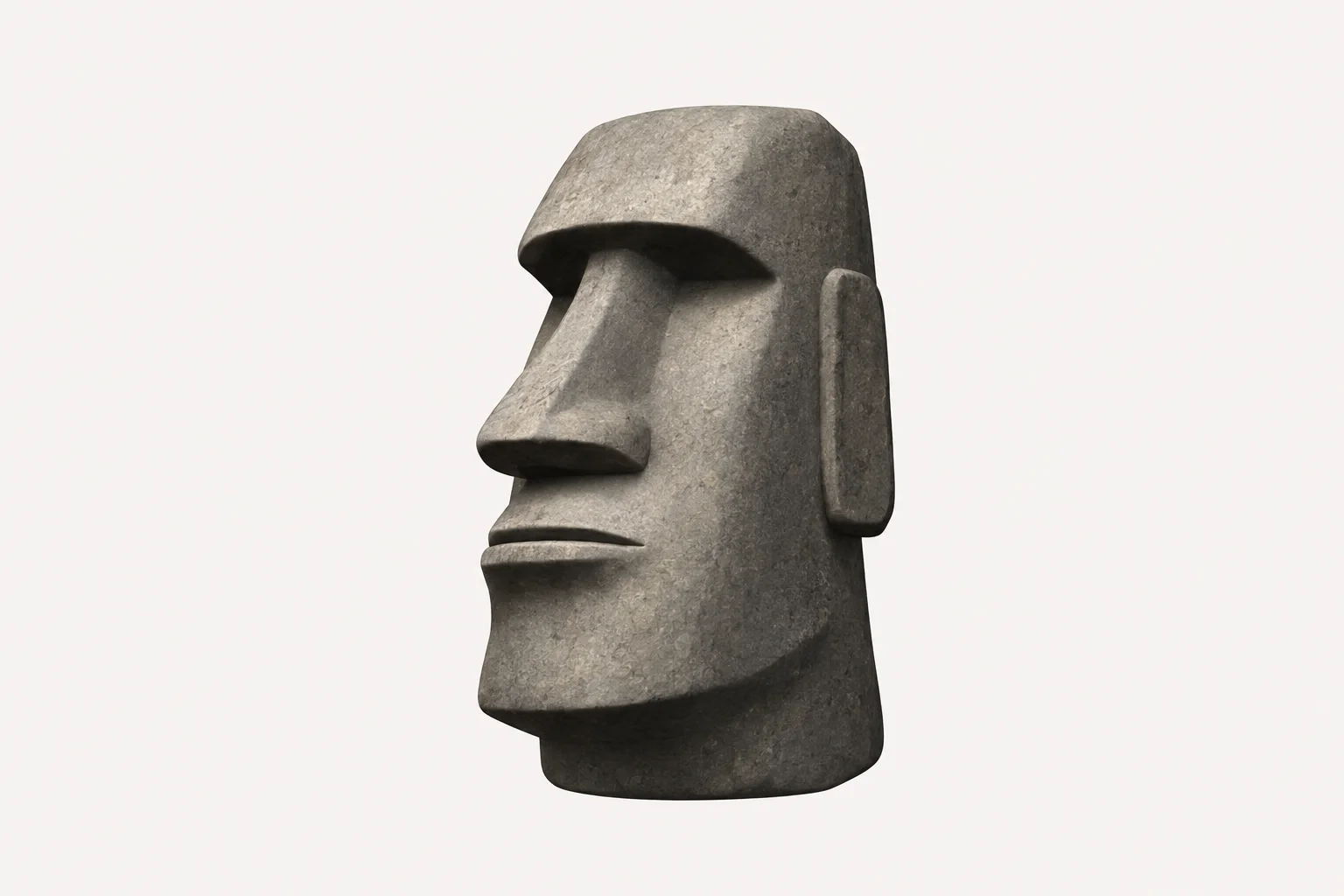
Hook: Someone says something completely ridiculous, and one stone-faced 🗿 says everything.
When someone sends you a message that leaves you thinking, “Bruh, seriously?”, the 🗿 emoji can be the perfect reaction. Online, the Moai emoji has developed a popular slang use as a deadpan, unimpressed, awkward, or slightly ridiculous response. It is not officially called the “bruh face emoji,” but many internet users use 🗿 that way in memes, comments, chats, and reaction posts.
The exact feeling depends heavily on context. A friend might send 🗿 after making an obviously silly statement, while someone else may use it to show disbelief, awkward silence, or playful judgment. In some conversations, 😑 or 😐 may communicate a similar straight-faced reaction, while 🙄 can make the response feel more annoyed. The relationship between the people also matters. A single 🗿 between close friends can be funny, while the same emoji in a serious conversation might sound dismissive.
That flexibility is exactly why people search for the bruh face emoji meaning. They want to know whether 🗿 means “bruh,” “really?”, “I cannot believe you,” “that was awkward,” or simply “I have no words.”
Sometimes a stone face is the funniest possible response to a completely ridiculous moment. 🗿
What Does Bruh Face Emoji Mean? 🗿
The bruh face emoji usually refers to 🗿, the Moai emoji, when it is used as an internet reaction rather than literally referring to the famous stone statues. In slang conversations, 🗿 can communicate a deadpan “bruh,” disbelief, awkwardness, mild annoyance, or an intentionally emotionless reaction. Online emoji references commonly associate 🗿 with a “bruh” or stoic reaction, although the emoji’s official identity remains Moai.
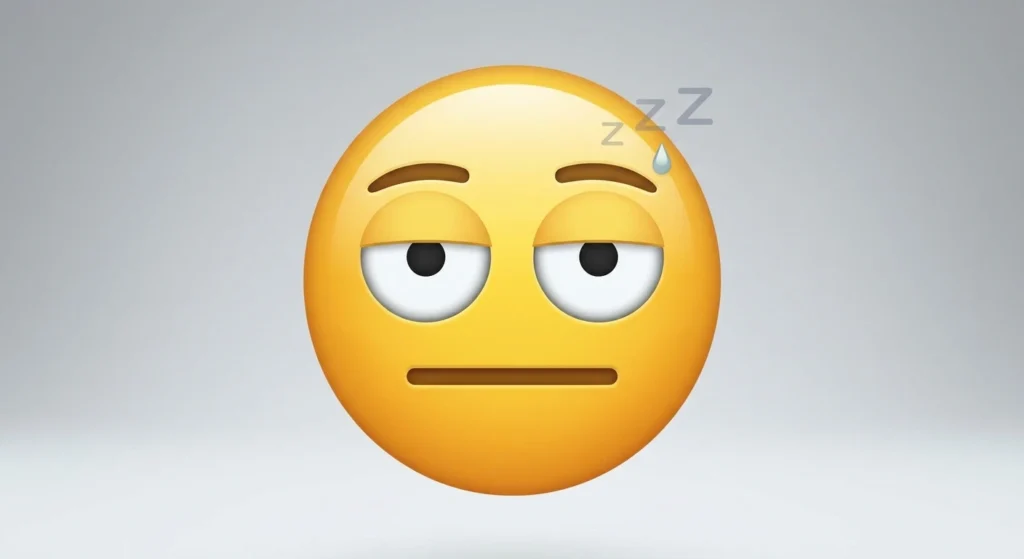
The most recognizable use is the silent reaction. Someone tells you, “I forgot there was an exam today,” and you reply 🗿. You are not literally talking about a stone statue. Your response means something closer to, “Bruh,” “What were you thinking?” or “I have absolutely nothing to say.”
The same idea can appear with 😑, the Expressionless Face, especially when you want a more obviously human expression. 😐 can feel neutral, while 🙄 may communicate stronger annoyance. 😒 can add an unamused tone, and 🤨 can suggest questioning or suspicion. These alternatives show why context matters.
On social media, 🗿 frequently appears in memes, comments, reaction posts, and casual conversations where the goal is to create a dry or exaggerated reaction. It can also be used literally when discussing Moai statues, Easter Island, ancient history, or travel, so the surrounding words are important.
With friends, the emoji is usually playful. In a romantic conversation, however, sending only 🗿 after someone’s affectionate message could sound cold or teasing. The same symbol can therefore feel funny, sarcastic, awkward, or dismissive depending on the relationship and conversation.
| Emoji | Core meaning | Possible misread | Best used when |
| 🗿 | Deadpan, bruh, unbothered | Literally a statue | Funny or absurd moments |
| 😑 | Expressionless reaction | Genuine anger | You are unimpressed |
| 😐 | Neutral or blank reaction | Coldness | You have no strong reaction |
| 🙄 | Eye-roll, annoyance | Serious hostility | Something feels ridiculous |
| 😒 | Unamused reaction | Strong dislike | You are mildly irritated |
| 🤨 | Doubt or questioning | Accusation | Something sounds suspicious |
Emoji Cards
🗿 Moai
Meaning: Deadpan humor, disbelief, awkwardness, or the classic online bruh reaction.
Example 1: You really forgot your own birthday? 🗿
Example 2: Bro said he studied for five minutes 🗿
😑 Expressionless Face
Meaning: A blank, unimpressed, or emotionally flat reaction.
Example 1: You did what? 😑
Example 2: That was your big plan? 😑
😐 Neutral Face
Meaning: A calm, blank, or uncertain response without strong emotion.
Example 1: Okay, I guess 😐
Example 2: I honestly don’t know what to say 😐
🙄 Face With Rolling Eyes
Meaning: Eye-rolling, annoyance, disbelief, or playful frustration.
Example 1: He changed the plan again 🙄
Example 2: Not this story again 🙄
😒 Unamused Face
Meaning: Mild irritation, skepticism, or a feeling that something is not funny.
Example 1: That joke was terrible 😒
Example 2: You seriously expect me to believe that? 😒
🤨 Face With Raised Eyebrow
Meaning: Doubt, suspicion, curiosity, or questioning.
Example 1: You ate the whole cake? 🤨
Example 2: And where exactly were you? 🤨
🤦 Person Facepalming
Meaning: Frustration, embarrassment, disbelief, or reacting to a silly mistake.
Example 1: I sent it to the wrong group 🤦
Example 2: I forgot my keys again 🤦
💀 Skull
Meaning: Internet slang for finding something extremely funny, absurd, or overwhelming.
Example 1: That comment took me out 💀
Example 2: I cannot believe he actually said that 💀
❤️ Red Heart
Meaning: Affection, warmth, love, or emotional appreciation.
Example 1: Thanks for always being there ❤️
Example 2: You made my whole day ❤️
🥰 Smiling Face With Hearts
Meaning: Warm affection, sweetness, appreciation, or romantic happiness.
Example 1: You are honestly so sweet 🥰
Example 2: That message made me smile 🥰
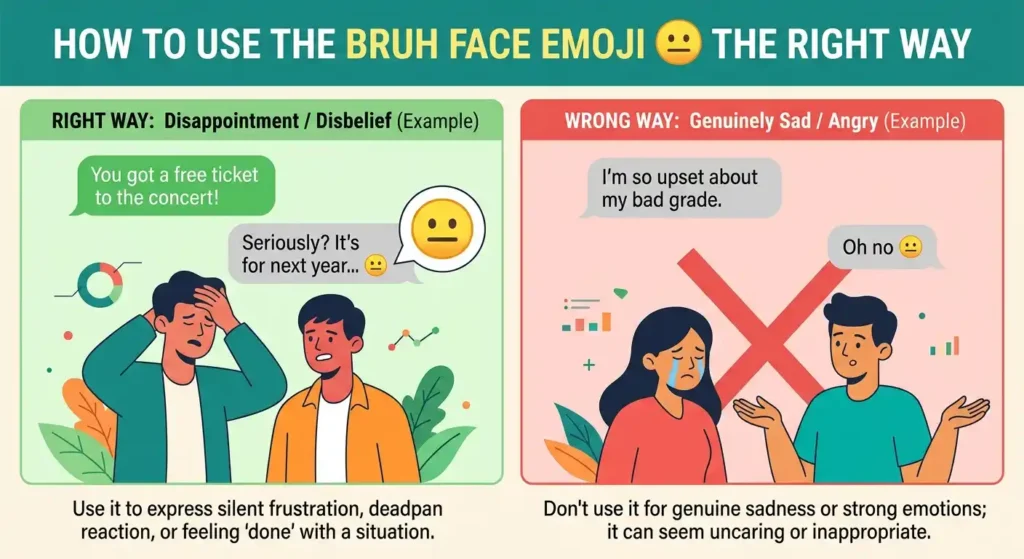
How to Use Bruh Face Emoji the Right Way
WhatsApp 💬
On WhatsApp, 🗿 works especially well in casual chats with friends and people who understand internet slang. If someone tells you something unbelievable, you can answer with a simple 🗿 instead of typing a full reaction.
For example:
Friend: “I started studying five minutes before the exam.”
You: “🗿”
It can also work in family conversations when the tone is clearly playful. However, be more careful with older relatives or people who may interpret the symbol literally. A response such as “I finally finished it 🗿” may not make sense to someone unfamiliar with the meme-style use.
For emotional messages, 🗿 can intentionally create contrast. “You forgot our anniversary 🗿” could be humorous between close partners, but in a real argument it might come across as dismissive. Context always wins.
Instagram 📸
On Instagram, the brush face emoji often works naturally in comments and casual captions. Someone posts an obviously funny or unexpected moment, and a simple 🗿 can communicate a dry reaction without explaining the joke.
It can also work with short captions such as:
“Bro really did that 🗿”
“Me pretending everything is normal 🗿”
“That was definitely a decision 🗿”
Because Instagram content is visual, the image or video itself often provides the context that makes the emoji understandable.
TikTok 🎵
TikTok is especially suited to reaction-style emoji language. A creator may use 🗿 in captions or comments when a video involves an awkward moment, strange decision, unexpected twist, or intentionally dry joke.
You might see it after a funny fail, a questionable statement, or a moment where the viewer is supposed to stare at the screen in silence. The humor comes from the contrast between an exaggerated situation and the emotionless stone face.
On Facebook, 🗿 can appear in comments, posts, Messenger conversations, and meme discussions. It generally works best in casual spaces where everyone understands the playful tone.
The important rule is simple: use 🗿 to support the message, not replace necessary communication. In a serious discussion, a clear sentence is usually better than relying on a meme-style reaction.
Do and Don’t
Do:
- Use 🗿 when the situation is genuinely funny, awkward, or absurd.
- Consider your relationship with the receiver.
- Match the emoji to the tone of the conversation.
- Remember that people may interpret internet slang differently.
- Check how the emoji appears on different devices.
Don’t:
- Assume 🗿 always means exactly the same thing.
- Use it randomly in a serious conversation.
- Treat every use as romantic or emotional.
- Overload a message with repeated reactions.
- Assume everyone knows the slang meaning of the Moai emoji.
Why Does Bruh Face Emoji Look Different on iPhone and Android?
Emoji characters are standardized through Unicode, but the actual artwork is created by individual platform and device companies. That means the same Unicode character can have a different visual appearance on Apple, Google, Samsung, Microsoft, and other systems.
For the bruh face emoji, the underlying character is 🗿, officially the Moai emoji. Its stone-statue appearance may have small differences depending on the operating system, app, font, or device. One version may look slightly wider, darker, more detailed, or differently shaded than another.
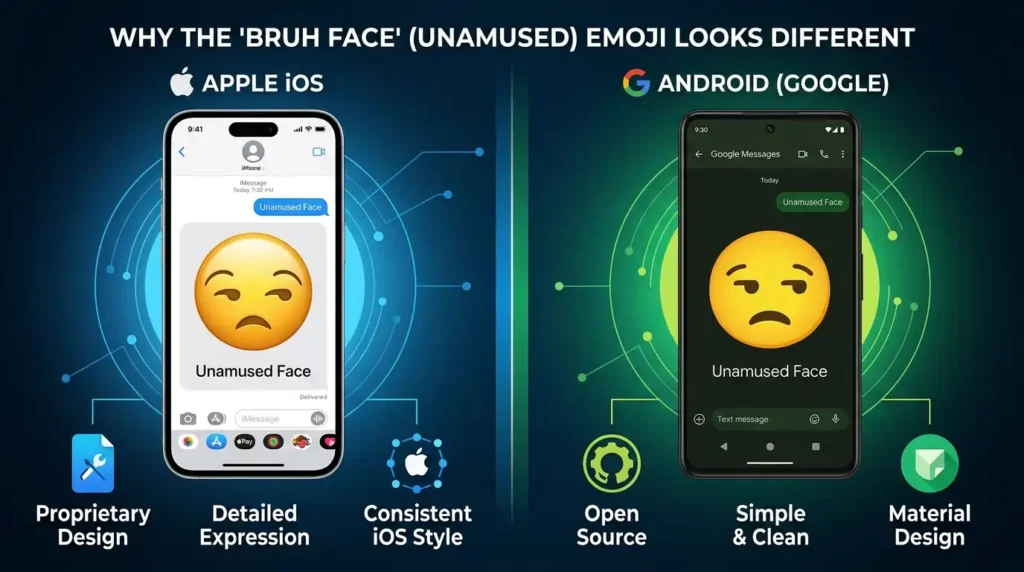
This does not mean one platform has the “correct” emoji and another has the wrong one. The character is still based on the same Unicode emoji. The artwork is simply interpreted through each platform’s visual design.
This difference can occasionally affect tone. A face emoji may look slightly happier, flatter, more serious, or more exaggerated across platforms. With 🗿, the overall stone-face concept is usually recognizable, which helps preserve its deadpan internet reaction.
For example, if someone sends 🗿 from an iPhone to an Android phone, the receiver is not receiving a completely different emoji. They are seeing the same underlying character rendered through their own system.
Understanding this is useful when an emoji appears slightly different from the version shown in an article, screenshot, or social media post.
Best Brush Face Emoji Combos, Copy & Paste
Romantic ❤️
1.👉 🗿❤️ , Use this for playful affection when someone says something ridiculous.
2.👉 ❤️🗿 , Use this for a funny “I love you, but seriously?” reaction.
3.👉 🥰🗿 , Use this when affection and playful disbelief appear together.
Cute 🥰
1.👉 🥰🗿 , Use this for a sweet reaction with a deadpan twist.
2.👉 🗿🥰 , Use this when someone does something silly but adorable.
3.👉 😐🥰 , Use this for a cute message that leaves you pretending to stay serious.
Flirty 😉
1.👉 😉🗿 , Use this for playful teasing with a straight-faced vibe.
2.👉 🗿😉 , Use this when you want to tease someone without writing much.
3.👉 😏🗿 , Use this for a confident, joking reaction.
Missing Someone
1.👉 🗿❤️ , Use this when you miss someone but want to keep the message playful.
2.👉 😑❤️ , Use this for affectionate frustration when someone is away.
3.👉 🗿🥰 , Use this for a cute “come back already” mood.
Good Night 🌙
1.👉 🗿🌙 , Use this for a funny, low-key good-night reaction.
2.👉 😑🌙 , Use this when you are tired and ready to disappear for the night.
3.👉 ❤️🌙 , Use this for a simple warm good-night message.
Trending Bruh Face Emoji in 2026 🗿
The brush reaction remains useful because it fits the style of short, reaction-based internet communication. The word “bruh” itself continues to function as a flexible reaction for disbelief, disappointment, humor, awkwardness, and absurd situations.
🗿 is commonly associated with this deadpan style, particularly in memes and casual social media conversations. Other expressions such as 😑, 🙄, and 😒 can communicate similar emotional territory, but their tones are slightly different. 🗿 is often more intentionally absurd, while 😑 feels more human and expressionless.
On TikTok and Instagram, short reactions can work especially well because comments often need to communicate a feeling quickly. On WhatsApp and Messenger, friends may use the same emoji as an inside joke. The meaning can shift depending on whether the conversation is playful, sarcastic, annoyed, or completely random.
| Emoji | Why trending | Who uses it | Platform |
| 🗿 | Deadpan and meme-style reaction | Meme and casual users | TikTok, Instagram |
| 😑 | Straight-faced response | Casual texters | WhatsApp, Facebook |
| 🙄 | Playful annoyance | Social media users | Instagram, TikTok |
| 😒 | Unimpressed reaction | Friends and casual texters | WhatsApp, Facebook |
The main trend is not about one emoji having one permanent meaning. Internet users continually adapt familiar symbols to fit jokes, memes, conversations, and community-specific language.
Bruh Face Emoji Meaning in Different Contexts
The meaning of 🗿 can change dramatically depending on who sends it and why.
Romantic conversations:
A partner might use 🗿 jokingly after you say something silly. For example, “You really think you can beat me at Mario Kart? 🗿” feels playful rather than genuinely cold.
Friendship:
This is probably where the brush reaction feels most natural. Friends can send 🗿 after an embarrassing mistake, ridiculous story, or questionable decision.
Family:
Use it carefully. Younger family members may understand the meme immediately, while someone unfamiliar with online slang may simply see a stone statue.
Professional or casual communication:
In a professional chat, 🗿 can easily look confusing or dismissive. It is usually safer to use clear words unless you already know the communication style of the group.
Texting:
A single 🗿 can work as a complete reaction. It can mean “bruh,” “seriously?”, “no way,” or “I have no words,” depending on the previous message.
Social media comments:
The emoji often works as a quick reaction to an unexpected, awkward, or funny post. A viewer can communicate a complete emotional response without writing a sentence.
Captions:
Adding 🗿 to a caption can make the tone intentionally dry. For example, “Made another excellent decision 🗿” suggests that the decision probably was not excellent at all.
The safest approach is to read the surrounding conversation first. The emoji itself gives you a starting point, but context supplies the actual meaning.
How to Copy and Paste Bruh Face Emoji
The easiest way to copy the brush face emoji is simply to select the character below:
🗿
On a computer, highlight 🗿, right-click, and choose Copy. Then paste it into WhatsApp Web, Instagram, Facebook, a comment, or another text field.
On a phone, press and hold the emoji, select it, and choose Copy. You can then paste it into a message, caption, comment, status, or bio.
Copy-paste bruh face emoji: 🗿
You can also save frequently used emoji combinations in your notes or use your phone’s emoji keyboard whenever you need a quick reaction.
FAQs
1. What is the most popular brush face emoji?
There is no official Unicode emoji called the “bruh face emoji.” In internet slang, 🗿 is one of the most commonly associated symbols with the brush reaction, especially when used as a deadpan or unimpressed response.
2. What does 🗿 mean when someone sends it?
It depends on the conversation. 🗿 can suggest “bruh,” disbelief, awkwardness, amusement, mild annoyance, or a deliberately emotionless reaction. It does not have one fixed meaning.
3. Why do emojis look different on iPhone vs Android?
Apple, Google, Samsung, and other platforms create their own artwork for Unicode emoji characters. The underlying character can remain the same even when its appearance differs between devices.
4. Are brush face emojis used differently in other countries?
Yes, interpretation can vary between online communities, languages, cultures, and age groups. Internet slang can also develop different meanings within particular communities, so context is more reliable than assuming one universal interpretation.
Conclusion
The brush face emoji is best understood as an internet-style reaction rather than an official emoji name. 🗿 can communicate disbelief, awkwardness, humor, or a perfectly timed “bruh” without saying much.
Use it where the tone is casual, understand your audience, and let the conversation provide the context. Sometimes, one stone-faced emoji really is enough. 🗿