5. One-Line Hook
One small smile can make a message feel friendly, warm, awkward, or even sarcastic.
6. Introduction
You receive a message that says, “Okay, sounds good 😊.” It looks friendly enough, but what if the sender simply writes, “Fine 🙂”? Suddenly, that little smile feels a bit different. The words haven’t changed much, yet the mood seems completely different.
That’s why people search for the emoji smile face meaning. These familiar yellow faces help us express happiness, friendliness, appreciation, and other feelings that can be difficult to communicate through plain text. However, not every smile communicates the same emotion. A cheerful grin can show excitement, while a simple closed-mouth smile might feel calm, polite, or slightly distant.
Whether you’re chatting on WhatsApp, replying to an Instagram comment, posting on TikTok, or sending a message to someone special, understanding the context makes a difference. 😊 The relationship between the sender and receiver, the wording, and the conversation itself can all change how a smile is understood.
Let’s explore the most useful smile emojis, their everyday meanings, and practical ways to use them naturally in 2026.
7. Standout Snippet
Sometimes a simple smile makes a message feel warmer, friendlier, and more human. 😊
8. What Does the Emoji Smile Face Mean?
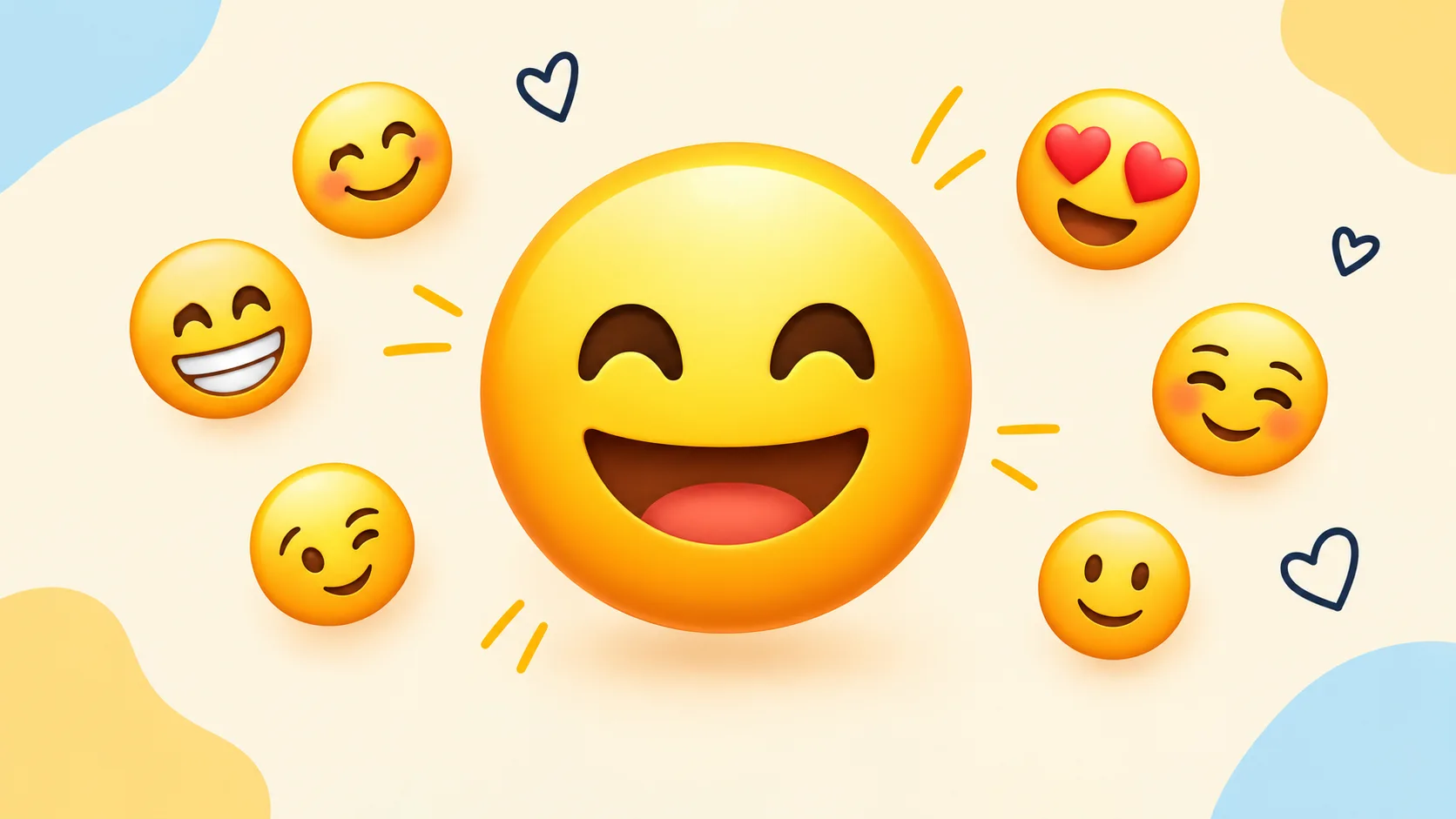
The emoji smile face represents a range of positive or socially friendly emotions, including happiness, kindness, appreciation, and goodwill. Its exact meaning depends on which smile you choose and what you say alongside it. 😊
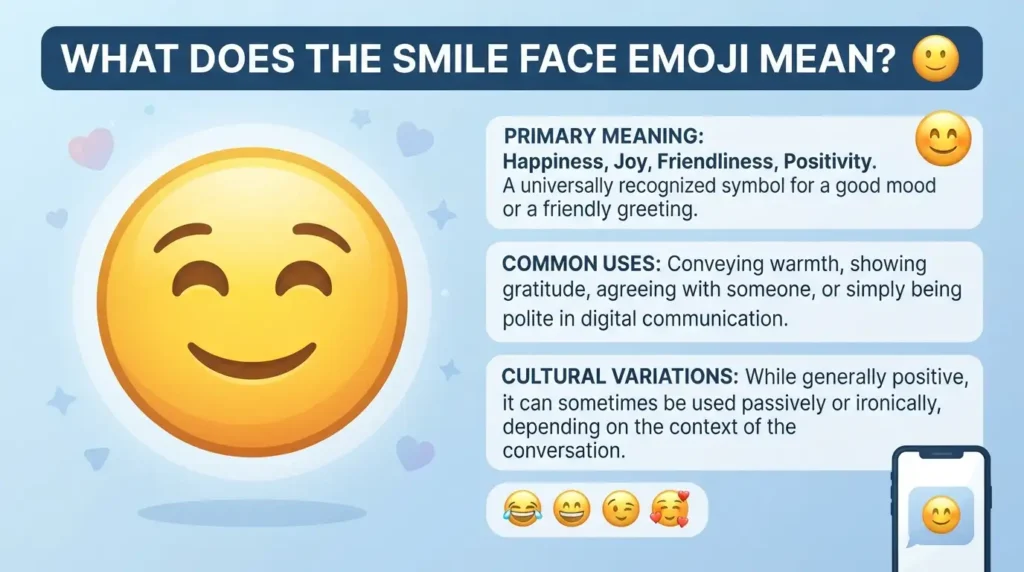
Here are six common smile emojis and how people often interpret them.
- 😀 Grinning Face: A broad, open smile that often expresses happiness, excitement, or a cheerful reaction. For example, “I passed my driving test 😀” sounds genuinely excited.
- 😃 Grinning Face With Big Eyes: An energetic smile that can communicate enthusiasm, surprise, or anticipation. It fits messages like “You’re coming tomorrow? 😃”
- 😄 Grinning Face With Smiling Eyes: A joyful expression that often feels relaxed and sincere. Use it when sharing a funny story or responding to good news.
- 😁 Beaming Face With Smiling Eyes: A wide grin that can suggest pride, excitement, playful embarrassment, or satisfaction. “I finally finished my project 😁” is a natural example.
- 😊 Smiling Face With Smiling Eyes: A gentle, warm expression often associated with gratitude, friendliness, affection, or appreciation. It works well in everyday conversations.
- 🙂 Slightly Smiling Face: A subtle smile that can communicate politeness, calmness, or quiet friendliness. Depending on the conversation, it may also seem reserved or ironic.
Meaning depends on context
Imagine a friend says, “Thanks for helping me 😊.” The emoji probably reinforces genuine appreciation. However, if someone replies, “Sure, whatever 🙂” during an argument, the same general family of expressions may feel distant or sarcastic.
Your relationship with the sender matters, too. A close friend might use a smile playfully, while a teacher or colleague might use it to keep a conversation pleasant. Cultural expectations and individual texting habits can also influence interpretation.
Social media adds another layer. A smile beneath a celebration post usually signals support, while a smile following an unexpected confession could communicate surprise or uncertainty.
The best approach is to read the whole message instead of judging a single symbol. Emoji meanings are flexible, and a smile alone cannot reliably reveal someone’s private feelings or intentions.
Emoji Smile Face Meaning Table
| Emoji | Core meaning | Possible misread | Best used when |
| 😀 | Happiness, excitement | Excessive enthusiasm | Sharing good news |
| 😃 | Energetic joy | Surprise or disbelief | Expressing anticipation |
| 😄 | Genuine amusement | Overexcitement | Friendly conversations |
| 😁 | Pride, playful joy | Nervousness | Celebrating a win |
| 😊 | Warmth, gratitude | Flirting or shyness | Saying thank you |
| 🙂 | Politeness, calmness | Sarcasm or distance | Keeping a reply pleasant |
| ☺️ | Gentle happiness | Old-fashioned sweetness | A soft, friendly message |
| 😆 | Strong amusement | Laughing at someone | Reacting to a funny moment |
| 🙃 | Playfulness, irony | Frustration | Light sarcasm |
| 😉 | Playfulness, hinting | Flirting | A teasing or knowing remark |
9. Exactly 10 Emoji Cards
😀
Grinning Face
Meaning: Happiness, excitement, and a cheerful mood.
Example 1: I finally finished my exams 😀
Example 2: Today’s going to be a great day 😀
😃
Grinning Face With Big Eyes
Meaning: Enthusiasm, excitement, and positive surprise.
Example 1: You’re visiting this weekend? 😃
Example 2: I can’t wait for the concert 😃
😄
Grinning Face With Smiling Eyes
Meaning: Joy, amusement, and relaxed friendliness.
Example 1: That story still makes me laugh 😄
Example 2: It was lovely catching up with you 😄
😁
Beaming Face With Smiling Eyes
Meaning: Pride, delight, and playful excitement.
Example 1: I got the highest score in class 😁
Example 2: Guess who finally learned to cook? 😁
😊
Smiling Face With Smiling Eyes
Meaning: Warmth, appreciation, and gentle happiness.
Example 1: Thank you for remembering my birthday 😊
Example 2: Your message made my day 😊
🙂
Slightly Smiling Face
Meaning: Subtle friendliness, politeness, or calmness.
Example 1: No worries, we can try again tomorrow 🙂
Example 2: Alright, I’ll see you there 🙂
☺️
Smiling Face
Meaning: Gentle contentment and simple friendliness.
Example 1: Wishing you a peaceful afternoon ☺️
Example 2: That was such a thoughtful gift ☺️
😆
Grinning Squinting Face
Meaning: Strong amusement and laughter.
Example 1: You really said that out loud? 😆
Example 2: Our group chat is too funny 😆
🙃
Upside-Down Face
Meaning: Playfulness, irony, or a humorous response to a situation.
Example 1: I studied everything except the chapter on the test 🙃
Example 2: Another Monday, exactly what I needed 🙃
😉
Winking Face
Meaning: Teasing, a playful hint, or shared understanding.
Example 1: I might have a surprise for you 😉
Example 2: You know exactly what I mean 😉
10. How to Use the Emoji Smile Face the Right Way
A smile emoji works best when it supports the words you’re already using. The goal isn’t to decorate every message. It’s to make your intended tone easier to understand.
WhatsApp 💬
In personal chats, 😊 can soften a thank-you, while 😄 can make a funny story feel more cheerful. Family conversations often benefit from gentle smiles because they add warmth without requiring a long explanation.
For example:
- Personal chat: “I had a lovely time talking to you 😊”
- Family group: “Dinner was delicious, thank you 😄”
- Friendship: “We’re definitely doing that again 😁”
- Emotional message: “I’m glad you’re feeling better 😊”
- Status update: “Choosing happiness in the little things 🙂”
Consider how the recipient normally texts. Someone who rarely uses emojis may interpret a sudden string of smiles differently from a friend who adds them to almost every message.
Instagram 📸
On Instagram, smile emojis can make captions, comments, bios, and Reels descriptions feel more approachable. A cheerful 😃 may fit a celebration photo, while 😊 can complement a gratitude post.
Caption example: “Collecting little moments worth remembering 😊”
Comment example: “This made my whole day 😄”
A smile can encourage a friendly tone, but it doesn’t guarantee more engagement. Relevant words, good content, and genuine interaction matter more than simply adding emojis.
TikTok
TikTok comments often use smiles to react to funny clips, relatable situations, and unexpected moments. 😆 can communicate laughter, while 🙃 can suggest that something is funny in an awkward or ironic way.
For example, “Why is this literally my life 🙃” suits a relatable mishap. “The ending got me 😆” is a natural reaction to a funny video.
Pay attention to trends and the creator’s tone. A playful smile may suit a comedy clip but feel dismissive beneath a serious personal story.
Facebook posts, comments, and Messenger chats use smile emojis in much the same way as other platforms. A smile can make congratulations warmer, show appreciation beneath a family photo, or soften a casual reply.
For example: “Congratulations on your new home 😊”
The key is sincerity. Use a smile because it fits your message, not because you feel every post needs one.
Dos and Don’ts
Do:
- Match your smile to the mood.
- Consider your relationship with the recipient.
- Read the surrounding conversation.
- Check how the emoji appears on your device.
- Use 😊 to add warmth when it genuinely fits.
Don’t:
- Assume every smile is romantic.
- Use 🙃 during a sensitive conversation without considering its tone.
- Fill a serious message with cheerful faces.
- Assume everyone interprets 🙂 the same way.
- Use multiple smiles when one communicates your point clearly.
11. Why Do Emoji Smile Faces Look Different on iPhone and Android?
Have you ever sent a smile emoji from your phone and noticed that it looks slightly different on a friend’s device? That’s normal. Emoji designs can vary across operating systems, applications, and device versions.
Emojis are encoded using the Unicode Standard, which assigns characters a consistent identity so compatible devices can recognize them. However, Unicode doesn’t require every company to draw each emoji identically.
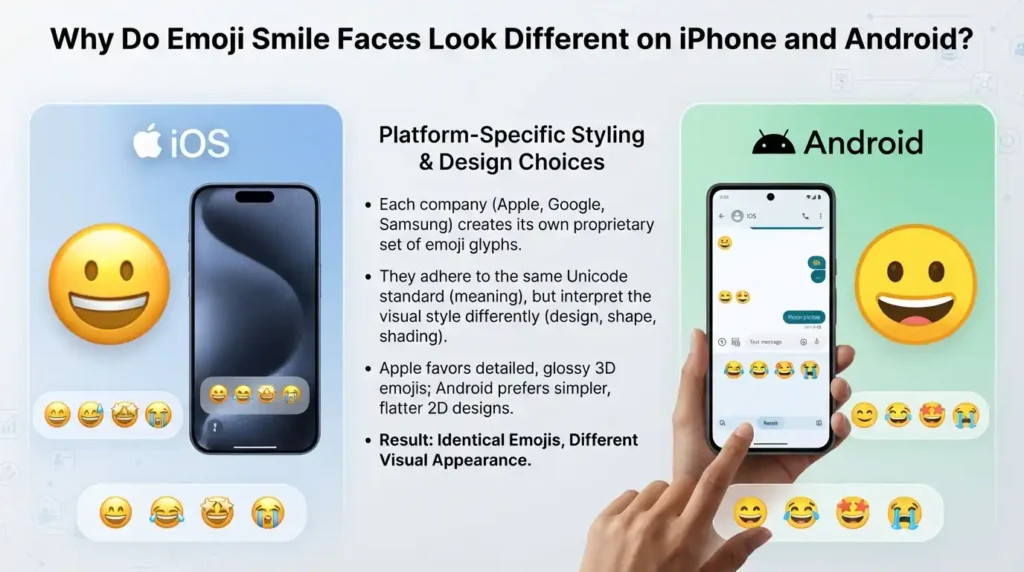
Companies such as Apple, Google, Samsung, and Microsoft can create their own visual artwork for the same character. As a result, the smile on an iPhone might look slightly different from the version displayed on an Android phone or Windows computer.
Here are some differences you might notice:
- Shape: The outline of a face, eyes, or mouth may vary.
- Color: The yellow shade and shading can differ.
- Facial expression: A grin might look wider or more subtle on one platform.
- Size: An emoji may appear larger or smaller depending on the app and font.
- Style: Some designs look flatter, while others use gradients and more detailed shading.
For example, 😀 represents a grinning face across compatible platforms, even when the artwork isn’t identical. The character’s intended identity stays the same, but its visual appearance can change.
Your operating system and app version can also affect which emoji designs are available. Older software may not support newer emoji characters, sometimes displaying a blank box or another placeholder instead.
Does a different design change the meaning? Not necessarily. Most people recognize familiar smile faces across devices, although subtle visual differences may influence how an expression feels.
If you’re creating social media content, it’s useful to remember that your audience may see a slightly different version of the emoji you selected. Choose a face that communicates your message clearly, and let your words provide additional context when the tone matters.
12. Best Emoji Smile Face Combos: Copy and Paste
Smile emoji combinations can make a message feel more expressive without requiring extra sentences. The combinations below use the established smile emoji family, so you can copy them into chats, captions, and comments.
Romantic ❤️
These combinations can add a gentle, playful tone to an affectionate message. Whether they feel romantic depends on the relationship and the accompanying words.
- 😊😉: Send this with a sweet, teasing message.
- 😁😊: Use this when sharing your happiness with someone special.
- 😉🙂: Add this to a playful message between people who understand each other’s humor.
Cute 🥰
These options suit friendly conversations, wholesome posts, and cheerful everyday moments.
- 😊☺️: Use this to express gentle appreciation.
- 😄😊: Add this to a message about a happy memory.
- 😀😃: Use this when you’re excited to share good news.
Flirty 😉
A smile can suggest a playful hint, but it doesn’t automatically mean romantic interest. These combinations work best when the conversation already feels comfortable.
- 😉😁: Send this with a teasing comment.
- 😊😉: Add this to a lighthearted compliment.
- 🙃😉: Use this for a joking remark with a little irony.
Missing Someone 💭
When you miss someone, a familiar smile can keep your message warm rather than overly serious.
- 😊🙂: Send this with a simple message checking in.
- ☺️😊: Use this when remembering a pleasant conversation.
- 😄😊: Add this when sharing a happy memory together.
Good Night 🌙
These gentle combinations can finish a friendly conversation on a positive note.
- 😊☺️: Use this to end a calm, pleasant chat.
- 😄🙂: Send this after a cheerful conversation.
- 🙂😊: Add this to a warm good-night message.
You can pair any of these combinations with words that explain your intention. For instance, “Hope you sleep well 😊 ☺ ️” makes the context clearer than sending two emojis on their own.
13. Trending Emoji Smile Faces in 2026
Smile emojis remain useful because they are easy to recognize, quick to type, and flexible enough for many kinds of online conversations. However, there is no single smile face that is automatically the most popular on every platform or for every audience.
The following four expressions serve different purposes in everyday digital communication. These are practical usage observations, not a verified ranking of the most-used emojis in 2026.
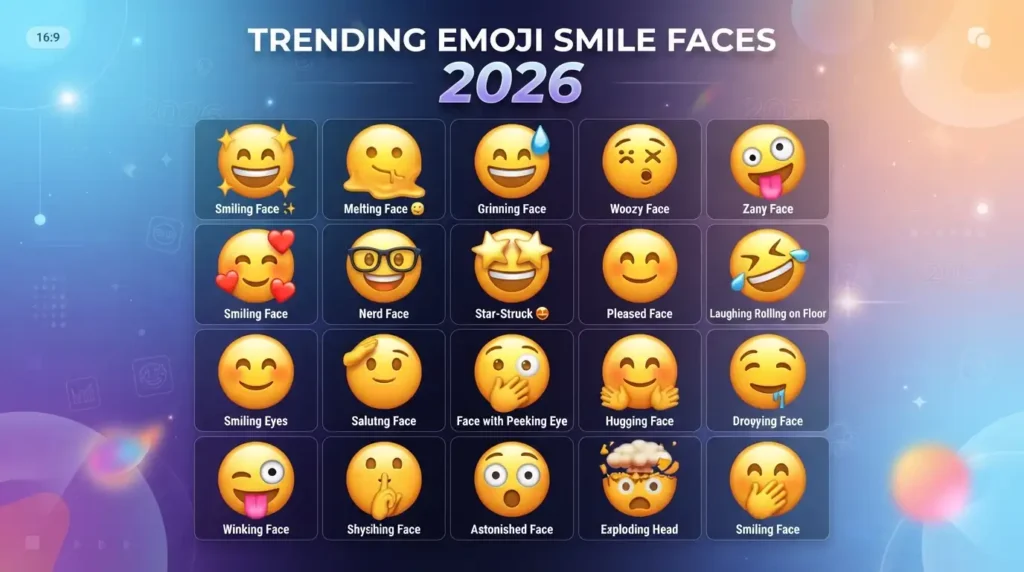
- 😊 Warm and appreciative: This face suits thank-you messages, friendly replies, positive captions, and conversations where a little warmth feels natural.
- 🙂 Simple and understated: Its restrained expression makes it suitable for brief acknowledgments. In some conversations, it may also be interpreted as dry humor or mild frustration.
- 😆 Funny and expressive: This face works well in comedy comments, group chats, and reactions to amusing videos.
- 🙃 Playfully ironic: People may use it when describing an awkward situation, an unexpected inconvenience, or something that went wrong in a funny way.
Creators often choose emojis that match the mood of their content. A cheerful lifestyle Reel might use 😊, while a relatable comedy video could attract reactions featuring 😆 or 🙃. On WhatsApp, the same faces can appear in ordinary conversations without any connection to a social media trend.
The audience matters, too. A smile that feels natural among close friends may look unusual in a professional message. Similarly, a familiar emoji can take on a different tone when used sarcastically in a comment.
Emoji Smile Face Usage Table
| Emoji | Why it’s commonly used | Who uses it | Platform |
| 😊 | Adds warmth and appreciation | Friends, families, creators | WhatsApp, Instagram |
| 🙂 | Keeps replies understated | Everyday texters, colleagues | Messenger, WhatsApp |
| 😆 | Shows amusement | Friends, comedy fans | TikTok, Instagram |
| 🙃 | Communicates irony or awkward humor | Casual texters, commenters | TikTok, messaging apps |
These examples describe common communication uses rather than measured popularity. Without reliable, current platform-specific data, it’s better not to label any of these faces the official top-trending smile emoji.
Emoji habits continue to evolve as communities develop new ways to express humor, friendliness, and emotion online.
14. Emoji Smile Face Meaning in Different Contexts
The same smile can feel completely different depending on who’s sending it, what the conversation is about, and the words around it. Rather than assigning a fixed meaning to every face, consider how people use it in different situations.
Romantic conversations
In an affectionate conversation, 😊 may make a compliment feel warmer, while 😉 can suggest playful teasing. For example, “I really enjoyed spending time with you 😊” sounds friendly and affectionate.
However, one emoji isn’t enough to confirm that someone has romantic feelings. Look at the broader conversation rather than drawing conclusions from a single symbol.
Friendship
Friends often use 😀, 😄, and 😆 to share excitement, celebrate achievements, and react to jokes.
For example, “We need another day like that 😄” expresses happiness about spending time together. A familiar smile can also make a short reply feel less abrupt.
Family conversations
With family members, a gentle face such as 😊 or ☺️ can add warmth to everyday messages.
For example, “Made it home safely, thank you 😊” communicates reassurance and appreciation without needing a long explanation.
Professional and casual communication
In casual workplace chats, a smile can soften a request or make a thank-you feel friendly. For example, “Thanks for sending the updated file 😊” is approachable in an informal team conversation.
In formal situations, consider whether an emoji suits the recipient and setting. A plain, respectful sentence may be more appropriate when discussing a serious issue.
Texting and social media comments
Text messages lack many of the facial expressions people use in face-to-face conversations. A smile can help clarify whether a short reply is meant to sound friendly.
On social media, the same emoji may function as a quick reaction, a joke, or a way to acknowledge someone’s post. For example, “That ending 😆” signals amusement, while “Another one of those days 🙃” can convey ironic frustration.
Captions
For Instagram captions and TikTok descriptions, smiling faces can reinforce a cheerful or humorous mood. Use one that matches the actual content instead of choosing an emoji simply because it looks attractive.
Ultimately, the best interpretation comes from the complete message, the relationship, and the surrounding circumstances.
15. How to Copy and Paste Emoji Smile Face
Want to use a smile emoji in a message or social media post? You can copy one directly from this line.
Copy and paste smile emojis
Choose a face that fits your message.
😀 😃 😄 😁 😊 🙂 ☺️ 😆 🙃 😉
Copy all smile emojis
Here’s how to use them:
- Select the emoji or emojis you want to use.
- Copy your selection using your device’s copy command.
- Open WhatsApp, Instagram, TikTok, Facebook, or another application.
- Paste the emoji into your message, comment, caption, or status.
- Read the complete message before sending it to make sure the tone feels right.
You can also use your phone’s built-in emoji keyboard to find smile faces without leaving the app. On a computer, the available emoji picker depends on your operating system.
If an emoji looks different after you paste it, remember that the receiving device or application may display its own version of the character.
16. Frequently Asked Questions
1. What is the most popular emoji smile face?
There isn’t one universally most popular smile face across every platform and audience. 😊 is a familiar choice for warmth and appreciation, while 😀 and 😄 are often used for cheerful reactions.
The best option depends on the feeling you want to communicate.
2. What does 😊 mean when someone sends it?
It commonly communicates friendliness, warmth, appreciation, or happiness. Depending on the message, it might also feel affectionate or slightly shy.
Its meaning doesn’t depend on the sender’s gender. Consider the words, your relationship, and the conversation before interpreting it.
3. Why do emojis look different on iPhone vs Android?
Unicode gives compatible emoji characters standardized identities, but companies such as Apple and Google create their own artwork. Consequently, the same smile can have slightly different shapes, colors, and expressions on different devices.
The underlying character can still be the same.
4. Are emoji smile faces used differently in other countries?
Emoji interpretation can vary across cultures, languages, age groups, and online communities. A particular smile might feel more formal, playful, or familiar to one group than another.
However, these differences aren’t universal rules. When communicating across cultures, pay attention to context and ask for clarification if a message is genuinely unclear.
17. Conclusion
The emoji smile face is a simple way to add warmth, happiness, humor, and personality to digital conversations. 😊
Choose a smile that matches your words, consider the person receiving your message, and remember that context matters more than any single symbol.
Whether you’re texting friends or writing social media captions, a thoughtful emoji can help your message feel more natural. 😄