One-line Hook
One tiny grimace can say, “Oh no, that got awkward!” 😬
Introduction
You get a message that makes you uncomfortable, someone tells you an unexpectedly bad story, or your friend sends a photo that is definitely not going according to plan. Instead of typing a long reaction, you might simply send the yikes emoji face 😬. It instantly adds a feeling of discomfort, nervousness, awkwardness, or concern without making the conversation too serious.
The yikes emoji face usually refers to 😬, officially known as the Grimacing Face emoji. People use it when something feels awkward, embarrassing, tense, unpleasant, or surprisingly close to going wrong. In texting, its meaning can shift depending on the words around it and your relationship with the other person. A friend may use 😬 jokingly, while someone in a serious conversation may use it to show genuine discomfort.
You will see this emoji in WhatsApp chats, Instagram comments, TikTok reactions, Facebook posts, captions, and everyday messages. Understanding the context helps you know whether the sender means “awkward,” “uh-oh,” “that hurts,” or simply “yikes.”
Sometimes 😬 says “I have no idea what to say, but I definitely have a reaction.”
What Does the Yikes Emoji Face Mean? 😬
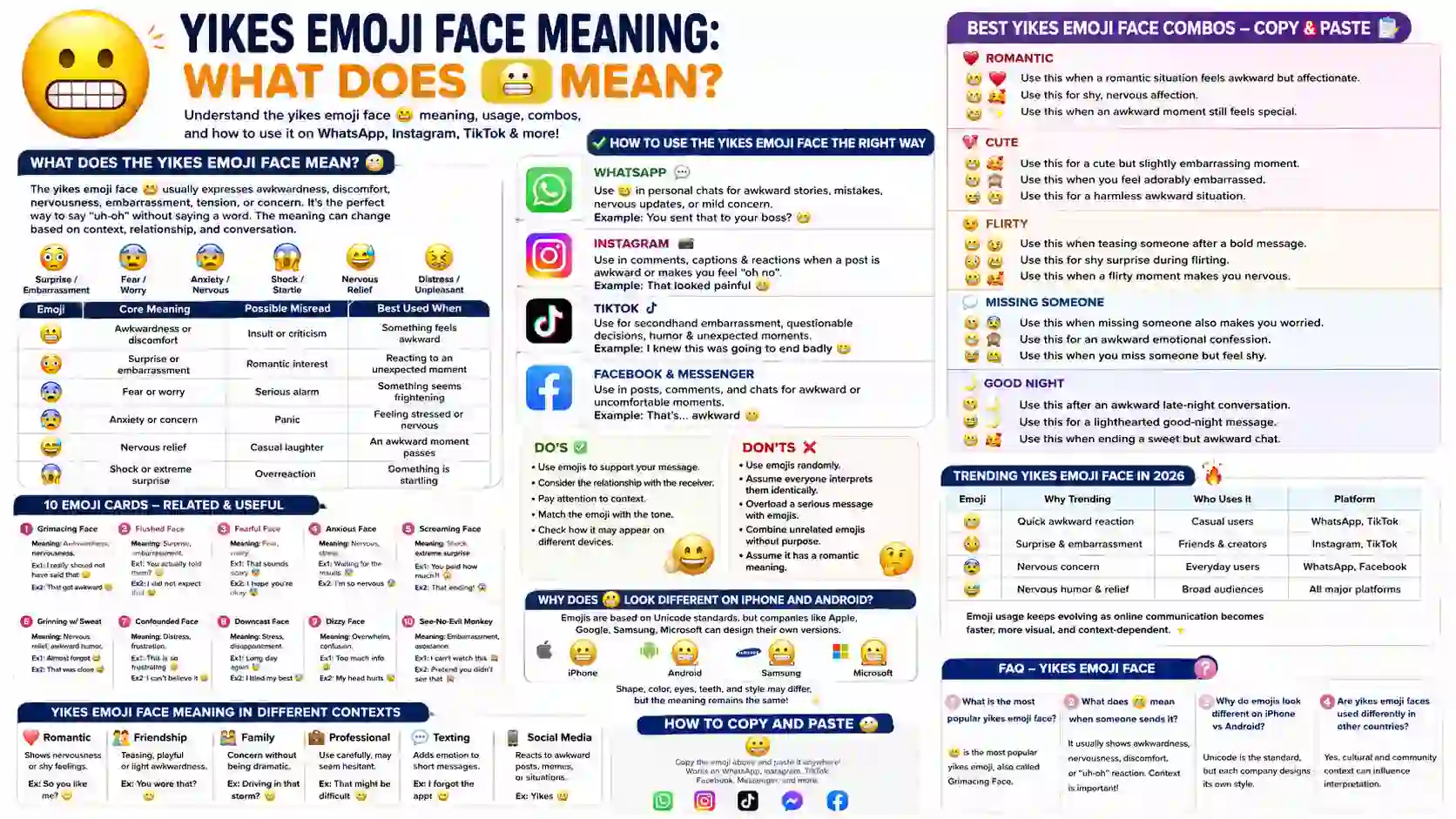
The yikes emoji face 😬 usually expresses an uncomfortable reaction. Its tightly closed, toothy expression can suggest nervousness, awkwardness, embarrassment, tension, or concern. That is why people often describe it as the “yikes face” even though its official Unicode name is Grimacing Face. It does not have one universal interpretation, so the surrounding message matters.
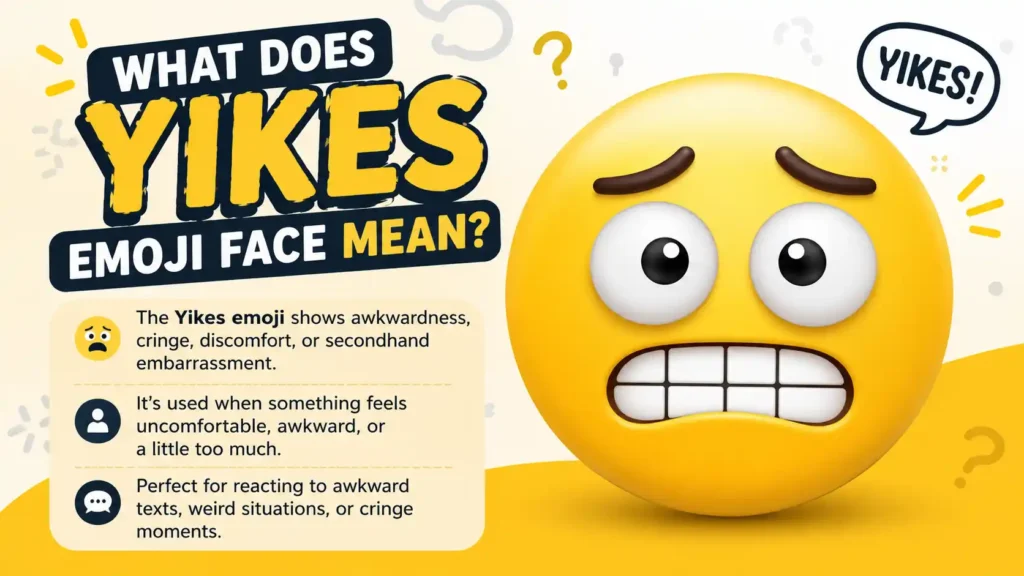
In texting, 😬 can mean “That sounds awkward,” “Oops,” “Uh-oh,” or “I would not want to be in that situation.” For example, if a friend says, “I accidentally replied to the wrong group chat 😬,” the emoji reinforces embarrassment. If they say, “The exam results are tomorrow 😬,” it can communicate nervous anticipation.
On social media, the yikes emoji face can be playful. Someone may comment 😬 on an awkward video, an uncomfortable joke, or a situation that looks like it could go badly. Other related reactions include 😳 for surprise or embarrassment, 😨 for fear, 😰 for anxious concern, 😱 for shock, and 😅 for nervous relief.
The relationship between sender and receiver also matters. A close friend may use 😬 humorously, while a stranger could use it to signal genuine discomfort. Even the same emoji can feel sympathetic, teasing, nervous, or critical depending on the conversation.
| Emoji | Core meaning | Possible misread | Best used when |
| 😬 | Awkwardness or discomfort | Insult or criticism | Something feels awkward |
| 😳 | Surprise or embarrassment | Romantic interest | Reacting to an unexpected moment |
| 😨 | Fear or worry | Serious alarm | Something seems frightening |
| 😰 | Anxiety or concern | Panic | Feeling stressed |
| 😱 | Shock or extreme fear | Overreaction | Something is startling |
| 😅 | Nervous relief | Casual laughter | An awkward moment passes |
| 😖 | Distress or frustration | Anger | Something feels unpleasant |
| 😓 | Stress or disappointment | Sadness | A situation is difficult |
| 😵 | Overwhelm or confusion | Physical illness | Something is too much |
| 🙈 | Embarrassment or avoidance | Shyness | You do not want to look |
😬 Grimacing Face
Meaning: Awkwardness, discomfort, nervousness, or a difficult reaction.
Example 1: I really should not have said that 😬
Example 2: That conversation got awkward fast 😬
😳 Flushed Face
Meaning: Surprise, embarrassment, or sudden self-consciousness.
Example 1: You actually told them? 😳
Example 2: I did not expect that message 😳
😨 Fearful Face
Meaning: Fear, worry, or concern about something unpleasant.
Example 1: That sounds seriously scary 😨
Example 2: I hope everything goes okay 😨
😰 Anxious Face with Sweat
Meaning: Nervousness, stress, worry, or uneasy anticipation.
Example 1: Waiting for the results like 😰
Example 2: I have to present tomorrow 😰
😱 Face Screaming in Fear
Meaning: Extreme surprise, shock, fear, or dramatic reaction.
Example 1: You paid how much for that? 😱
Example 2: That ending was wild 😱
😅 Grinning Face with Sweat
Meaning: Nervousness mixed with relief, embarrassment, or humor.
Example 1: Almost forgot my appointment 😅
Example 2: That was close 😅
😖 Confounded Face
Meaning: Frustration, distress, or an unpleasant emotional reaction.
Example 1: This situation is becoming difficult 😖
Example 2: I cannot believe I have to redo it 😖
😓 Downcast Face with Sweat
Meaning: Stress, disappointment, or feeling worn down.
Example 1: It has been a long day 😓
Example 2: I tried my best, honestly 😓
😵 Dizzy Face
Meaning: Feeling overwhelmed, confused, or mentally stunned.
Example 1: That explanation completely confused me 😵
Example 2: So many things happened today 😵
🙈 See-No-Evil Monkey
Meaning: Embarrassment, playful avoidance, or not wanting to witness something.
Example 1: I cannot watch this 🙈
Example 2: Please pretend you did not see that 🙈
How to Use the Yikes Emoji Face the Right Way
The yikes emoji face works best when it supports the emotional tone of your message. On WhatsApp, you can use 😬 in personal chats when a friend tells you something awkward, embarrassing, or worrying. For example, “You sent that to your boss? 😬” sounds concerned but can still feel playful. In family conversations, it can show mild concern without making the situation sound dramatic.
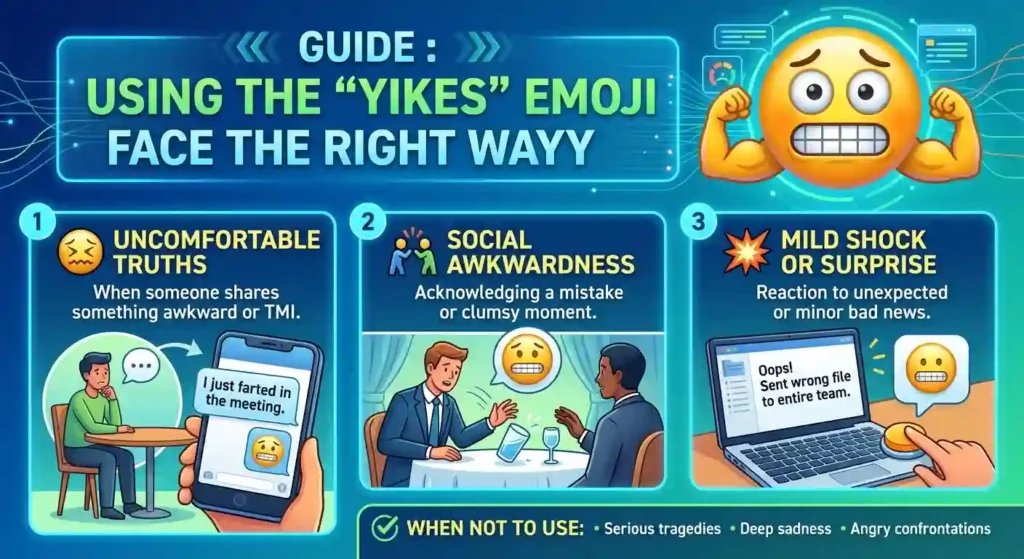
On Instagram, 😬 often appears in comments, captions, and reactions. A person might comment “That looked painful 😬” under a video or use it in a caption about an awkward experience. It can also work in casual bios or posts when someone wants to show a slightly uncomfortable sense of humor.
TikTok conversations give 😬 another playful role. People use it for awkward moments, questionable decisions, uncomfortable jokes, unexpected outcomes, and situations where they feel secondhand embarrassment. A comment such as “I knew this was going to end badly 😬” can sound humorous rather than genuinely worried.
Facebook and Messenger usage is similar. You might use 😬 after a friend shares an embarrassing story, posts an awkward update, or describes a difficult situation. The emoji can soften a reaction because it communicates discomfort without requiring a blunt statement.
The key is matching the emoji to the relationship. With close friends, 😬 can be teasing. With family, it may show concern. In a professional or unfamiliar conversation, it is better to use it carefully because the recipient may read it as criticism. The same emoji can sound supportive in one message and judgmental in another.
WhatsApp 💬
Use 😬 for awkward stories, nervous updates, uncomfortable situations, and mild concern.
Instagram 📸
Use it in comments, captions, and reactions when a post creates an awkward or uneasy feeling.
TikTok 🎵
Use it for secondhand embarrassment, questionable decisions, humor, and unexpected moments.
Use it naturally in posts, comments, and Messenger conversations where the tone is casual.
Dos and Don’ts
Do:
- Use 😬 when the situation genuinely feels awkward or uncomfortable.
- Consider your relationship with the receiver.
- Let the surrounding words explain your intention.
- Match the emoji to the emotional tone.
- Remember that device designs can make expressions look slightly different.
Don’t:
- Use 😬 randomly in a serious message.
- Assume everyone interprets it in exactly the same way.
- Fill an important conversation with nervous-looking emojis.
- Combine it with unrelated symbols without a clear reason.
- Assume 😬 automatically means romance, flirting, or rejection.
Why Does the Yikes Emoji Face Look Different on iPhone and Android?
The yikes emoji face can look slightly different depending on the device, operating system, app, or platform being used. The reason is that Unicode defines the underlying emoji character, while companies create their own visual artwork for displaying that character. Apple, Google, Samsung, Microsoft, and other platforms can therefore give the same emoji a somewhat different appearance.
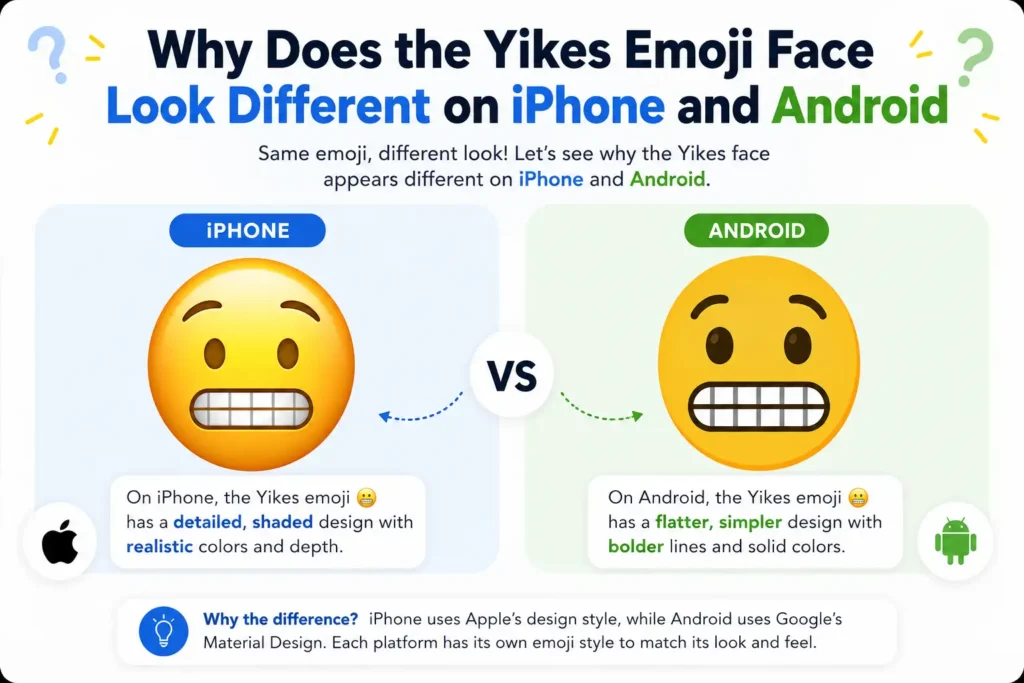
The basic identity remains the same. However, the shape of the face, teeth, eyes, color, proportions, shading, and overall style may vary. One version of 😬 may appear wider or more expressive, while another may have a slightly different facial design.
This matters because people sometimes think a different-looking emoji is a completely different symbol. Usually, it is simply another platform’s artwork for the same Unicode emoji.
App design can also affect how large an emoji appears. A character may look bigger in one messaging app and smaller in another. Updates can occasionally change the artwork as companies refresh their emoji designs.
The important point is that there is not one platform that owns the “correct” appearance. Unicode provides the standard character, while individual platforms decide how to draw it.
For example, if you send 😬 from an iPhone to an Android phone, the recipient may see a slightly different grimacing face. The intended character is still the same, even if the visual details are not identical.
So, if someone’s yikes emoji looks a little different from yours, that is normal. Focus on the surrounding message rather than judging the meaning from tiny visual differences.
Best Yikes Emoji Face Combos: Copy & Paste
Romantic ❤️
1.👉 😬❤️: Use this when a romantic situation feels awkward but affectionate.
2.👉 😬🥰: Use this for shy, nervous affection.
3.👉 😬✨: Use this when an awkward moment still feels special.
Cute 🥰
1.👉 😬🥰: Use this for a cute but slightly embarrassing moment.
2.👉 😬🙈: Use this when you feel adorably embarrassed.
3.👉 😅😬: Use this for a harmless awkward situation.
Flirty 😉
1.👉 😬😉: Use this when teasing someone after a bold message.
2.👉 😳😬: Use this for shy surprise during flirting.
3.👉 😬🥰: Use this when a flirty moment makes you nervous.
Missing Someone 💭
1.👉 😬😰: Use this when missing someone also makes you feel worried.
2.👉 😬🙈: Use this for an awkward emotional confession.
3.👉 😅😬: Use this when you miss someone but feel shy about saying it.
Good Night 🌙
1.👉 😬🌙: Use this after an awkward late-night conversation.
2.👉 😅🌙: Use this for a lighthearted good-night message after a funny moment.
3.👉 😬🥰: Use this when ending a sweet but slightly awkward chat.
Trending Yikes Emoji Face in 2026
In 2026, 😬 continues to fit naturally into casual digital communication because it expresses a reaction that words sometimes struggle to capture. It is especially useful when someone wants to acknowledge awkwardness without sounding overly serious.
On WhatsApp, people can use 😬 after personal stories, mistakes, unexpected news, or nervous updates. On Instagram, the emoji works well in comments where a creator’s post creates secondhand embarrassment or a playful “oh no” reaction. TikTok users can also use it when reacting to awkward situations, unexpected outcomes, or humorous clips.
Related expressions such as 😳, 😰, and 😅 can shift the tone. 😳 can make a reaction feel more surprised or embarrassed, while 😰 emphasizes worry. 😅 can make the same uncomfortable situation feel lighter and more relieved.
| Emoji | Why trending | Who uses it | Platform |
| 😬 | Quick awkward reaction | Casual users | WhatsApp, TikTok |
| 😳 | Surprise and embarrassment | Friends and creators | Instagram, TikTok |
| 😰 | Nervous concern | Everyday users | WhatsApp, Facebook |
| 😅 | Nervous humor and relief | Broad audiences | All major platforms |
These emojis are commonly seen because they are easy to understand visually and work well in short-form communication. Creators can use them in captions or comments, while everyday users can add them to messages without needing a long explanation.
Emoji usage continues to evolve as online conversations become more visual, fast, and context-dependent. A symbol that once seemed straightforward can take on new shades of meaning through memes, communities, relationships, and repeated online use.
Yikes Emoji Face Meaning in Different Contexts
The meaning of 😬 changes naturally with the situation. In a romantic conversation, it may show nervousness after someone makes a bold confession. For example, “So you really like me? 😬” can sound shy or uncertain rather than negative. The recipient needs to read the words around it before deciding what the sender means.
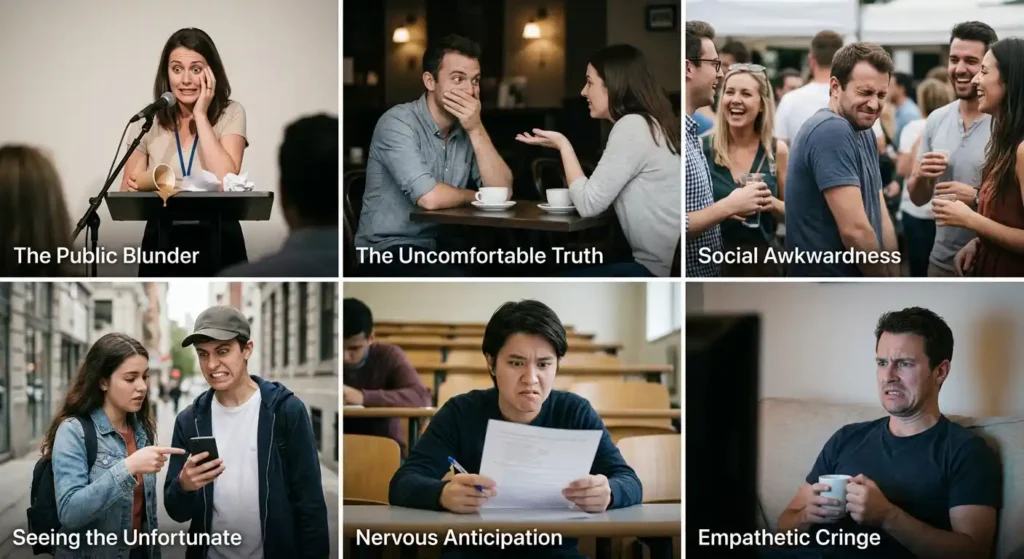
Among friends, 😬 is often much more playful. Someone might say, “You actually wore that to the party? 😬” as a teasing reaction. In this context, the emoji can signal friendly discomfort rather than serious disapproval.
In family conversations, it can communicate concern. A message such as “Mom is driving through that storm 😬” may show nervousness without being overly dramatic. The emotional weight comes from the situation itself.
In professional or casual communication, context becomes especially important. In a workplace chat, “That might be difficult 😬” could be interpreted as hesitation, concern, or criticism. Because professional conversations have less personal context, the emoji may be less predictable.
In texting, short messages can make 😬 particularly useful because it adds emotional information. “I forgot the appointment 😬” communicates more than the words alone. It suggests embarrassment or concern.
Social media comments can be even more flexible. A person may use 😬 to react to a funny mistake, uncomfortable scene, controversial statement, or unexpected outcome. Captions can use it to create self-deprecating humor.
The safest approach is simple: read the complete message, consider your relationship with the sender, and look at the situation before assigning a precise meaning.
How to Copy and Paste the Yikes Emoji Face
Copying the yikes emoji face is simple:
😬
Select the emoji above, copy it, and paste it wherever you want. You can use it in WhatsApp messages, Instagram captions, TikTok comments, Facebook posts, Messenger chats, or other apps that support Unicode emojis.
On a phone, you can also open the emoji keyboard and search for the grimacing face if your keyboard provides an emoji search feature. On a computer, your operating system may offer an emoji picker as well.
The important thing is that 😬 is a standard Unicode emoji character, so you can usually copy and paste it across many platforms. Its visual appearance may change depending on the device, but the underlying character remains the same.
FAQs
1. What is the most popular yikes emoji face?
The emoji most commonly associated with “yikes” is 😬, officially called Grimacing Face. It is frequently used for awkwardness, nervousness, discomfort, and “uh-oh” reactions.
2. What does 😬 mean when someone sends it?
It usually signals an uncomfortable, awkward, nervous, or uneasy reaction. The exact meaning depends on the message, relationship, and situation rather than gender stereotypes.
3. Why do emojis look different on iPhone vs Android?
Unicode identifies the emoji character, while companies such as Apple and Google create their own visual designs. That is why the same emoji can have different facial details or styling.
4. Are yikes emoji faces used differently in other countries?
Yes, interpretation can vary with cultural and online community context. However, there is no single worldwide alternative meaning, so the surrounding conversation remains important.
Conclusion
The yikes emoji face 😬 is a handy way to communicate awkwardness, nervousness, discomfort, or a quick “uh-oh” reaction.
Its meaning can change depending on the words, relationship, platform, and situation.
Use it thoughtfully, especially when the conversation is serious or unfamiliar.
When the moment feels awkward, sometimes 😬 says it perfectly.