5. One-Line Hook
One tiny symbol can make a message feel loving, funny, friendly, or completely different.
6. Introduction
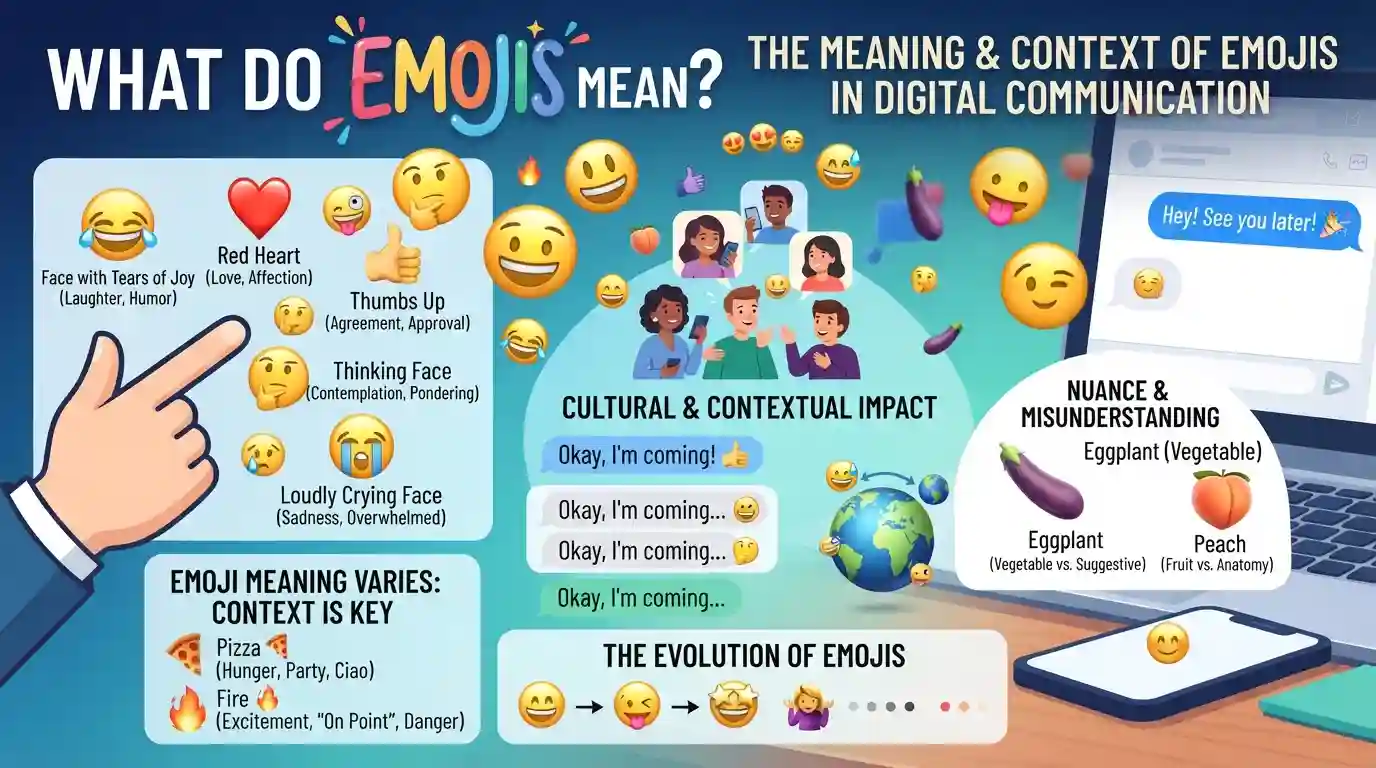
You receive a message that says “Okay 😊,” and it feels friendly. Then someone replies with just “Okay 👍,” and you start wondering whether they are being polite, annoyed, or simply busy. This is why so many people search for what emoji mean and how to understand them in everyday conversations.
Emojis add emotion to words, help people express reactions, and make online chats feel more personal. A heart can show affection, a smiling face can soften a reply, and a sparkle can add excitement to a caption. However, the same symbol can communicate different feelings depending on the conversation, the relationship between two people, and the way it is used.
Whether you use WhatsApp, Instagram, TikTok, Facebook, or regular text messages, understanding emoji meanings can help you communicate more clearly. You do not need to memorize every symbol. You simply need to understand the common meanings and pay attention to context. Let’s explore how emojis work, what popular symbols can suggest, and how to use them naturally.
Sometimes, one small emoji can add the feeling that your words are missing. ✨
7. Standout Snippet
Understanding an emoji starts with the symbol, but its real message often comes from the conversation around it. ❤️
8. What Does Emoji Mean?
When people search for what emoji mean, they usually want to understand the feelings, reactions, or ideas behind the small pictures they see in messages. Emojis are digital symbols that can express emotions, describe situations, add humor, or make a sentence feel warmer.
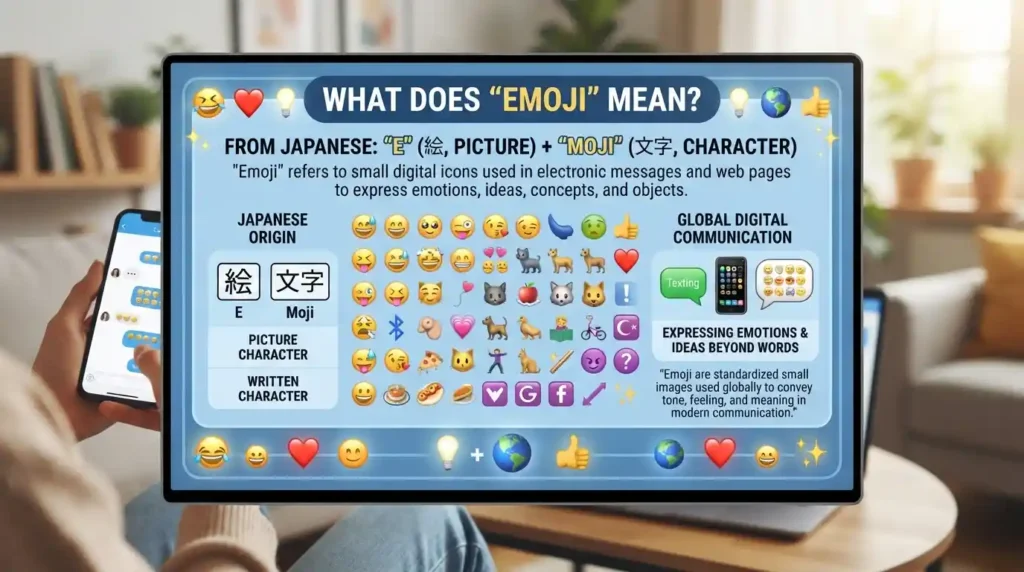
For example, ❤️ often suggests love or affection, 😊 can make a reply feel friendly, and 😂 commonly expresses laughter. ✨ can add excitement or highlight something special, while 💕 may communicate tenderness or appreciation. These are common interpretations, not rules that everyone follows.
Common emoji meanings
Here are six familiar symbols and the ways people often use them.
- ❤️ Red Heart: Often expresses love, care, appreciation, or strong emotional support. A friend might send it after receiving helpful advice.
- 😊 Smiling Face: Can communicate friendliness, happiness, gratitude, or a gentle tone. It may make a short reply feel less direct.
- 😂 Face with Tears of Joy: Usually shows that something is very funny. People also use it to react to playful mistakes or relatable situations.
- ✨ Sparkles: Can highlight excitement, beauty, achievement, or an aesthetic detail. It frequently appears in captions and celebratory messages.
- 💕 Two Hearts: Often conveys affection, warmth, closeness, or a sweet reaction. Its tone depends on the relationship between the people chatting.
- 🥰 Smiling Face with Hearts: Commonly suggests feeling loved, touched, grateful, or especially fond of someone.
How context changes the meaning
Imagine a friend sends you “You remembered! ❤️” The heart probably adds warmth and appreciation. If a romantic partner sends the same symbol, it might carry a more intimate feeling.
Now consider “That was hilarious 😂.” Here, the emoji supports a clear joke. But after an embarrassing mistake, it could communicate nervous laughter or an attempt to keep things light.
Social media adds another layer. A creator might use ✨ to make a caption look polished, while someone else uses it to celebrate a personal achievement. Neither use is automatically more correct.
Your relationship with the sender matters, too. A familiar emoji between close friends may have an inside meaning that other people would not recognize. Cultural habits, community trends, and personal preferences also influence interpretation.
The best approach is to read the complete message instead of judging an emoji alone. Look at the words, the previous conversation, and the sender’s usual style. If the meaning matters and remains unclear, asking a friendly question is more reliable than guessing.
Meaning table
| Emoji | Core meaning | Possible misread | Best used when |
| ❤️ | Love and care | Always romantic | Showing affection or support |
| 😊 | Warmth and happiness | Forced politeness | Friendly replies |
| 😂 | Laughter | Mocking someone | Reacting to humor |
| ✨ | Excitement or emphasis | Decorative only | Highlighting something special |
| 💕 | Affection and closeness | Romantic interest only | Sweet messages |
| 🥰 | Feeling loved or touched | Flirting in every case | Expressing fondness |
| 😍 | Admiration or excitement | Serious romantic love | Praising something appealing |
| 😉 | Playfulness or a hint | Dishonesty | Light teasing |
| 😭 | Strong emotion or dramatic laughter | Actual sadness every time | Emotional or exaggerated reactions |
| 💀 | Figurative shock or laughter | Literal danger | Reacting to something hilarious or unbelievable |
9. Exactly 10 Emoji Cards
1. ❤️ Red Heart
Meaning: Love, care, affection, and emotional connection.
Example 1: Thank you for always being there for me ❤️
Example 2: Sending you lots of love today ❤️
2. 😊 Smiling Face
Meaning: Friendliness, happiness, and a gentle tone.
Example 1: It was lovely talking to you today 😊
Example 2: Thanks for helping me with everything 😊
3. 😂 Face with Tears of Joy
Meaning: Strong laughter, amusement, and funny reactions.
Example 1: I cannot believe you actually said that 😂
Example 2: This video gets funnier every time I watch it 😂
4. ✨ Sparkles
Meaning: Excitement, beauty, special moments, and emphasis.
Example 1: Finally finished my room makeover ✨
Example 2: A little progress every day ✨
5. 💕 Two Hearts
Meaning: Sweet affection, warmth, and emotional closeness.
Example 1: Your message made my day 💕
Example 2: Love spending time with you 💕
6. 🥰 Smiling Face with Hearts
Meaning: Feeling loved, touched, appreciated, or fond of someone.
Example 1: You remembered my favorite thing 🥰
Example 2: That was such a thoughtful surprise 🥰
7. 😍 Smiling Face with Heart-Eyes
Meaning: Admiration, excitement, or strong appreciation.
Example 1: This outfit looks amazing 😍
Example 2: Just look at that beautiful view 😍
8. 😉 Winking Face
Meaning: Playfulness, teasing, or a lighthearted hint.
Example 1: I might have a little surprise for you 😉
Example 2: You know exactly what I mean 😉
9. 😭 Loudly Crying Face
Meaning: Sadness, emotional overwhelm, or exaggerated reactions.
Example 1: I finally finished that emotional movie 😭
Example 2: Why is this scene so funny 😭
10. 💀 Skull
Meaning: Figurative shock, disbelief, or intense laughter in casual online slang.
Example 1: That unexpected ending absolutely got me 💀
Example 2: I cannot stop laughing at that comment 💀
10. How to Use What Emoji Mean the Right Way
Knowing common emoji meanings is useful, but using them well is just as important. The goal is to make your message easier to understand, not to decorate every sentence. Think about what you want to communicate and choose a symbol that supports that feeling.
WhatsApp 💬
WhatsApp conversations are often personal, so emojis can help show warmth when you cannot express your tone through voice.
- Personal chats: Add ❤️ to a loving message or 😊 to a friendly reply.
- Family conversations: Use 💕 to show appreciation or 🥰 when a family member shares something sweet.
- Friendships: React to funny stories with 😂 or 💀 when something is unbelievably funny.
- Emotional messages: A heart can offer support, while 🥰 may express that someone’s words touched you.
- Status updates: Add ✨ to a milestone, a favorite photo, or a positive update.
For example, “Thank you for checking on me 😊” sounds warmer than a plain thank-you. Still, use the style that feels natural for your relationship.
Instagram 📸
Instagram emojis often add personality to visual content. In captions, ✨ can emphasize a special moment, while ❤️ may show appreciation for a meaningful experience.
- Captions: “Little moments, big memories ✨”
- Comments: “This looks amazing 😍”
- Bios: A heart or sparkle can give a profile a personal touch.
- Aesthetic posts: Use a small number of matching symbols rather than filling every line.
- Reels: 😂 or 😭 can communicate a funny or dramatic reaction.
- Engagement: A relevant emoji can make a comment feel more expressive, but it does not guarantee more likes or views.
TikTok 🎵
TikTok comments frequently use emojis for quick reactions, humor, and exaggerated emotions. The skull 💀 can signal that a video is unbelievably funny, while 😂 is useful for more direct laughter.
A comment such as “The ending 😭” might express dramatic amusement rather than sadness. Meanwhile, 😍 can show admiration for a performance, outfit, or creative result.
Trends can also give symbols temporary meanings within a particular community. Before copying a trend, check how other users are using the emoji in that specific context.
On Facebook, emojis appear in posts, comments, Messenger conversations, and reactions. A heart can express sympathy or appreciation, 😊 can soften a friendly response, and ✨ can highlight a personal achievement.
For example, “Congratulations on your new home! ❤️” feels supportive without needing a long message.
The key across all four platforms is consistency. Choose emojis that match your words, consider your audience, and remember that a symbol that feels funny among friends might not fit a serious conversation.
Do’s and Don’ts
Do:
- Match the emoji to your message.
- Consider your relationship with the receiver.
- Read the conversation before interpreting a symbol.
- Use ❤️, 😊, or 🥰 when they fit the feeling you want to express.
- Check how a symbol looks on your device.
Don’t:
- Assume every person interprets an emoji identically.
- Add 😂 to a message about someone’s serious problem.
- Use 💕 when you do not want to suggest affection.
- Fill professional messages with unnecessary symbols.
- Treat an emoji as proof of someone’s romantic feelings.
11. Why Do What Emoji Mean Look Different on iPhone and Android?
Have you ever sent an emoji to a friend and noticed that it looked slightly different on their phone? This happens because the same emoji can have different visual designs across devices, operating systems, and applications.
Emojis are standardized through Unicode, a system that assigns recognized characters and codes to digital text. Unicode helps devices identify the same underlying emoji, even when their artwork differs.
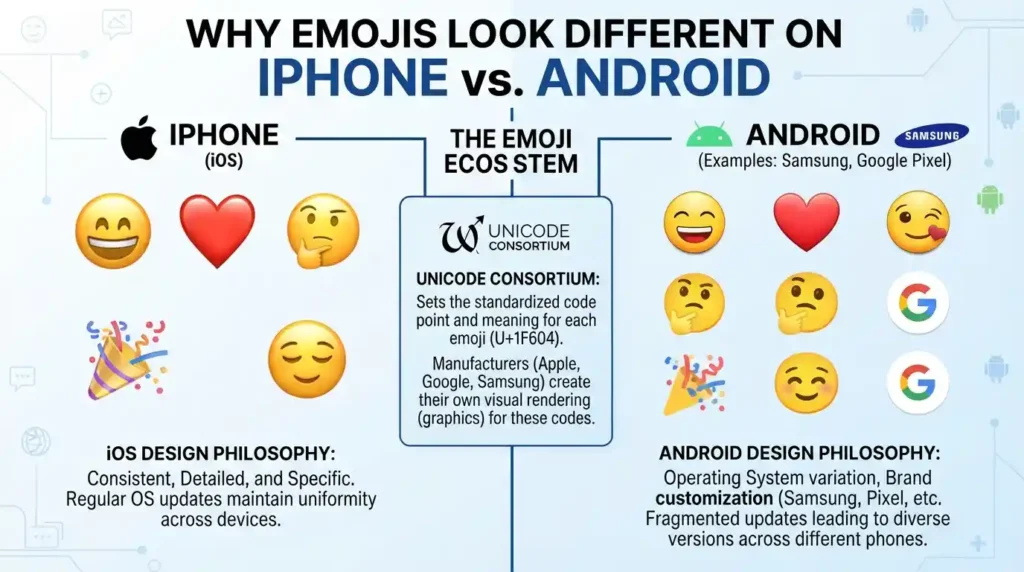
However, Unicode does not require every company to draw each emoji identically. Apple, Google, Samsung, Microsoft, and other platform providers create their own designs.
What can look different?
- Shape: A heart, face, or other symbol may have slightly different proportions.
- Color: Shades can vary between operating systems.
- Facial expression: Small differences in the eyes or mouth may change how expressive a face appears.
- Size and style: Some designs look bold and rounded, while others appear more detailed or flatter.
- App support: An older device or application may display an unsupported character differently, or show a placeholder instead.
Imagine sending 😊 from an iPhone to an Android phone. The artwork may not match exactly, but both devices generally recognize the same underlying emoji character when they support it.
These differences can occasionally affect interpretation. A facial expression that looks gentle on one screen might appear more intense on another. That does not mean one platform is automatically correct and the other is wrong.
Updates also matter. New emoji characters and revised designs may become available at different times depending on the device and operating system. If a recent emoji does not display correctly, updating your software may help, provided the device supports it.
The practical lesson is simple: focus on the message and its context rather than tiny visual differences. If you are sending an important message, use clear words alongside the emoji so the intended feeling is easier to understand.
12. Best What Emoji Mean Combos: Copy and Paste
Emoji combinations let you express a fuller feeling with just a few symbols. The following examples use the selected group of hearts, faces, sparkles, and expressive reactions.
Romantic ❤️
- 👉 ❤️💕: Use this in a loving message to a partner.
- 👉 🥰❤️: Add this when someone makes you feel appreciated.
- 👉 😍💕: Send this to express admiration and affection.
Cute 🥰
- 👉 😊💕: Use this for a sweet message to someone close.
- 👉 🥰✨: Add this to celebrate a lovely moment.
- 👉 ❤️✨: Use this to highlight something meaningful.
Flirty 😉
- 👉 😉❤️: Send this when playful affection fits your relationship.
- 👉 😉🥰: Use this for a teasing but sweet reply.
- 👉 😍😉: Add this to a lighthearted compliment.
Missing Someone 💭
- 👉 ❤️🥰: Use this to send someone a warm reminder that you care.
- 👉 💕😊: Add this to a friendly message after time apart.
- 👉 ❤️✨: Use this to make a thoughtful message feel special.
Good Night 🌙
- 👉 🥰❤️: Send this with a loving bedtime message.
- 👉 😊💕: Use this for a gentle good-night greeting.
- 👉 ✨❤️: Add this to a warm, thoughtful sign-off.
These combinations are suggestions, not fixed expressions. You can copy them as they are or use a single symbol when that better matches your message. The words around a combination still matter most.
13. Trending What Emoji Mean in 2026
Emoji habits continue to change as people develop new ways to communicate online. A symbol can keep its familiar meaning while gaining an additional use in a particular community, meme, or social media trend.
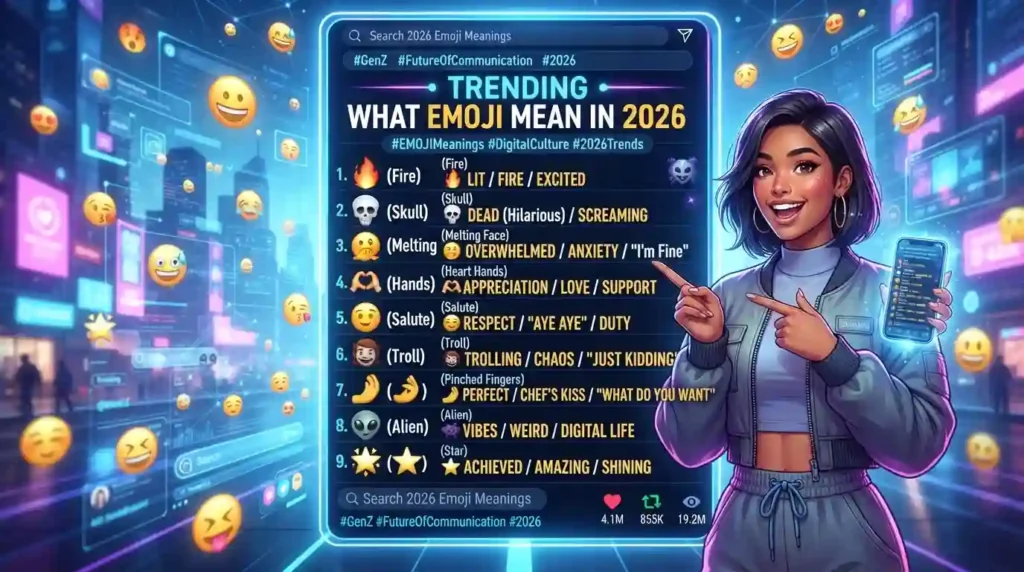
In 2026, familiar symbols such as ❤️, 😂, ✨, and 💀 remain useful examples of how emojis can communicate feelings quickly. Their presence in everyday messages does not mean they hold an official ranking or that everyone uses them in the same way.
Emojis commonly seen in online conversations
❤️ Red Heart is frequently used in personal messages, supportive comments, and affectionate captions. Creators may add it to posts about relationships, family, or meaningful milestones. In other conversations, it can simply show appreciation.
😂 Face with Tears of Joy is a familiar reaction to jokes, funny videos, and relatable situations. It works in comments, group chats, and conversations where people want to show that something made them laugh.
✨ Sparkles often appears in Instagram captions, profile descriptions, celebratory posts, and messages about personal achievements. It can add emphasis or a polished aesthetic without changing the basic meaning of the words.
💀 Skull is common in casual internet slang, where it can express disbelief or intense laughter. Its figurative use is particularly dependent on the conversation, so it may confuse people who interpret the symbol literally.
| Emoji | Why trending | Who uses it | Platform |
| ❤️ | Affection and supportive reactions | Friends, families, couples, creators | WhatsApp, Instagram, Facebook |
| 😂 | Quick reactions to humor | Casual users and content viewers | TikTok, Instagram, messaging |
| ✨ | Aesthetic emphasis and celebration | Creators and everyday users | Instagram, TikTok, Facebook |
| 💀 | Exaggerated reactions and online humor | Users participating in casual internet conversations | TikTok, Instagram, group chats |
These are examples of common communication patterns, not a measured ranking of the most popular emojis in 2026. Trends can vary by community, age group, region, and platform.
Creators may use emojis to reinforce a caption, while everyday users often choose them because they feel familiar and quick to type. Some communities also develop inside jokes that give an emoji a more specific meaning than it has elsewhere.
Emoji usage continues to evolve as people adapt familiar symbols to new conversations, trends, and personal styles.
14. What Emoji Mean in Different Contexts
An emoji rarely tells the whole story on its own. The same symbol can feel affectionate, friendly, funny, or even sarcastic depending on the words surrounding it. Understanding these differences helps you avoid misunderstandings in digital conversations.
Romantic conversations
In a romantic conversation, ❤️ or 🥰 may communicate affection, appreciation, or emotional closeness. A message such as “I had a lovely time with you 🥰” sounds warm and personal.
However, a heart does not automatically prove romantic interest. Some people use hearts with friends and family just as naturally as they do with partners.
Friendships
Among friends, 😂 and 💀 can express laughter, disbelief, or a reaction to an inside joke. A friend might reply “You actually did that 💀” after hearing a surprising story.
The meaning depends on the friendship. If teasing is common between two people, the reaction may feel playful. In a sensitive conversation, the same response could seem dismissive.
Family conversations
Family members often use ❤️, 💕, and 😊 to show care and appreciation. A short message such as “Made it home safely 😊” can reassure someone without requiring a long explanation.
Family members may also have their own habits. One person might use hearts in almost every message, while another prefers plain text.
Professional and casual communication
In a casual workplace chat, 😊 can make a friendly reply feel less abrupt. For example, “Thanks for sending the update 😊” may sound warm and approachable.
In formal emails or sensitive work discussions, however, emojis may not always fit. Consider the recipient, workplace culture, and seriousness of the subject before using them.
Texting and social media comments
In texting, emojis often add emotional clues to short replies. “That sounds good 😊” can feel more welcoming than the same words without a symbol.
On social media, 😍 might show admiration for a photo, while ✨ can highlight an achievement or an attractive visual detail. A creator may also use a symbol for style rather than a deep emotional message.
Captions
Captions often use emojis to establish a mood. A personal milestone might include ✨, while a heartfelt family photo might feature ❤️.
The important distinction is between common meaning and personal meaning. Familiar symbols provide useful clues, but they cannot reveal someone’s exact thoughts. When a message is unclear, consider the surrounding words and ask rather than assuming.
15. How to Copy and Paste What Emoji Mean
You do not need a special application to copy and paste most emojis. You can use the symbols directly in your messages, comments, captions, and profile descriptions.
Copy-paste emojis
Copy your favorite emoji
Select a symbol or copy it using the button.
❤️Copy
😊Copy
😂Copy
✨Copy
💕Copy
🥰Copy
😍Copy
😉Copy
😭Copy
💀Copy
Copy all 10 emojis
How to use them
- Select the emoji you want and copy it.
- Open WhatsApp, Instagram, TikTok, Facebook, or your messaging application.
- Tap the message, caption, comment, or bio field.
- Paste the emoji where it fits naturally.
- Read the complete message before sending it.
You can also open the emoji keyboard on your phone or computer and choose a symbol directly.
If an emoji appears as a blank box or an unfamiliar symbol, your device or application may not support that character. Updating the software can sometimes resolve the issue.
16. Frequently Asked Questions
1. What does the most popular emoji mean?
There is no single emoji that is universally the most popular in every country, app, or community. Hearts, smiling faces, and laughter reactions are familiar choices in everyday digital conversations.
The best emoji depends on what you want to express.
2. What does an emoji mean when someone sends it?
Its meaning depends on the symbol, the message, your relationship, and the conversation. A heart might show friendship, gratitude, or romantic affection, while a smile may simply make a reply feel friendly.
Consider the context instead of assuming the sender has a particular intention.
3. Why do emojis look different on iPhone vs Android?
Unicode standardizes emoji characters, but Apple, Google, Samsung, and other companies create their own artwork. This means the same character can have different colors, shapes, or facial details across devices.
The underlying character is generally the same when both devices support it.
4. What do emoji mean used differently in other countries?
Yes, emoji interpretation can vary between cultures, languages, and online communities. A symbol may have a familiar meaning in one group but a different association in another.
Personal habits matter, too. Avoid assuming that everyone in a country uses an emoji identically.
17. Conclusion
Understanding what emoji mean can help you express yourself more clearly in messages, captions, and comments. ❤️
Pay attention to the words, the relationship, and the situation instead of relying on a symbol alone.
Choose emojis that feel natural, and remember that clear communication matters more than using the perfect combination. 😊