5. One-line Hook
That tiny drop of sweat can turn an awkward moment into a joke instantly. 😅
6. Introduction
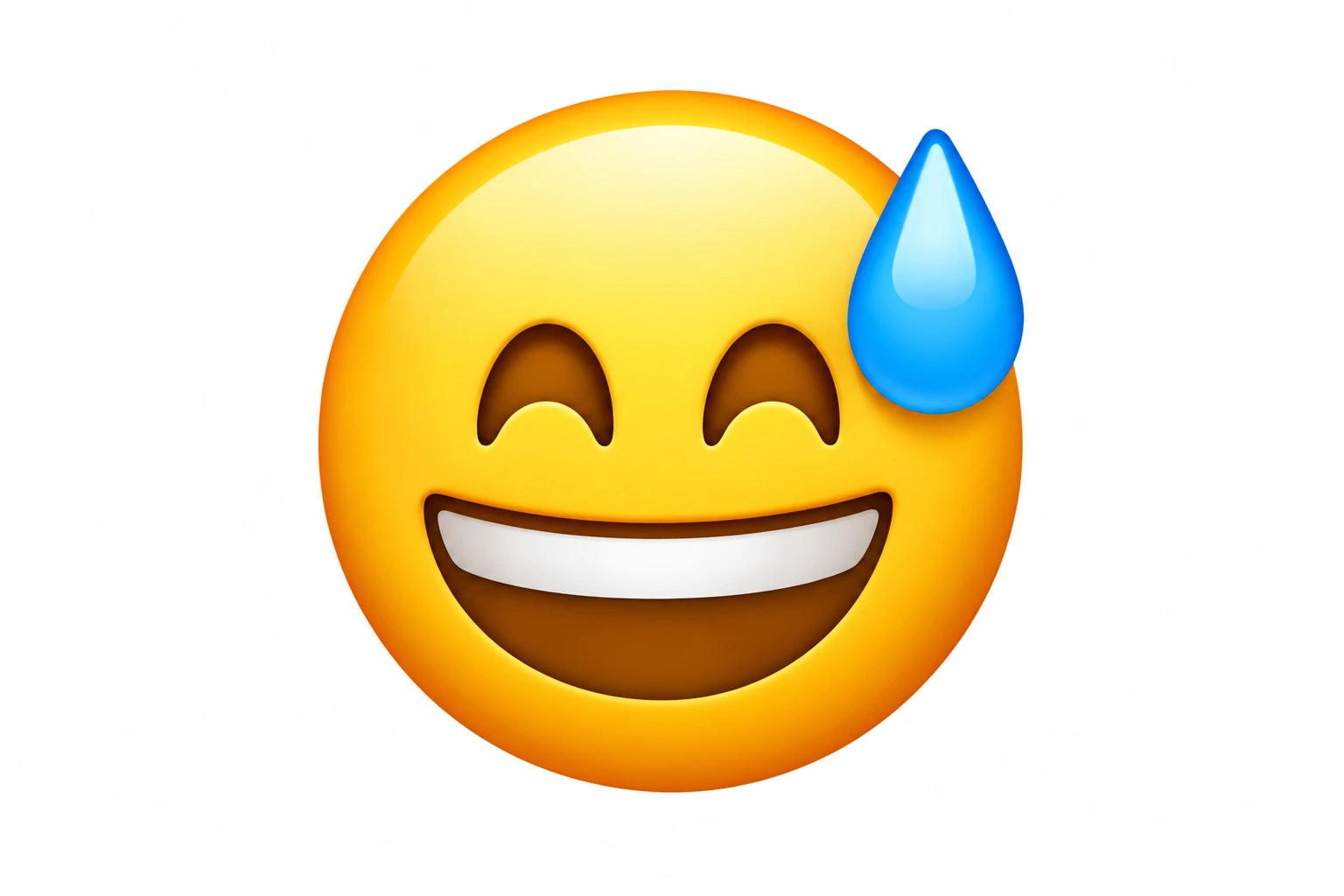
You send a message that is technically funny, slightly awkward, or way too close to the truth, then add 😅 and suddenly the whole tone feels different. That is exactly why the sweating emoji meme has become such a recognizable way to react online. The emoji is officially called Grinning Face with Sweat, and its combination of a big grin and a single sweat drop can suggest nervous laughter, embarrassment, awkwardness, relief, or a humorous close call.
In memes, chats, captions, and comments, 😅 often works like a visual version of saying, “Well, that was close,” “I probably should not have said that,” or “I am laughing because I am slightly uncomfortable.” 😂 can make something feel openly hilarious, while 😅 often adds a little tension or self-consciousness. Context matters too. A friend may use it playfully, while someone else may use it to soften an uncomfortable message. 💬
Whether you saw the sweating emoji meme on WhatsApp, Instagram, TikTok, Facebook, or a group chat, understanding that extra layer of nervous humor makes it much easier to interpret.
7. Standout Italicized Snippet
The 😅 emoji is basically a smile, a sweat drop, and a whole lot of “I hope this goes well.”
8. What Does Sweating Emoji Meme Mean?
The sweating emoji meme usually refers to 😅, officially known as Grinning Face with Sweat. Unicode lists 😅 with keywords connected to smiling, nervousness, stress, and sweat, while common emoji references describe it as useful for nervous laughter, mild embarrassment, awkwardness, discomfort, and relief after a close call.
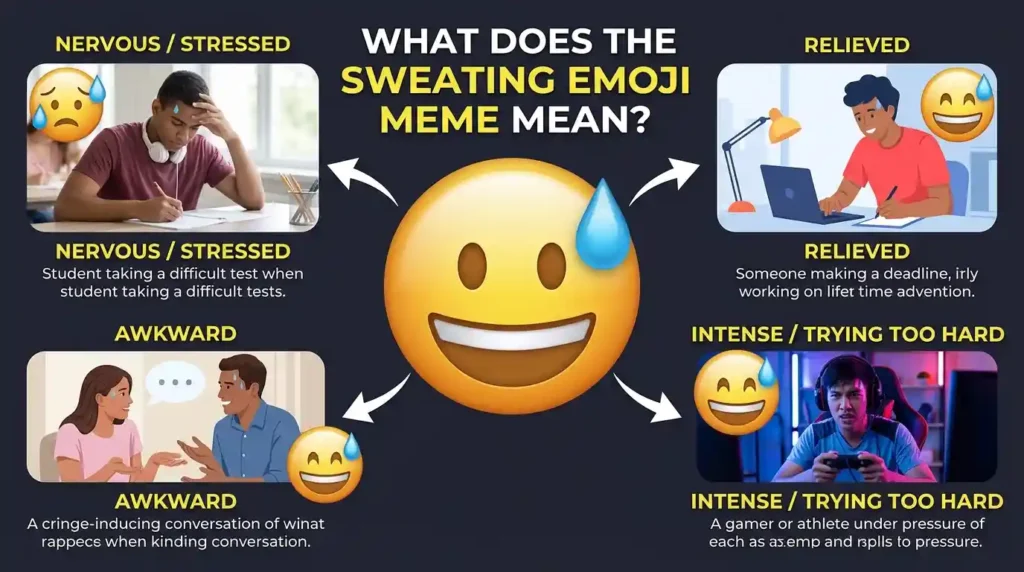
In texting, 😅 can mean, “That was awkward,” “I am nervous,” “I cannot believe I said that,” or “Thankfully, everything worked out.” For example, saying “I almost sent that message to my boss 😅” creates a completely different feeling from simply writing “I almost sent that message to my boss.” The sweat drop signals that the situation was uncomfortable, while the grin keeps it light.
On social media, the emoji often becomes funnier when paired with a relatable meme. Someone might post a picture about checking their bank account after shopping and add 😅. The message is not necessarily that the person is genuinely distressed. Instead, the emoji creates a humorous “I know I made a questionable decision” feeling.
It can also express relief. Imagine someone writing, “I thought I deleted the entire presentation, but it was still in my downloads 😅.” Here, the emoji communicates a nervous laugh after escaping a bad situation.
The relationship between sender and receiver matters. A close friend may use 😅 to tease you, while a stranger could use it to soften criticism. In a romantic conversation, it can make an embarrassing confession feel less intense, but it does not automatically make the message romantic.
Related emojis can shift the tone. 😂 and 🤣 push the message toward obvious laughter. 😬 can make it more uncomfortable, while 🫠 can suggest that the situation is becoming overwhelming or painfully awkward. 😰 creates a more genuinely anxious feeling. 😓 leans toward stress, disappointment, or emotional discomfort.
So, the sweating emoji meme does not have one fixed interpretation. The words around it, the relationship between people, and the situation all help determine whether 😅 feels funny, nervous, embarrassed, relieved, or awkward.
Meaning Table
| Emoji | Core meaning | Possible misread | Best used when |
| 😅 | Nervous humor or relief | Genuine happiness | Awkward or close-call moments |
| 😂 | Strong laughter | Laughing at someone | Clearly funny situations |
| 🤣 | Extreme laughter | Overreacting | Very funny memes |
| 😬 | Awkward tension | Anger or discomfort | Cringe moments |
| 🫠 | Overwhelmed or embarrassed | Physical melting | Painfully awkward situations |
| 😰 | Anxiety or worry | Simple nervousness | More serious stress |
| 😓 | Stress or disappointment | Happiness | Difficult situations |
| 😳 | Embarrassment or surprise | Fear | Unexpected moments |
| 🙃 | Sarcasm or ironic humor | Genuine positivity | Dry or ironic jokes |
| 😭 | Intense emotion or laughter | Actual sadness | Dramatic reactions |
Emoji Cards
😅 Grinning Face with Sweat
Meaning: Nervous humor, awkwardness, embarrassment, or relief.
Example 1: I almost forgot my exam today 😅
Example 2: That was way too close 😅
😂 Face with Tears of Joy
Meaning: Strong laughter at something genuinely funny.
Example 1: This meme gets me every time 😂
Example 2: I cannot stop laughing 😂
🤣 Rolling on the Floor Laughing
Meaning: Extremely funny laughter or an exaggerated reaction.
Example 1: That reply absolutely finished me 🤣
Example 2: Your meme is ridiculous 🤣
😬 Grimacing Face
Meaning: Awkwardness, tension, discomfort, or a cringe reaction.
Example 1: I just waved back at someone who was not waving at me 😬
Example 2: That conversation got awkward fast 😬
🫠 Melting Face
Meaning: Feeling overwhelmed, embarrassed, exhausted, or humorously defeated.
Example 1: Me trying to survive Monday 🫠
Example 2: I cannot believe I actually said that 🫠
😰 Anxious Face with Sweat
Meaning: Anxiety, fear, worry, or serious nervousness.
Example 1: I hope the results are okay 😰
Example 2: Waiting for that phone call like 😰
😓 Downcast Face with Sweat
Meaning: Stress, frustration, sadness, or difficult relief.
Example 1: That was a stressful meeting 😓
Example 2: Finally finished the assignment 😓
😳 Flushed Face
Meaning: Embarrassment, surprise, shyness, or being caught off guard.
Example 1: You actually remembered my birthday 😳
Example 2: Okay, that compliment surprised me 😳
🙃 Upside-Down Face
Meaning: Ironic humor, sarcasm, or pretending everything is fine.
Example 1: Everything is completely under control 🙃
Example 2: Another unexpected problem, great 🙃
😭 Loudly Crying Face
Meaning: Intense sadness, emotional overwhelm, or exaggerated laughter.
Example 1: This video is too funny 😭
Example 2: I cannot handle this anymore 😭
How to Use Sweating Emoji Meme the Right Way
WhatsApp 💬
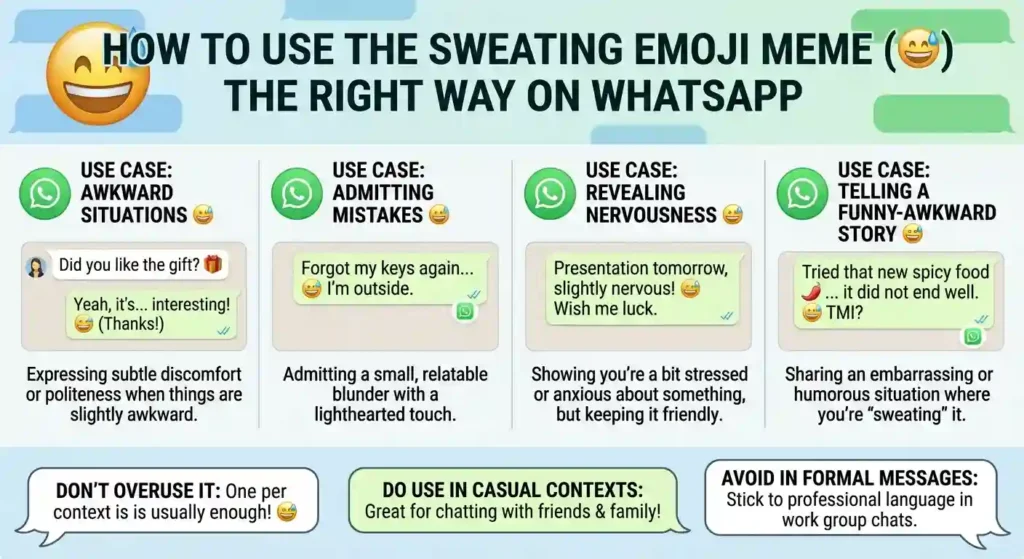
On WhatsApp, 😅 works especially well in personal conversations because it adds emotional information that plain text can miss. You can use it after admitting a mistake, sharing an embarrassing story, or explaining that something almost went badly.
For example:
“I forgot to charge my phone before leaving 😅”
This sounds more playful than simply saying, “I forgot to charge my phone.”
In family chats, it can soften an awkward confession. With friends, it can make teasing feel less serious. In emotional conversations, however, use it carefully. If someone is discussing a genuinely painful issue, 😅 could make your response appear dismissive.
For WhatsApp Status updates, the emoji can also turn an ordinary sentence into a relatable joke:
“Me checking my account after the weekend 😅”
Instagram 📸
Instagram users can place 😅 in captions, comments, Stories, Reels descriptions, and casual replies. It works particularly well with relatable content involving awkward moments, mistakes, unexpected situations, or harmless self-roasting.
A caption such as “When you say you will only watch one episode 😅” creates a playful confession. In comments, it can show that you understand the joke without needing a long response.
TikTok
On TikTok, 😅 can support humor, irony, reaction-based content, and relatable situations. A creator might use it after describing a situation that was technically embarrassing but funny afterward.
It is particularly useful when the content has a “I probably should not admit this” feeling.
On Facebook, 😅 can work naturally in posts, comments, Messenger conversations, and meme reactions. It can soften a personal story or signal that a frustrating experience is being shared humorously rather than as a serious complaint.
The key is matching the emoji to the emotional weight of the message.
Do’s and Don’ts
Do:
- Use 😅 to soften an awkward or embarrassing message.
- Consider your relationship with the receiver.
- Let the surrounding words establish the context.
- Use 😂 or 🤣 when you want stronger obvious laughter.
- Check how the emoji appears across different devices.
Don’t:
- Assume 😅 always means happiness.
- Use it randomly in serious conversations.
- Assume it automatically creates a romantic tone.
- Overload a message with several similar reaction emojis.
- Treat every sweating emoji meme as having exactly the same meaning.
Why Does Sweating Emoji Meme Look Different on iPhone and Android?
The 😅 character is standardized as an emoji, but its visual appearance is designed separately by different platforms and vendors. Unicode provides the underlying character standard, while companies create their own artwork for displaying it. Unicode currently lists 😅 as Grinning Face with Sweat, code point U+1F605.
That means an iPhone user and an Android user can send exactly the same emoji character while seeing slightly different artwork.
The sweat drop may appear on a different side of the face. The eyes can have a slightly different shape. The grin, shading, colors, eyebrows, and overall proportions can also vary. For example, Emojipedia notes that WhatsApp places the sweat drop differently from some other designs, while Huawei has used a more worried-looking expression.
These differences do not normally mean that the sender intentionally chose a different emoji. The underlying Unicode character remains the same.
This is especially useful when interpreting emoji memes. A screenshot may make 😅 look more nervous, cheerful, or embarrassed simply because of the platform’s artwork.
The important point is simple: there is no single visual design that every device must use. Apple, Google, Samsung, Microsoft, WhatsApp, and other platforms can give the same standardized emoji their own visual treatment.
So if your friend’s 😅 looks slightly different from yours, that is normal. It does not automatically signal a different meaning.
Best Sweating Emoji Meme Combos, Copy & Paste
Romantic ❤️
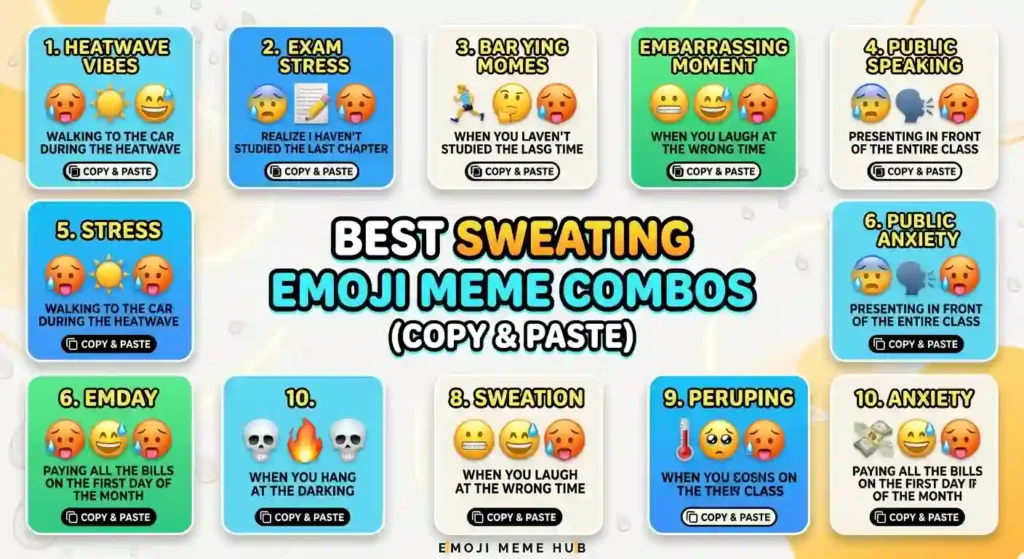
1.😅😉❤️, Use this for a shy, playful romantic message.
2.😅🥰❤️, Use this when affection comes with a little nervousness.
3.😳😅❤️, Use this for an unexpectedly sweet or embarrassing romantic moment.
Cute 🥰
1.😅😊🥰, Use this after a cute confession.
2.😳😅🥰, Use this when something adorable makes you shy.
3.😊😅❤️, Use this for a warm and slightly bashful response.
Flirty 😉
1.😅😉, Use this when a playful message has a teasing edge.
2.😳😅😉, Use this after a bold or cheeky comment.
3.😅😜😉, Use this for lighthearted teasing between people who are comfortable with each other.
Missing Someone 💭
1.😅🥺❤️, Use this when missing someone but keeping the message gentle.
2.😥😅❤️, Use this for an emotional message softened with humor.
3.😭😅❤️, Use this for exaggerated missing-you drama with a playful tone.
Good Night 🌙
1.😅😊, Use this after a funny good-night conversation.
2.😅🥰, Use this for a cute, slightly shy good-night message.
3.😅❤️, Use this when saying good night after a warm conversation.
Trending Sweating Emoji Meme in 2026
The 😅 emoji remains especially useful in casual digital communication because it sits between obvious laughter and genuine discomfort. Unicode’s current emoji listings identify 😅 with terms such as nervous, stressed, excited, smiling, and sweat, which helps explain why it can cover several shades of online emotion.
In 2026, the most useful way to understand its popularity is not as a single ranked trend, but as part of a broader style of conversational reactions. People frequently use expressive emojis to make short comments feel more personal, humorous, ironic, or emotionally specific.
| Emoji | Why trending | Who uses it | Platform |
| 😅 | Awkward humor and relief | Everyday users and meme fans | WhatsApp, TikTok |
| 😂 | Clear humorous reaction | Broad audiences | Instagram, Facebook |
| 😬 | Cringe and awkward reactions | Meme and comment communities | TikTok, Instagram |
| 🫠 | Overwhelmed humor | Younger and casual audiences | TikTok, Instagram |
The important distinction is tone. A meme creator might use 😅 after a joke about making a bad decision, while a friend might use it after admitting an embarrassing mistake. The same character works because its expression leaves room for interpretation.
Emoji usage continues to evolve as online communities develop their own conversational habits, memes, and ironic meanings.
Sweating Emoji Meme Meaning in Different Contexts
Romantic Conversations
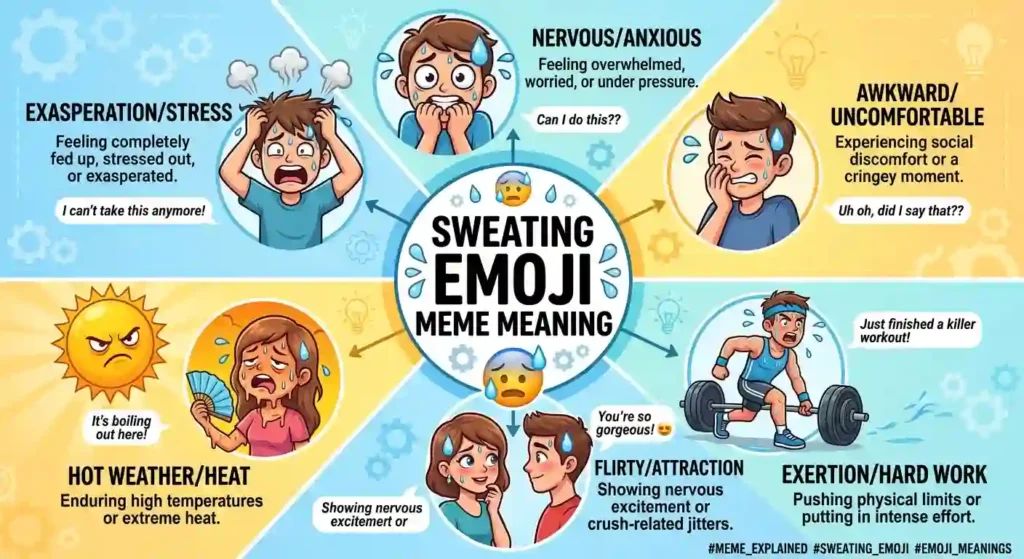
In romantic chats, 😅 often adds shyness or playful nervousness. “I was actually waiting for your message 😅” can sound more bashful than a plain statement.
However, the emoji alone does not prove romantic interest. The surrounding conversation matters more.
Friendship
Among friends, 😅 is excellent for admitting silly mistakes.
“I told everyone I knew the answer. I absolutely did not 😅”
Here, it creates friendly self-deprecating humor.
Family
In family conversations, it can soften an admission such as:
“Okay, I may have eaten the last piece of cake 😅”
The tone becomes playful instead of defensive.
Professional or Casual Communication
In casual work chats, 😅 can soften a minor mistake or awkward situation. But professional environments vary, so it is better to understand the communication culture before using expressive emojis.
Texting
In ordinary texting, 😅 often means “I am laughing, but I am also a little embarrassed.” It can also mean “That could have gone badly.”
Social Media Comments
In comments, the emoji can act as a quick reaction to a relatable meme, embarrassing confession, or awkward video moment.
Captions
For captions, 😅 is useful when the post is intentionally self-aware.
“Me pretending I have everything figured out 😅”
The humor comes from the contrast between the confident wording and the nervous-looking emoji.
How to Copy and Paste Sweating Emoji Meme
Want the emoji itself? Copy this:
😅
Select 😅, copy it, and paste it wherever you want.
You can use it in WhatsApp messages, Instagram captions, TikTok comments, Facebook posts, Messenger chats, text messages, bios, or meme captions.
For quick copy and paste:
😅
The character should remain an emoji when pasted into most modern apps, although its visual design can change depending on the platform or device.
FAQs
1. What is the most popular sweating emoji meme?
The most recognizable one is 😅, officially called Grinning Face with Sweat. It is commonly used for nervous laughter, awkwardness, embarrassment, and relief after a close call.
2. What does 😅 mean when someone sends it?
It depends on context. The sender may be joking, feeling embarrassed, nervous, relieved, or trying to soften something awkward. It should not be interpreted through gender stereotypes.
3. Why do emojis look different on iPhone vs Android?
Emoji characters are standardized through Unicode, but platforms create their own artwork. As a result, the same 😅 character can have different shapes, colors, sweat-drop positions, or facial details.
4. Are sweating emoji memes used differently in other countries?
Interpretation can vary between communities and cultures because humor, irony, and conversational habits differ. However, there is no universal rule saying that 😅 has one completely different meaning in a particular country.
Conclusion
The sweating emoji meme 😅 is useful because it sits in that funny space between laughter, embarrassment, nervousness, and relief. Use it when the words need a little extra emotional context.
Whether you are replying on WhatsApp, commenting on TikTok, posting an Instagram caption, or sharing a meme, let the conversation guide the meaning. 😅