
One little face can express more emotion than an entire paragraph.
Have you ever received a sweet message that made you feel emotional but didn’t quite make you cry? Or perhaps someone complimented you, and you wanted to show how touched you felt without writing a long reply. That’s where the 🥹 emoji comes in. Commonly called the pleading face or teary-eyed face, this expressive symbol is often associated with happy tears, gratitude, affection, vulnerability, and being emotionally overwhelmed. People use the tearing up emoji in WhatsApp messages, Instagram comments, TikTok captions, and everyday conversations to communicate feelings that are difficult to put into words. Its meaning can change depending on the message and relationship between the people chatting. Sometimes it expresses genuine sadness, while other times it communicates happiness, admiration, or playful emotion.
Sometimes 🥹 says you’re touched, grateful, or emotional without needing another word.
What Does the Tearing Up Emoji Mean? 🥹
The 🥹 emoji commonly represents someone holding back tears. It features large, watery eyes with small tears, raised eyebrows, and a gentle facial expression. Although its official name is Pleading Face, many people casually call it the tearing up emoji, teary-eyed emoji, or watery eyes emoji.
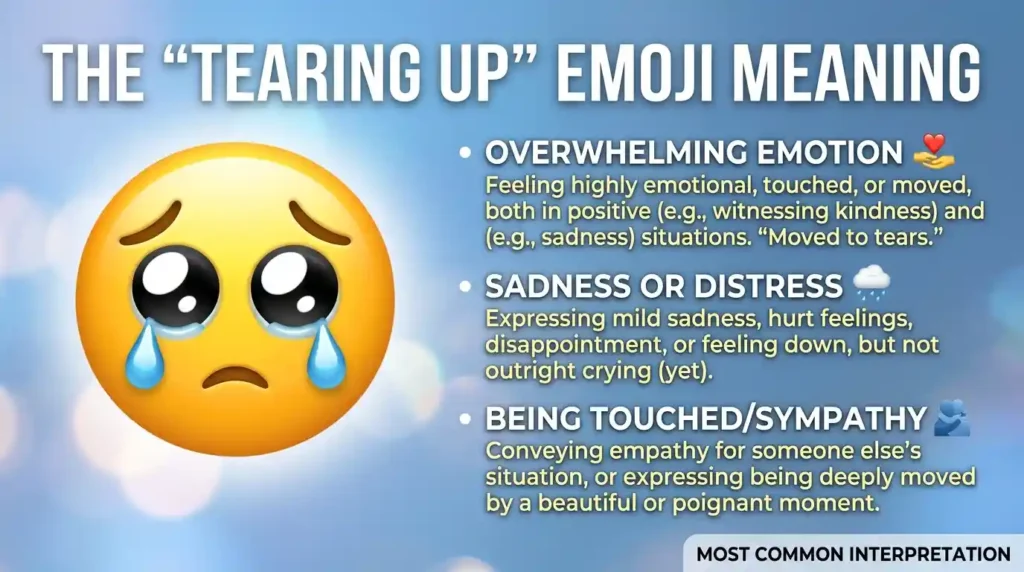
Its emotional meaning is not limited to sadness. In everyday conversations, it can express being deeply touched, feeling grateful, experiencing happiness, or becoming emotional over something meaningful.
Here are some common interpretations:
- Happy tears: Someone has made you smile so much that you feel like crying. Example: You remembered my birthday 🥹
- Gratitude: You genuinely appreciate someone’s kindness. Example: Thank you for always being there 🥹
- Affection: You find someone’s words or actions incredibly sweet. Example: You’re the sweetest person ever 🥹
- Vulnerability: You feel sensitive and want someone to understand your emotions.
- Pleading: You are making a gentle request and hoping the other person says yes.
- Emotional surprise: Something unexpectedly touched your heart.
Other related emojis can communicate slightly different feelings. 😢 often suggests sadness, while 😭 can represent intense crying or exaggerated happiness. 🥲 combines a smile with a tear, making it useful for bittersweet moments. 🥺 adds a more pleading or vulnerable expression, and 😥 can suggest relief, worry, or emotional discomfort.
In texting, the emoji often softens a message and makes it feel more personal. On social media, it frequently appears under heartwarming videos, thoughtful posts, and emotional announcements.
For example, receiving a message like “I’m proud of you” might make you reply with 🥹. However, if someone sends it after sharing difficult news, the same emoji may communicate sympathy or sadness.
The sender’s personality, your relationship, surrounding words, and conversation history all influence its interpretation. A close friend might use it playfully, while a romantic partner might use it to express affection. It is better to understand the complete message than assume one fixed meaning.
Tearing Up Emoji Meaning Table
| Emoji | Core meaning | Possible misread | Best used when |
| 🥹 | Being touched or emotional | Begging | Someone makes you happy |
| 😢 | Sadness | Mild disappointment | Sharing sad feelings |
| 😭 | Intense crying | Dramatic happiness | Strong emotional reactions |
| 🥲 | Bittersweet feelings | Hiding sadness | Mixed emotions |
| 😥 | Worry or relief | Disappointment | Expressing concern |
| 😓 | Stress or discomfort | Physical tiredness | Difficult situations |
| 😿 | Sadness or sympathy | Excessive drama | Reacting to upsetting news |
| 😪 | Tiredness or sadness | Sleepiness only | Expressing exhaustion |
| 🥺 | Vulnerability or pleading | Flirting | Making a gentle request |
| 💧 | A tear or emotional moment | Sweat or water | Adding emphasis to sadness |
10 Related Emoji Cards
🥹 Tearing Up Face
Meaning: Feeling touched, grateful, emotional, or close to happy tears.
Example 1: That was the sweetest thing ever 🥹
Example 2: I honestly don’t know what to say 🥹
😢 Crying Face
Meaning: Sadness, disappointment, and emotional pain.
Example 1: I really miss those days 😢
Example 2: That’s such heartbreaking news 😢
😭 Loudly Crying Face
Meaning: Intense emotions, dramatic sadness, or overwhelming happiness.
Example 1: I can’t believe this actually happened 😭
Example 2: This video made me cry 😭
🥲 Smiling Face with Tear
Meaning: Bittersweet happiness, emotional acceptance, or smiling through difficulty.
Example 1: Finally achieved my dream 🥲
Example 2: Happy memories, but I miss those times 🥲
😥 Sad but Relieved Face
Meaning: Worry, emotional relief, or feeling uncomfortable.
Example 1: That was a close call 😥
Example 2: I’m glad everything worked out 😥
😓 Downcast Face with Sweat
Meaning: Stress, exhaustion, embarrassment, or pressure.
Example 1: Today was a really long day 😓
Example 2: I barely finished everything on time 😓
😿 Crying Cat
Meaning: A cute or exaggerated expression of sadness.
Example 1: You forgot my favorite treat 😿
Example 2: I don’t want the weekend to end 😿
😪 Sleepy Face
Meaning: Feeling sleepy, exhausted, or emotionally drained.
Example 1: I need a full night’s sleep 😪
Example 2: It’s been such a tiring week 😪
🥺 Pleading Face
Meaning: Asking sweetly, showing vulnerability, or expressing affection.
Example 1: Please stay a little longer 🥺
Example 2: Can we watch one more episode? 🥺
💧 Droplet
Meaning: A small drop of water that can represent tears, sweat, or emotional emphasis.
Example 1: Trying not to cry right now 💧
Example 2: That ending was emotional 💧
How to Use the Tearing Up Emoji the Right Way
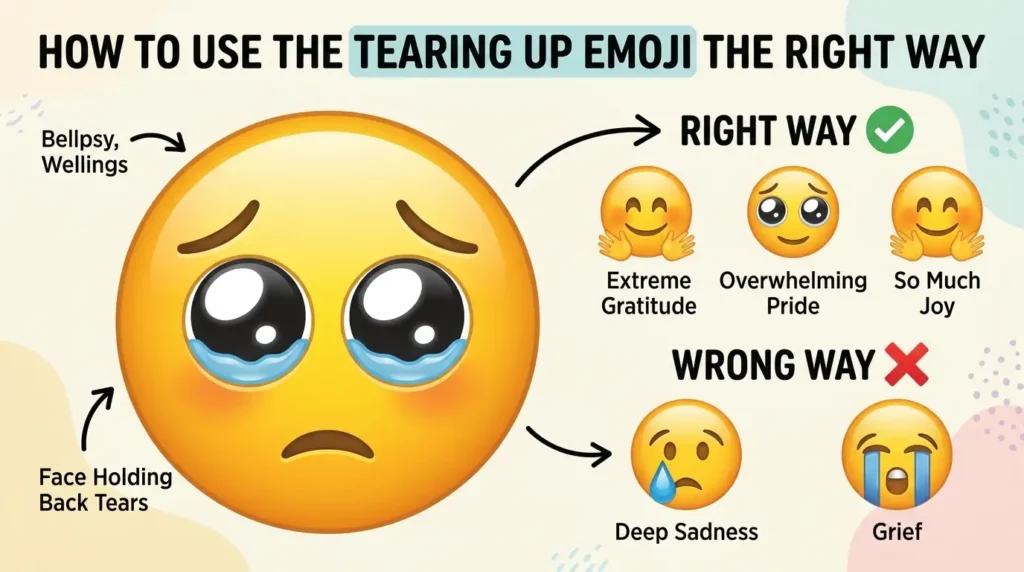
The 🥹 emoji works best when you want to express genuine emotion without making your message sound overly serious. It can make a short reply feel warmer, more personal, and more expressive.
WhatsApp 💬
In personal chats, use it when someone says something thoughtful or does something that makes you feel appreciated.
- Thank you for checking on me 🥹
- You always know how to make me smile 🥹
In family conversations, it can show appreciation for loving messages, family photographs, and special memories.
With friends, it works particularly well when someone surprises you, supports you, or shares a funny but heartwarming memory.
You can also include it in a WhatsApp status about gratitude, friendship, or meaningful moments. A simple caption like “Some people make life beautiful 🥹” feels natural and personal.
Instagram 📸
Instagram is full of emotional reactions, and this emoji fits naturally into captions, comments, and Reels.
For example, you might comment 🥹 under a friend’s graduation picture, a beautiful family photograph, or an announcement about an exciting achievement.
For captions, try:
- My heart is so full 🥹
- Moments I’ll always remember 🥹
- Feeling grateful for everything 🥹
It can also add a gentle emotional touch to an Instagram bio or aesthetic post, although using it sparingly usually looks better.
TikTok 🎵
TikTok users often use 🥹 when reacting to adorable pets, emotional storytelling, romantic moments, and unexpected acts of kindness.
It can also work humorously when a creator shares an exaggeratedly emotional reaction.
Examples:
- This ending got me emotional 🥹
- The way they look at each other 🥹
- I wasn’t ready for that moment 🥹
In comments, it can communicate a reaction quickly without requiring a complete sentence.
On Facebook, the emoji works well in posts, comments, and Messenger conversations. You might use it to appreciate a friend’s achievement, respond to a family memory, or acknowledge a heartfelt birthday wish.
For example:
“Seeing everyone together again makes me so happy 🥹”
It can also make supportive replies feel warmer. However, when responding to serious personal news, consider adding a thoughtful sentence rather than relying entirely on an emoji.
Dos and Don’ts of Using 🥹
Using the tearing up emoji is simple, but a little thought can make your messages clearer.
Do:
- Use 🥹 when someone genuinely touches your heart.
- Match it with the emotional tone of your message.
- Consider your relationship with the person receiving it.
- Use it to appreciate thoughtful gestures and special memories.
- Check how it appears on different devices.
Don’t:
- Add it randomly to every conversation.
- Assume everyone interprets it as happy tears.
- Use it excessively in serious discussions.
- Combine it with unrelated emojis without a clear purpose.
- Assume it always expresses romantic feelings.
A message such as “Thank you for remembering 🥹” feels warm and appreciative. However, sending only this emoji after someone shares difficult personal news might leave them unsure how you feel.
The best approach is to let your words provide context and allow the emoji to add emotional expression.
Why Does the Tearing Up Emoji Look Different on iPhone and Android?
Have you noticed that 🥹 sometimes looks slightly different on an iPhone compared with an Android phone? That’s normal. Emojis follow Unicode standards, but their visual appearance is designed separately by different technology companies.
Unicode provides a standardized character so devices and applications can recognize and display the same emoji. However, it does not require every company to use identical artwork.
Apple, Google, Samsung, Microsoft, and other technology companies create their own emoji designs. As a result, the tearing up emoji can have slightly different facial details, eye shapes, colors, and proportions depending on the device.
Here are some differences you might notice:
- Shape: The face and eyes may have different proportions.
- Color: Skin tones and shading can vary slightly.
- Facial expression: The eyebrows, eyes, and tears may appear more or less pronounced.
- Size: The displayed emoji can look larger or smaller depending on the application.
- Design style: Some platforms use softer shading, while others prefer a flatter visual appearance.
For example, when someone sends 🥹 from an iPhone to an Android user, the receiving phone generally displays its own supported design for that Unicode character.
The underlying emoji remains the same even when its artwork changes. Therefore, you shouldn’t assume someone intended a different emotion simply because their emoji looks slightly different.
App versions, operating systems, and font support can also influence how emojis appear. Keeping your device updated can help you receive newer emoji designs and improved compatibility.
Best Tearing Up Emoji Combos: Copy & Paste
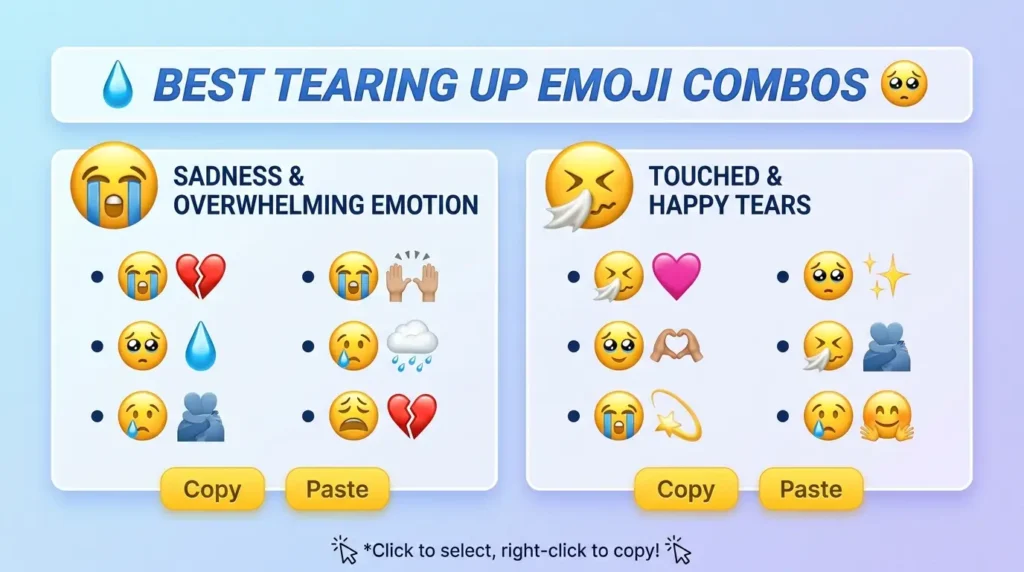
Want to express affection, sweetness, or emotional feelings with more than one emoji? These combinations offer simple ways to communicate different moods.
Romantic ❤️
👉 🥹❤️: Use this when someone’s affection genuinely touches your heart.
👉 🥺❤️: Send this with a sweet romantic request.
👉 🥹🫶: Show appreciation for someone special.
Cute 🥰
👉 🥹🥺: Use this when something is almost too adorable.
👉 😿🥹: React to an especially emotional or cute moment.
👉 🥹🫶: Share a warm reaction to a thoughtful gesture.
Flirty 😉
👉 🥺❤️: Use this for a gentle, affectionate message.
👉 🥹😉: Show playful excitement after a sweet compliment.
👉 🥹🫶: Send a warm reaction to someone’s attention.
Missing Someone 💭
👉 🥹💧: Express an emotional feeling when someone is far away.
👉 😢🥹: Use this when memories make you emotional.
👉 🥲💧: Share a bittersweet feeling about someone you miss.
Good Night 🌙
👉 🥹❤️: Send a loving goodnight message.
👉 🥺🫶: Add a gentle, caring touch before sleeping.
👉 🥹😪: Show that you’re emotional and ready for bed.
Trending Tearing Up Emoji in 2026
The 🥹 emoji remains a recognizable choice for expressing emotional reactions in everyday digital communication. Its popularity comes partly from its flexibility. It can communicate happiness, gratitude, affection, vulnerability, and even playful exaggeration without requiring a long explanation.
In 2026, emotional emoji expressions continue to appear naturally in casual conversations, short-form videos, captions, and comment sections.
Here are four related emojis that serve different purposes in online communication.
🥹 Tearing Up Face: This is frequently used under heartwarming videos, thoughtful messages, and emotional announcements. Creators may add it to captions when sharing personal achievements or meaningful moments.
😭 Loudly Crying Face: This emoji often appears in humorous reactions, dramatic comments, and emotional TikTok conversations. Depending on context, it can express genuine sadness or exaggerated excitement.
🥲 Smiling Face with Tear: This is useful for bittersweet experiences, such as achieving something after a difficult journey. It often appears in personal captions and relatable posts.
🥺 Pleading Face: People frequently use this expression in affectionate messages, playful requests, and cute social media comments. It can make a simple request feel softer.
| Emoji | Why trending | Who uses it | Platform |
| 🥹 | Heartwarming emotional reactions | Friends and creators | Instagram, TikTok |
| 😭 | Dramatic and humorous reactions | Everyday users | TikTok, WhatsApp |
| 🥲 | Relatable bittersweet moments | Content creators | Instagram, Facebook |
| 🥺 | Cute requests and affection | Friends and couples | WhatsApp, TikTok |
These are examples of recognizable usage patterns, not a verified popularity ranking. Emoji habits continue to evolve as online communities develop new ways to express familiar feelings.
Tearing Up Emoji Meaning in Different Contexts
The same emoji can communicate very different emotions depending on who sends it and what is happening in the conversation. Understanding the context helps you avoid misunderstandings.
Romantic Conversations
When someone uses 🥹 in a romantic conversation, they may be expressing affection, appreciation, or emotional happiness.
Example:
“You make every ordinary day feel special 🥹”
It can also communicate that a compliment or thoughtful gesture genuinely touched them. However, it doesn’t automatically mean someone is in love.
Friendship
Friends often use this emoji when sharing memories, celebrating achievements, or appreciating one another.
Example:
“You’re honestly the best friend anyone could ask for 🥹”
It can make a friendly message feel more sincere without becoming overly formal.
Family Conversations
In family chats, it can express happiness about reunions, birthdays, celebrations, and thoughtful messages.
Example:
“Can’t wait to see everyone together again 🥹”
It is particularly suitable for reacting to meaningful photographs and family memories.
Professional and Casual Communication
In casual workplace conversations, it may show appreciation when a colleague offers help or shares good news.
Example:
“Thank you for helping me finish the project 🥹”
However, consider your workplace culture. A simple thank-you may be more appropriate in formal emails or serious professional discussions.
Texting and Social Media Comments
In texting, it often adds emotion to short replies. On social media, it can show admiration for a beautiful moment, an inspiring achievement, or a touching story.
For example:
“That was such a beautiful surprise 🥹”
The important thing is to consider the complete conversation rather than interpreting the emoji on its own.
How to Copy and Paste the Tearing Up Emoji
Want to use the tearing up emoji in your next message? You can copy it directly from the line below.
Copy this emoji:
<escape>🥹</escape>
Simply follow these steps:
- Select the 🥹 emoji above.
- Right-click and choose Copy, or use your device’s copy shortcut.
- Open WhatsApp, Instagram, TikTok, or Facebook.
- Select the message, caption, comment, or status field.
- Paste the emoji and send or publish your message.
You can also access it through your phone’s built-in emoji keyboard. Search for terms such as “pleading face” or browse the face emoji category.
The emoji can be copied and pasted like regular text on most modern devices and supported applications. If it appears as a blank square, your device or application may need an update.
FAQs About the Tearing Up Emoji
1. What is the most popular tearing up emoji?
The 🥹 emoji is one of the most recognizable choices for expressing watery eyes and being emotionally touched. It is commonly used for happy tears, affection, gratitude, and heartfelt reactions.
2. What does 🥹 mean when someone sends it?
When someone sends 🥹, they may feel touched, happy, grateful, affectionate, or emotionally overwhelmed. The meaning depends on the conversation and your relationship with the sender, not their gender.
3. Why do emojis look different on iPhone vs Android?
Apple and Android manufacturers use their own artwork to display Unicode emoji characters. The facial details, colors, and proportions can differ, even though the underlying emoji character is the same.
4. Are tearing up emojis used differently in other countries?
Yes, interpretations can vary between languages, cultures, and online communities. Some people primarily associate 🥹 with happiness, while others use it for sadness, affection, or playful pleading. The surrounding conversation usually provides the clearest meaning.
Conclusion
The 🥹 tearing up emoji is a simple way to express emotions that words sometimes struggle to capture. Whether you’re showing gratitude, sharing a happy moment, or reacting to something heartfelt, it adds a personal touch to digital conversations. Use it naturally, consider the context, and let your message communicate what you really feel. ❤️