
5. One-Line Hook
Sometimes a little panda is all you need to make a message feel softer, sweeter, and more playful.
6. Introduction
You are chatting with a friend, sharing a cute picture, or posting something that makes you smile. Instead of writing a long reaction, you drop a little panda emoji 🐼 into the conversation. Somehow, it makes the message feel warmer and more adorable.
The panda emoji is commonly associated with cuteness, gentleness, friendliness, peaceful feelings, and a love of animals. People use it in text messages, WhatsApp chats, Instagram captions, TikTok comments, and other social media conversations to express a sweet mood or add a playful touch. It can also represent pandas themselves, wildlife, nature, or simply something that looks irresistibly cute.
But its meaning is not always exactly the same. Depending on the conversation, a panda can express affection, humor, a relaxed mood, or even a little awkwardness. Whether someone sends it to a friend, a partner, or a group chat, the surrounding words help explain what they mean.
7. Standout Snippet
The panda emoji brings a little softness, cuteness, and peaceful energy to everyday conversations. 🐼
8. What Does the Panda Emoji Mean? 🐼
The panda emoji 🐼 usually represents cuteness, kindness, a peaceful personality, and a playful mood. Its familiar black-and-white appearance makes it an easy choice when someone wants their message to feel friendly rather than serious. It can also symbolize pandas, animal lovers, wildlife, bamboo forests, or anything someone finds adorable.
In texting, 🐼 often works as a soft reaction. Someone might send it after receiving a cute photo, hearing a sweet story, or sharing a funny moment. It can also be used as a nickname or affectionate symbol between friends and couples.
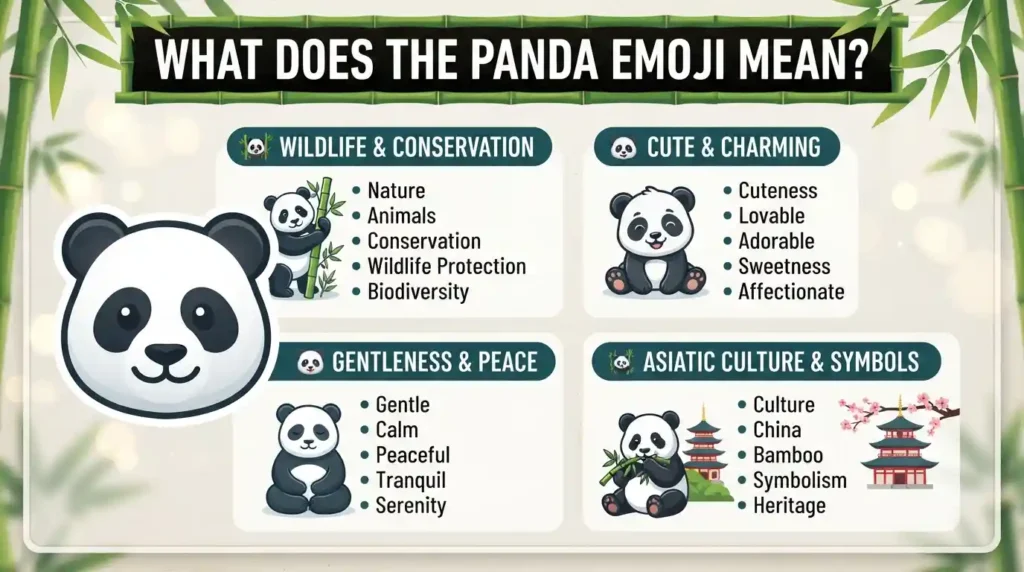
Here are some closely related emojis and the feelings they can add:
- 🐼 Panda: Cute, gentle, playful, peaceful, or animal-loving.
- 🐻 Bear: Cozy, cuddly, friendly, and sometimes protective.
- 🐾 Paw prints: Pets, animals, affection, or following someone’s footsteps.
- 🎋 Bamboo: Nature, pandas, greenery, or a peaceful atmosphere.
- 🌿 Leaf: Freshness, nature, calmness, and a relaxed mood.
- 🖤 Black heart: A playful connection to the panda’s black coloring, or a darker, stylish mood.
- 🤍 White heart: Pure affection, warmth, kindness, or a gentle feeling.
The panda can also be used humorously. For example, someone might send 🐼 after admitting they have spent the entire day sleeping, eating snacks, and doing absolutely nothing. In that situation, it becomes a playful way to describe a lazy or comfortable mood.
On social media, the panda emoji can add personality to captions, comments, usernames, bios, and animal-related posts. It might express admiration for a panda video or make an ordinary caption feel more charming.
The meaning also depends on who sends it. A friend may use it simply because pandas are cute. A romantic partner might use it as a sweet nickname or an affectionate reaction. Someone you barely know may just be responding to an adorable picture.
There is no single universal meaning. The words, relationship, and conversation usually tell you more than the emoji alone.
9. Panda Emoji Meaning Table
| Emoji | Core meaning | Possible misread | Best used when |
| 🐼 | Cute, gentle, playful | Childish or random | Sharing something adorable |
| 🐻 | Cuddly, friendly | Too familiar | Expressing cozy affection |
| 🐾 | Animals, pets, footsteps | Unclear without context | Animal posts or pet chats |
| 🎋 | Bamboo, nature | Decoration | Panda or nature content |
| 🌿 | Fresh, calm, natural | Gardening only | Peaceful captions |
| 🖤 | Stylish, dark affection | Sadness or coldness | Matching panda colors |
| 🤍 | Gentle love, kindness | Romantic interest | Sweet messages |
| 🥰 | Warm affection | Strong romantic feelings | Appreciating someone |
| 😊 | Happiness, friendliness | Polite or awkward smile | Casual conversations |
| 😴 | Sleepiness, rest | Boredom | Lazy or bedtime chats |
10. Panda Emoji Cards: 10 Cute Emojis
🐼
Panda
Meaning: Cuteness, gentleness, and a playful mood.
Example 1: This little guy is adorable 🐼
Example 2: My mood today is just panda energy 🐼
🐻
Bear
Meaning: Cuddly affection, coziness, and friendliness.
Example 1: Sending you a big bear hug 🐻
Example 2: You are my favorite cuddle buddy 🐻
🐾
Paw Prints
Meaning: Animals, pets, playful adventures, and affection.
Example 1: A day full of furry friends 🐾
Example 2: Follow me on this little adventure 🐾
🎋
Tanabata Tree
Meaning: Bamboo, nature, and a peaceful green setting.
Example 1: Panda’s favorite snack time 🎋
Example 2: A little bamboo and a lot of peace 🎋
🌿
Herb
Meaning: Freshness, greenery, and a calm natural mood.
Example 1: Taking a quiet walk outside 🌿
Example 2: Keep life simple and peaceful 🌿
🖤
Black Heart
Meaning: Stylish affection, deep feelings, or dark humor.
Example 1: Black is always my favorite 🖤
Example 2: You know my kind of humor 🖤
🤍
White Heart
Meaning: Gentle love, sincerity, and peaceful affection.
Example 1: Wishing you a peaceful day 🤍
Example 2: You make everything feel lighter 🤍
🥰
Smiling Face With Hearts
Meaning: Loving feelings, appreciation, and happiness.
Example 1: That was so sweet of you 🥰
Example 2: I can’t stop smiling right now 🥰
😊
Smiling Face
Meaning: Friendly happiness, warmth, and appreciation.
Example 1: It was lovely talking to you 😊
Example 2: Thanks for checking on me 😊
😴
Sleeping Face
Meaning: Tiredness, sleep, relaxation, or boredom.
Example 1: I need a long nap 😴
Example 2: Good night, I am finally off to bed 😴
11. How to Use the Panda Emoji the Right Way
The panda emoji is easy to use because it usually carries a friendly, lighthearted tone. It works best when the message is already playful, affectionate, animal-related, or relaxed. You don’t need to explain it every time. A single 🐼 can make a short reply feel more expressive.
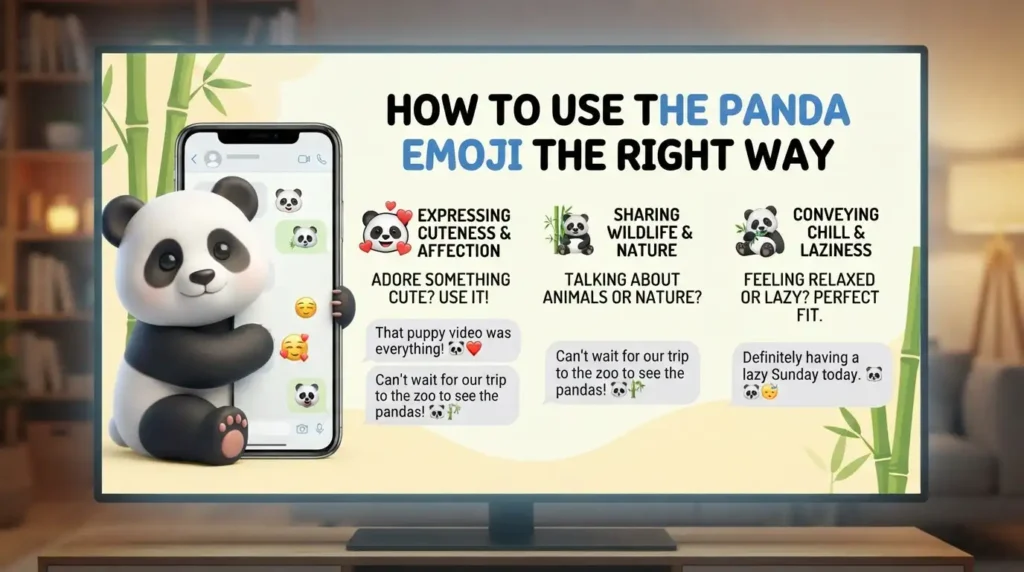
WhatsApp 💬
WhatsApp is one of the natural places to use the panda emoji because conversations are often personal and informal.
- Personal chats: Send it when sharing a cute picture, funny moment, or adorable video.
- Family conversations: Add it to a message about children, pets, family photos, or a fun day together.
- Friendships: Use it as a playful reaction when your friend says something silly or sweet.
- Emotional messages: Pair it with gentle words when you want to sound caring without making the conversation overly serious.
- Status updates: Use it for cozy moods, animal photos, relaxed weekends, or cute selfies.
Examples:
“Look what I found today 🐼”
“That is literally the cutest thing ever 🐼”
“Weekend plans: snacks, sleep, and peace 🐼”
Instagram 📸
On Instagram, the panda emoji can help give captions and comments a cute or relaxed personality. It works particularly well on animal accounts, nature posts, aesthetic photos, and playful content.
You can place it at the end of a caption to add a softer tone, use it in a comment to react to someone’s adorable photo, or include it in a bio if your page has a cute or animal-related theme.
Example caption: “Collecting little moments that make me smile 🐼”
It can also make a short comment feel more expressive than simply writing “cute.”
TikTok
TikTok users can use the panda emoji in captions, comments, video descriptions, and playful reactions. It can suit funny videos, cute animal clips, cozy routines, or relatable content about being lazy.
Example: “Me trying to be productive on a Sunday 🐼”
It may also be used ironically, especially when someone is joking about acting innocent, sleepy, or harmless.
On Facebook, 🐼 fits posts, comments, Messenger conversations, and reactions. You might use it beneath a family photo, an animal video, or a friend’s funny update.
It is generally a friendly, low-pressure emoji. When you want to express affection or playfulness without making a message sound overly emotional, it can be a simple choice.
The best approach is to let your words carry the message and use the panda to add personality.
12. Why Does the Panda Emoji Look Different on iPhone and Android?
Have you ever sent a panda emoji to someone and noticed that it looks slightly different on their phone? That is normal. Emojis are standardized characters, but their visual appearance is created by individual companies and operating systems.
The panda emoji 🐼 is part of the Unicode emoji standard. Unicode helps devices recognize the same emoji character, even when those devices use different artwork. Apple, Google, Samsung, Microsoft, and other companies create their own emoji designs.
The panda may have slightly different facial features, proportions, shading, colors, or overall styling depending on the device. One version might look rounder and more cartoon-like, while another might have a different expression or appear slightly flatter.
The underlying character remains the same in normal emoji text. The difference is usually the artwork used to display it, not a different emoji meaning.
Here are a few things that can change:
- Shape: The panda’s head, body, and facial proportions may vary.
- Color: Black patches, white fur, and shading can look slightly different.
- Expression: Small changes in the eyes or mouth may make one design look more playful.
- Style: Some platforms use softer, more detailed designs, while others use a simpler visual style.
- Size: Emojis may appear differently sized depending on the font, app, or operating system.
These differences do not automatically change the meaning of the emoji. If someone sends 🐼 from an iPhone to an Android phone, the recipient generally sees the panda rendered using their device’s supported emoji artwork.
The same applies to WhatsApp, Instagram, TikTok, and other apps. Some applications use their own emoji rendering systems, while others rely more heavily on the device’s emoji support.
So if your panda looks a little different from your friend’s, there is no need to worry. It is still the same panda emoji character.
13. Best Panda Emoji Combos, Copy & Paste
Panda emoji combinations are a fun way to express affection, sweetness, playful moods, and cozy feelings. Pair 🐼 with related emojis to make your message feel a little more personal.
Romantic ❤️
- 👉 🐼🤍 — Send this to someone you care about deeply.
- 👉 🐼🥰 — Use it for a sweet, affectionate message.
- 👉 🐼🖤 — A cute combination with a playful, stylish feeling.
Cute 🥰
- 👉 🐼🐾 — Perfect for animal lovers and adorable pet content.
- 👉 🐼🎋 — Use it for panda pictures, bamboo, or nature posts.
- 👉 🐼😊 — A friendly, cheerful reaction to something sweet.
Flirty 😉
- 👉 🐼🥰🤍 — Send this when someone makes you smile.
- 👉 🐼🖤🥰 — A playful mix of cute and affectionate feelings.
- 👉 🐼😊🤍 — Use it for a sweet, slightly shy reply.
Missing Someone 💭
- 👉 🐼🤍 — A gentle way to show someone is on your mind.
- 👉 🐼🥰 — Send it when you miss a person you love.
- 👉 🐼🐾🤍 — A cute, sentimental message for someone far away.
Good Night 🌙
- 👉 🐼😴 — A simple sleepy panda good-night message.
- 👉 🐼🤍😴 — Use it when wishing someone a peaceful night.
- 👉 🐼🌿😴 — A soft combination for a calm bedtime mood.
These combinations work in texts, comments, captions, and status updates. You can copy them directly or use only the panda if you prefer a simpler message.
14. Trending Panda Emoji in 2026
The panda emoji continues to fit several familiar styles of online communication: cute reactions, animal content, cozy moods, playful humor, and affectionate messages. It is particularly useful because it doesn’t need a complicated explanation. People can use it as a visual reaction to something adorable or as a small expression of their personality.

Rather than treating it as a symbol with one fixed trend or meaning, its popularity in casual communication comes from its versatility. A panda can fit a funny video, a peaceful photo, a friendly conversation, or an affectionate comment.
Here are a few ways related emojis commonly appear in online content:
| Emoji | Why trending | Who uses it | Platform |
| 🐼 | Cute animal reactions and playful moods | Animal lovers, casual users, creators | TikTok, Instagram |
| 🥰 | Expressing affection and appreciation | Friends, couples, creators | WhatsApp, Instagram |
| 😊 | Friendly replies and positive reactions | Everyday users | Facebook, Messenger |
| 🐾 | Pet content, animal videos, and playful captions | Pet owners, animal accounts | Instagram, TikTok |
Why the panda fits online conversations
Cute content: People often use 🐼 when reacting to animal videos, adorable photos, or sweet moments. Its recognizable appearance makes it an easy visual response.
Cozy and relaxed moods: It can accompany posts about sleeping in, relaxing at home, taking a break, or enjoying a peaceful day.
Friendly humor: The panda can make a reaction feel less serious. It may be used when someone is joking about being lazy, shy, innocent, or overly comfortable.
Captions and comments: A single panda can add personality to a short caption without requiring additional words. It also works well when a creator wants a soft, cute tone.
For example, a TikTok caption such as “My weekend personality” followed by 🐼 can communicate a relaxed mood without spelling everything out. On Instagram, the same emoji might appear beneath a panda video or in a cute photo caption.
Emoji usage continues to evolve through personal habits, online communities, memes, and changing conversation styles. The panda remains flexible because its friendly appearance can fit many moods.
15. Panda Emoji Meaning in Different Contexts
The same panda emoji can feel different depending on the conversation. A 🐼 sent to a close friend may feel playful, while one sent to a romantic partner may seem affectionate. Context is what helps you understand the tone.
Romantic conversations
When someone uses 🐼 in a romantic conversation, it may suggest affection, sweetness, or a cute shared mood. Some couples use animal emojis as nicknames or private symbols.
For example:
“You are too cute sometimes 🐼”
“Wish you were here with me 🐼🤍”
These messages may sound affectionate, but the panda itself does not confirm romantic interest. The surrounding conversation matters.
Friendship
Among friends, the panda is often a simple playful reaction. It can respond to jokes, funny photos, silly comments, or conversations about relaxing.
Example: “You really slept until noon again 🐼”
It can also make teasing sound less harsh by adding a softer tone.
Family conversations
Family members may use the panda when sharing animal pictures, cute memories, funny moments, or messages about children. It works especially well when the conversation is lighthearted.
Example: “Look at this little cutie 🐼”
Professional and casual communication
In a casual workplace group, the panda may fit a lighthearted message or a funny reaction. However, it is usually less appropriate in formal emails, serious announcements, or conversations involving important decisions.
If you are unsure whether an emoji fits the situation, consider the other person’s communication style first.
Texting
In texting, 🐼 may soften a short reply, show amusement, or add a cute touch to an ordinary sentence.
Example: “Okay, I am staying home today 🐼”
Without the emoji, the message may sound plain. With it, the sender may be expressing a relaxed or playful mood.
Social media comments and captions
On social media, the panda can react to adorable content, decorate a caption, or communicate an animal-loving personality. It may also be used humorously when a person wants to describe their own behavior as cute, sleepy, or harmless.
The important thing is not to overthink it. If the conversation is already friendly, 🐼 is usually a simple, positive addition.
16. How to Copy and Paste the Panda Emoji
Want to use the panda emoji in your next message? You don’t need to download anything or install a special keyboard.
Copy the panda emoji here
🐼
Panda Emoji
Copy Panda Emoji
You can also copy it manually by selecting the emoji above and pressing Ctrl+C on Windows or Command+C on Mac.
Then paste it wherever you want:
- WhatsApp: Add it to chats, messages, or status updates.
- Instagram: Use it in captions, comments, or your bio.
- TikTok: Add it to video captions, comments, or descriptions.
- Facebook: Use it in posts, comments, and Messenger.
- Other apps: Paste it into notes, usernames, messages, and supported text fields.
The panda emoji is a Unicode character, so it can generally be copied between supported apps and devices without needing a special emoji image.
17. Frequently Asked Questions
1. What is the most popular panda emoji?
The standard panda emoji is 🐼. It is the familiar black-and-white panda face that people use for cute reactions, animal-related content, playful messages, and affectionate conversations.
2. What does 🐼 mean when someone sends it?
When someone sends you 🐼, they may be expressing cuteness, friendliness, affection, humor, or a relaxed mood. It could simply be a reaction to an adorable picture or something funny. The meaning depends on the conversation and your relationship with that person, not their gender.
3. Why do panda emojis look different on iPhone and Android?
Panda emojis follow Unicode standards, but Apple, Google, Samsung, and other platforms create their own artwork. The panda may have slightly different colors, shapes, facial features, or styling while representing the same emoji character.
4. Are panda emojis used differently in other countries?
The panda emoji is widely recognizable as an animal and a cute symbol, but its tone can vary between communities and conversations. Local humor, cultural references, personal habits, and the context of a message can influence how someone interprets it.
18. Conclusion
The panda emoji 🐼 is a simple way to express cuteness, friendliness, affection, humor, and peaceful feelings. It works naturally in texts, WhatsApp chats, Instagram captions, TikTok comments, and everyday conversations.
Use it when it fits your mood, keep the context in mind, and let your message feel natural. Sometimes a tiny panda is enough to make someone’s day a little sweeter.