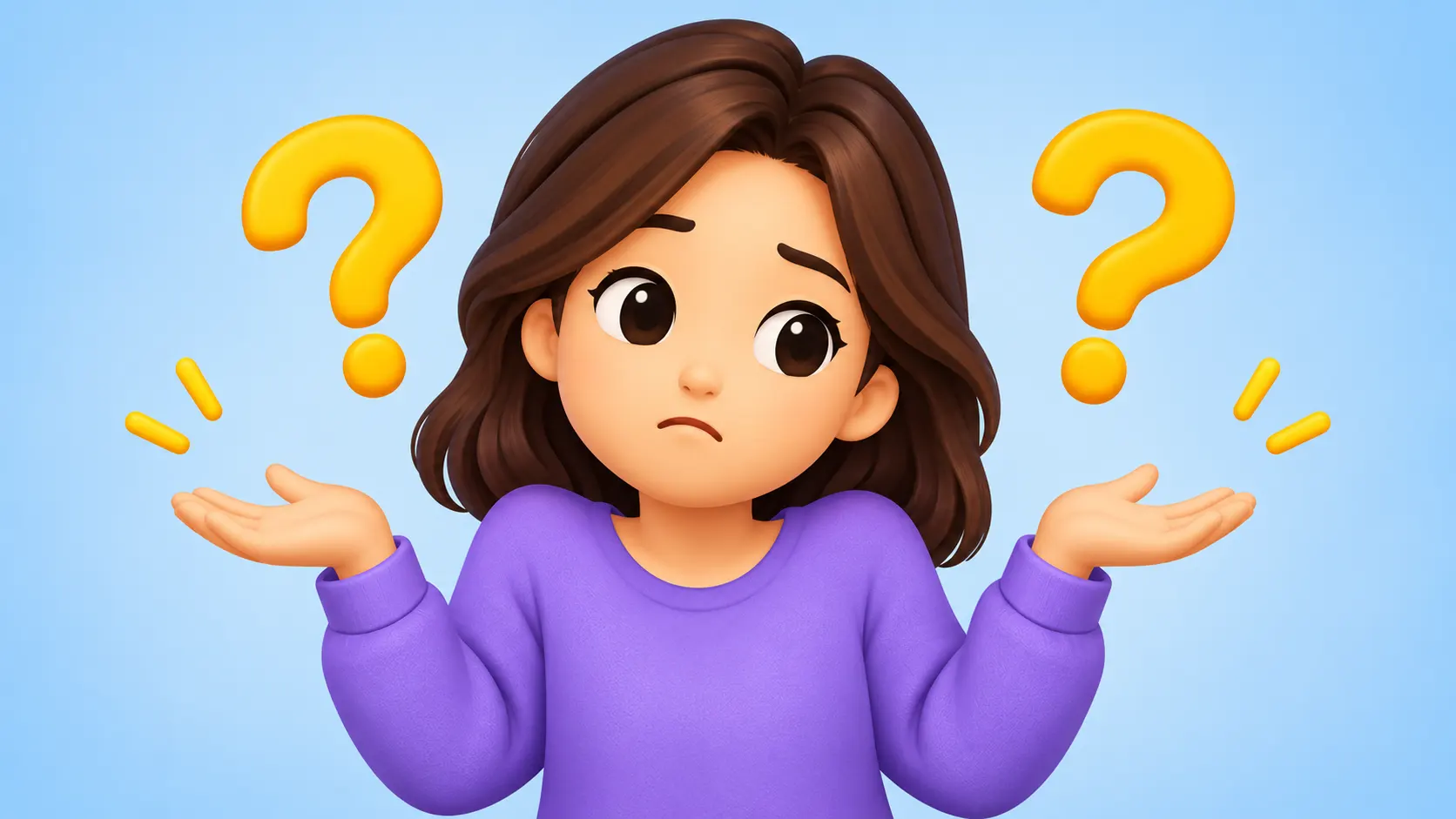
When words aren’t enough, a little shrug can say everything.
You receive a confusing message, someone asks a question you cannot answer, or something happens that leaves you completely speechless. What do you send? The Japanese shrug emoji, commonly written as ¯_(ツ)_/¯, is a fun way to express that feeling without typing a long explanation.
Although people call it an emoji, this popular expression is technically a Japanese-style text emoticon known as a kaomoji. It uses ordinary keyboard characters to create a face with raised shoulders and outstretched arms. You can use it to communicate confusion, uncertainty, indifference, or playful acceptance. Whether you’re chatting on WhatsApp, commenting on Instagram, or sharing a funny TikTok reaction, this little character can add personality to your message. Its meaning can also change depending on your relationship with the person and the conversation.
Sometimes, a simple shrug is the perfect answer when you honestly don’t know what to say. ¯_(ツ)_/¯
5. What Does the Japanese Shrug Emoji Mean?
The Japanese shrug emoji, ¯_(ツ)_/¯, represents a person raising their shoulders and spreading their arms as if saying, “I don’t know,” “What can I do?” or “It is what it is.” It is commonly used when someone feels confused, uncertain, unconcerned, or unable to explain a situation.
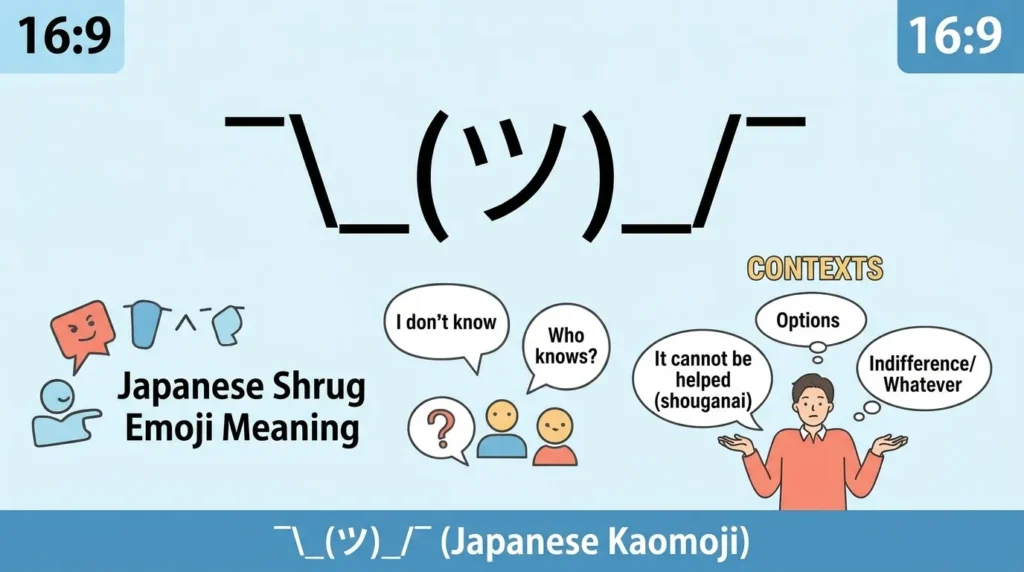
Despite its popular name, it is technically a kaomoji rather than a standard Unicode emoji. Kaomoji are text-based facial expressions that originated in Japanese internet culture. Unlike traditional Western emoticons, they are generally designed to be read without turning your head sideways.
The expression has several emotional interpretations:
- Confusion: You have no idea what someone is talking about.
- Uncertainty: You’re unsure what will happen next.
- Indifference: Something does not bother you very much.
- Acceptance: You cannot change a situation, so you accept it.
- Humor: You want to respond to something ridiculous in a funny way.
- Playfulness: You’re teasing someone without sounding too serious.
For example, if a friend asks why the internet stopped working, you could reply, “I have no idea ¯_(ツ)_/¯.”
On social media, the expression often appears in funny comments, reaction posts, memes, and casual conversations. It can also communicate a relaxed attitude when something unexpected happens.
Other related expressions include 🤷, the standard shrugging person emoji, and variations such as 🤷♀️ and 🤷♂️. These are actual Unicode emojis, while the Japanese-style expression is made from keyboard characters.
The sender’s intention matters, too. A friend might use it to make you laugh, while someone discussing a serious problem might use it to show frustration or helplessness. Therefore, the Japanese shrug emoji does not have one universal emotional meaning. The surrounding words and relationship provide the missing information.
6. Japanese Shrug Emoticon Meaning Table
| Expression | Core meaning | Possible misread | Best used when |
| ¯_(ツ)_/¯ | I don’t know | Not interested | Casual replies |
| 🤷 | Uncertainty | Carelessness | Everyday conversations |
| 🤷♀️ | Playful uncertainty | Dismissiveness | Friendly chats |
| 🤷♂️ | Confusion | Lack of concern | Casual reactions |
| ¯_(シ)_/¯ | Uncertainty | Confusion | Funny messages |
| ¯_(ツ)_/¯ | Acceptance | Indifference | Unexpected situations |
| 🤷🏻 | Uncertainty | Sarcasm | Informal reactions |
| 🤷🏼 | Confusion | Disinterest | Friendly messages |
| 🤷🏽 | Not knowing | Frustration | Casual conversations |
| 🤷🏾 | Playful confusion | Sarcasm | Social media comments |
7. Japanese Shrug Emoji Cards: 10 Expressions
1. ¯_(ツ)_/¯ Japanese Shrug
Meaning: Playful confusion, uncertainty, or not knowing what to say.
Example 1: I honestly have no idea ¯_(ツ)_/¯
Example 2: That’s just how things happen ¯_(ツ)_/¯
2. 🤷 Shrugging Person
Meaning: Uncertainty or a lack of knowledge.
Example 1: What happened here? 🤷
Example 2: Nobody told me anything 🤷
3. 🤷♀️ Woman Shrugging
Meaning: A casual expression of not knowing.
Example 1: I forgot the details 🤷♀️
Example 2: Maybe we’ll find out tomorrow 🤷♀️
4. 🤷♂️ Man Shrugging
Meaning: An informal reaction to an unclear situation.
Example 1: I didn’t make the rules 🤷♂️
Example 2: What can I say? 🤷♂️
5. ¯_(シ)_/¯ Alternative Shrug
Meaning: A playful expression of uncertainty.
Example 1: Well, that was unexpected ¯_(シ)_/¯
Example 2: I really don’t know ¯_(シ)_/¯
6. 🤷🏻 Shrugging Person, Light Skin Tone
Meaning: A shrugging reaction with a light skin tone.
Example 1: I have no answer 🤷🏻
Example 2: Let’s see what happens 🤷🏻
7. 🤷🏼 Shrugging Person, Medium-Light Skin Tone
Meaning: A casual reaction to something uncertain.
Example 1: That’s beyond my knowledge 🤷🏼
Example 2: Your guess is as good as mine 🤷🏼
8. 🤷🏽 Shrugging Person, Medium Skin Tone
Meaning: An expression of uncertainty or playful acceptance.
Example 1: I wasn’t expecting that 🤷🏽
Example 2: It happens sometimes 🤷🏽
9. 🤷🏾 Shrugging Person, Medium-Dark Skin Tone
Meaning: A relaxed response when there is no clear answer.
Example 1: I can’t explain it 🤷🏾
Example 2: Maybe that’s the reason 🤷🏾
10. 🤷🏿 Shrugging Person, Dark Skin Tone
Meaning: An informal expression of not knowing or understanding.
Example 1: I have absolutely no clue 🤷🏿
Example 2: Nothing else I can do 🤷🏿
8. How to Use the Japanese Shrug Emoji the Right Way
The Japanese shrug emoji works particularly well when you want to keep a conversation light. It can make a short response feel more expressive and less formal. However, the best way to use it depends on the platform and the person receiving your message.
WhatsApp 💬
WhatsApp is a natural place to use ¯_(ツ)_/¯ because personal conversations often include jokes, unexpected questions, and quick reactions.
You can send it when a friend asks something you genuinely cannot answer.
Examples:
- Why did he cancel the plan? ¯_(ツ)_/¯
- I don’t know what happened yesterday 🤷
- Maybe we’ll figure it out later ¯_(ツ)_/¯
It also works in family group chats. If someone asks who finished the last piece of cake and nobody knows, the shrug can add a little humor.
For emotional conversations, use it carefully. If someone is sharing a serious problem, a shrug might make them feel that you are ignoring their concerns.
Instagram 📸
On Instagram, the Japanese shrug emoticon can make captions and comments feel more relaxed.
For example, you might use it in a caption about an unexpected photo, a funny mistake, or a situation that did not go according to plan.
Examples:
- Planned everything, and this happened ¯_(ツ)_/¯
- No explanation for this picture 🤷
- Just going with the flow ¯_(ツ)_/¯
It can also work in comments when reacting to funny reels, unexpected transformations, and relatable posts.
TikTok 🎵
TikTok users can use shrug expressions in humorous videos, comment sections, and captions.
The expression is especially useful when the video shows something confusing, surprising, or completely unexpected.
Examples:
- Me trying to understand the assignment 🤷
- When nobody knows what is happening ¯_(ツ)_/¯
- I can’t even explain this one 🤷♂️
It can also add a sarcastic tone to a reaction, although the surrounding video or caption should make the joke understandable.
On Facebook, you can include the Japanese shrug in posts, comments, and Messenger conversations.
It works well for casual discussions, funny updates, and friendly reactions. For example, if somebody asks why plans changed at the last minute, you can reply, “Things happen ¯_(ツ)_/¯.”
The main idea is simple: use the shrug when you want to communicate uncertainty or playful acceptance without making your message sound unnecessarily serious.
9. Dos and Don’ts of Using the Japanese Shrug Emoji
A shrug expression is simple, but the wrong timing can make it sound dismissive. A little attention to context helps you communicate more clearly.
Do:
- Use ¯_(ツ)_/¯ when you genuinely don’t know something.
- Add it to funny conversations with friends.
- Consider your relationship with the receiver.
- Match the expression with the tone of your message.
- Use 🤷 when you want a recognizable shrugging-person emoji.
- Check how text characters display on different devices.
Don’t:
- Use it randomly in every conversation.
- Assume everyone understands the same meaning.
- Add it to sensitive messages where someone needs support.
- Use it to avoid answering an important question.
- Assume it automatically communicates romantic interest.
- Confuse the Japanese text emoticon with a standard Unicode emoji.
For example, replying with “I don’t know ¯_(ツ)_/¯” to a friend’s casual question is usually harmless. However, sending the same response to someone asking for help with a serious issue could sound uncaring.
The best approach is to let the expression support your message instead of replacing the words that matter.
10. Why Does the Japanese Shrug Emoji Look Different on iPhone and Android?
Have you ever copied a shrug expression from a website and noticed that it looks slightly different when you send it to someone? There is a simple reason for this.
The Japanese shrug expression, ¯_(ツ)_/¯, is built using ordinary text characters rather than one dedicated emoji character. Its appearance depends partly on the fonts and text-rendering systems used by different devices.
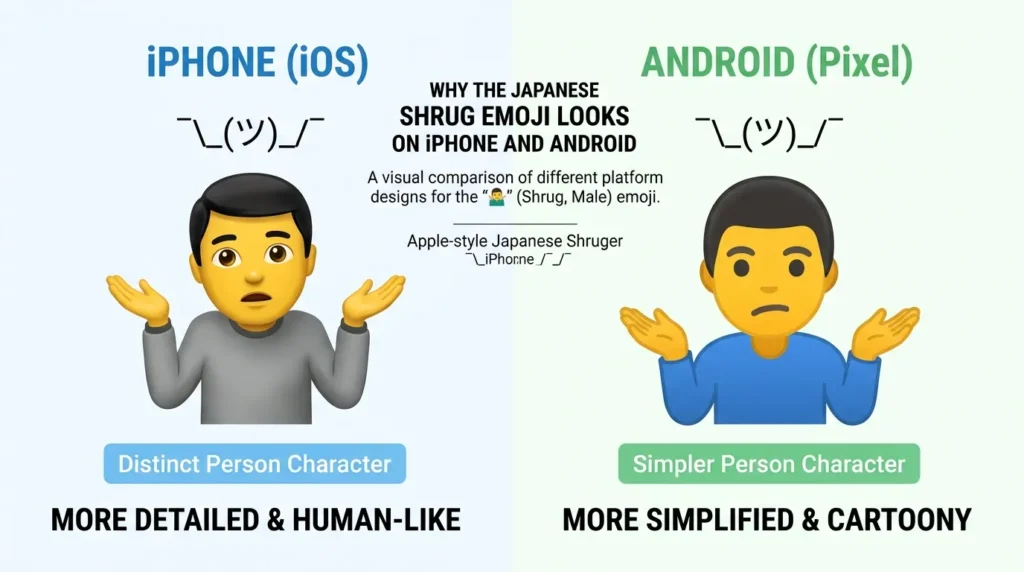
The same principle applies to Unicode emojis such as 🤷. Unicode provides a standard way for devices to recognize and represent emoji characters, but it does not require every company to use identical artwork.
Apple, Google, Samsung, Microsoft, and other technology companies can create their own visual designs.
As a result, you may notice differences in:
- Shape: Arms, hands, and body proportions may appear different.
- Color: Skin tones and clothing can have different shades.
- Facial expression: Small design details may change the overall appearance.
- Size: Some operating systems display characters larger than others.
- Style: One design may look more realistic, while another appears flatter or simpler.
For the text-based Japanese shrug, spacing and font choices can also affect how the arms and face line up.
For example, ¯_(ツ)_/¯ may appear slightly different in a browser, messaging app, or social media comment. However, the underlying characters remain the same when the text is preserved.
Neither Apple’s nor Android’s design is automatically the correct one. They simply represent the same standardized emoji using different artwork.
If you want your message to look consistent, copying the original text expression is often a good option. Remember that some apps may adjust spacing or formatting when displaying text.
11. Best Japanese Shrug Emoji Combos: Copy & Paste
The Japanese shrug expression can be paired with related shrug variations to create playful reactions. Here are 15 combinations for different conversational moods.
Romantic
1. ¯_(ツ)_/¯ 🤷♀️
Use this when playfully pretending not to know what to say.
2. 🤷♂️ ¯_(ツ)_/¯
Use this for a relaxed response during a lighthearted conversation.
3. ¯_(シ)_/¯ 🤷
Use this when teasing someone about an unexpected situation.
Cute
4. 🤷♀️ ¯_(ツ)_/¯
Use this for a sweet, playful reaction.
5. 🤷🏻 ¯_(ツ)_/¯
Use this when you have no idea what is happening.
6. ¯_(ツ)_/¯ 🤷🏼
Use this in a friendly conversation with a little humor.
Flirty
7. 🤷♂️ 🤷♀️
Use this when both people are playfully unsure.
8. ¯_(ツ)_/¯ 🤷♂️
Use this when teasing someone about a confusing situation.
9. 🤷🏽 ¯_(シ)_/¯
Use this for a humorous response to playful teasing.
Missing Someone
10. ¯_(ツ)_/¯ 🤷
Use this when you don’t know when someone will return.
11. 🤷♀️ 🤷♂️
Use this when discussing an uncertain plan to meet.
12. ¯_(シ)_/¯ 🤷🏻
Use this for a lighthearted response when you miss someone but don’t know what to say.
Good Night
13. 🤷♂️ ¯_(ツ)_/¯
Use this when you are too tired to figure something out.
14. 🤷♀️ ¯_(シ)_/¯
Use this for a playful late-night conversation.
15. ¯_(ツ)_/¯ 🤷🏿
Use this when ending a funny discussion without a definite answer.
12. Trending Japanese Shrug Emoji in 2026
Text-based expressions and shrugging-person emojis continue to be useful in everyday digital conversations in 2026. Their appeal comes from their simplicity. Instead of writing a complete sentence, someone can share a quick reaction that communicates uncertainty, humor, or acceptance.
The Japanese shrug, ¯_(ツ)_/¯, remains recognizable in online discussions because it has a distinctive keyboard-based appearance. It is also easy to copy and paste into platforms that support ordinary text.
Here are four related expressions worth knowing:
1. ¯_(ツ)_/¯
This classic text expression is commonly used in memes, funny posts, discussion threads, and casual messages. Its relaxed appearance makes it suitable for situations where someone does not have an explanation.
2. 🤷
The standard shrugging-person emoji is useful when you want a quick visual reaction. It appears in casual conversations, comments, and social media posts.
3. 🤷♀️
This variation is often used in friendly chats and humorous reactions. It can communicate uncertainty without requiring additional words.
4. 🤷♂️
This variation works well in casual replies, funny captions, and conversations about unexpected situations.
| Emoji | Why trending | Who uses it | Platform |
| ¯_(ツ)_/¯ | Recognizable text reaction | Meme lovers and casual users | Comments, chats |
| 🤷 | Simple visual response | Everyday users | WhatsApp, Facebook |
| 🤷♀️ | Playful reaction | Social media users | Instagram, TikTok |
| 🤷♂️ | Casual expression | Friends and creators | Messaging, comments |
These expressions can have different tones depending on the conversation. A shrug in a funny TikTok comment may communicate sarcasm, while the same expression in a private message might simply mean that someone is unsure.
Creators can also use the Japanese shrug in captions when something unexpected happens during filming or when a planned situation turns into a funny moment.
There is no need to assume that one version is officially the most popular. Their usefulness comes from how easily people can understand and adapt to them.
As digital communication evolves, simple text expressions and visual emojis continue to offer different ways to express everyday feelings.
13. Japanese Shrug Emoji Meaning in Different Contexts
The Japanese shrug expression is flexible because its meaning depends on the situation. The same characters can sound funny, relaxed, uncertain, or even slightly sarcastic.
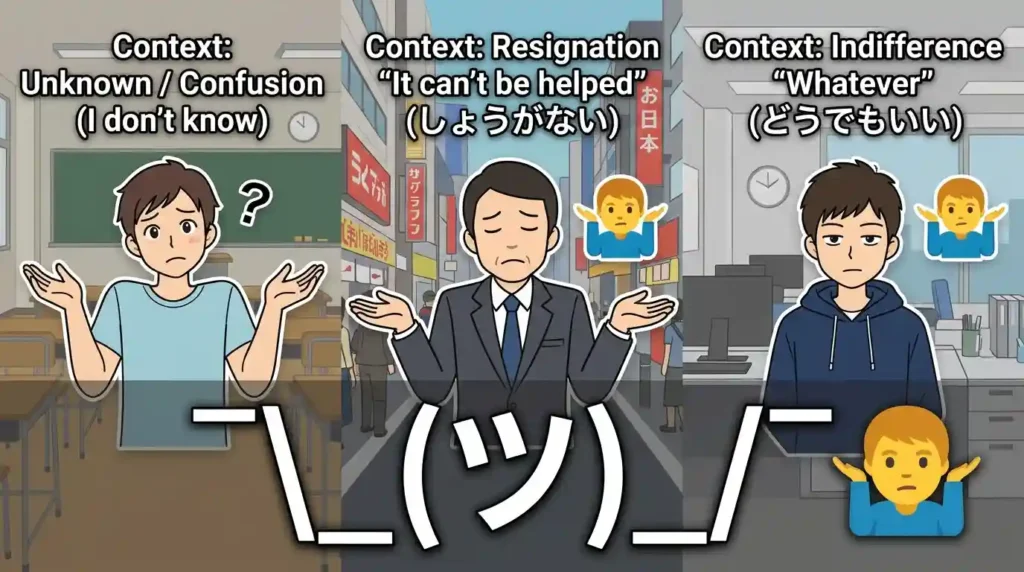
Understanding the conversation helps you choose the right interpretation.
Romantic Conversations
In romantic chats, the shrug can make an awkward moment feel less serious. Someone might use it when they are unsure what to say after receiving a sweet or unexpected message.
Example:
“You always know how to surprise me ¯_(ツ)_/¯”
It does not automatically mean attraction or rejection. The surrounding conversation matters.
Friendship
Among friends, the expression is usually casual and playful. It works when discussing funny mistakes, unexpected events, or situations nobody can explain.
Example:
“Why did we even agree to this plan? ¯_(ツ)_/¯”
Family Conversations
Family members may use it when they do not know an answer or want to respond humorously to a question.
Example:
“Ask your brother where the keys are 🤷”
It can help keep everyday family discussions relaxed.
Professional and Casual Communication
In professional conversations, use the expression carefully. It may be appropriate in an informal team chat, especially among colleagues who regularly joke together.
However, avoid using it as the only response to an important workplace question. A clear explanation is better when someone needs information.
Texting
In text messages, the Japanese shrug is a quick alternative to phrases such as “I don’t know” or “What can I do?”
Example:
“Maybe the shop is closed today ¯_(ツ)_/¯”
Social Media Comments
In comments, it often works as a reaction to confusing videos, unexpected news, and humorous posts.
Example:
“Nobody understands this situation anymore 🤷”
Captions
You can also include it in captions when describing a funny mistake or an unplanned moment.
Example:
“Things didn’t go according to plan, but here we are ¯_(ツ)_/¯”
The important thing is to consider your audience. A playful expression among friends might sound dismissive in a serious discussion. When you are unsure, adding a few words can make your intention clearer.
14. How to Copy and Paste the Japanese Shrug Emoji
Want to use the Japanese shrug in your next message? You do not need to download a special keyboard or install an additional application.
Simply copy the expression below.
¯_(ツ)_/¯
Japanese shrug emoticon
Copy Japanese Shrug
Follow these simple steps:
- Select the Japanese shrug expression.
- Copy it using your device’s copy option.
- Open WhatsApp, Instagram, or TikTok.
- Choose a conversation, caption, or comment box.
- Paste the expression wherever you want to use it.
- Send or publish your message.
You can also paste it into Facebook posts, Messenger chats, online forums, and other applications that support text characters.
If you prefer a standard visual shrugging emoji, you can copy this one instead:
🤷
Standard shrugging person emoji
Copy Shrug Emoji
15. Frequently Asked Questions
1. What is the most popular Japanese shrug emoji?
The most recognizable Japanese shrug expression is ¯_(ツ)_/¯. It is widely recognized as a text-based way to express uncertainty, confusion, or playful acceptance.
2. What does 🤷 mean when someone sends it?
It generally communicates uncertainty, confusion, or not knowing what to say. The meaning depends on the conversation and the sender’s intention, not their gender.
3. Why do emojis look different on iPhone vs Android?
Apple and Android use their own emoji artwork based on Unicode standards. Their designs can differ in shape, color, and appearance even when they represent the same underlying emoji character.
4. Are Japanese shrug emojis used differently in other countries?
Interpretations can vary depending on online communities, language, and cultural context. Some people recognize the Japanese shrug as a humorous internet expression, while others may interpret it simply as a sign of uncertainty.
16. Conclusion
The Japanese shrug emoji, ¯_(ツ)_/¯, is a simple and playful way to express confusion, uncertainty, or acceptance. Although technically a kaomoji rather than a standard emoji, it remains useful in everyday digital conversations.
Use it in your WhatsApp chats, Instagram captions, TikTok comments, and friendly messages whenever a little shrug says more than words. Keep the context in mind, and enjoy expressing yourself! 🤷