One little expression can reveal feelings that words sometimes struggle to explain.
You are chatting with someone, and suddenly they send an unusual face that looks like it is cracking or breaking. What are they trying to say? The crack emoji is associated with breaking, crumbling, emotional tension, and revealing what someone has been keeping inside. It can also suggest vulnerability, a difficult moment, or a change in someone’s emotional state. Introduced as part of Unicode 18.0 in September 2026, the Cracking Face is a relatively new addition to the emoji collection. That means not everyone will recognize it immediately. Its meaning can depend on the conversation, the sender’s personality, and the relationship between both people. Whether you encounter it in WhatsApp messages, Instagram comments, or TikTok captions, understanding its context helps you interpret it naturally.
Sometimes, showing that you’re not perfectly okay is its own kind of expression.
What Does the Crack Emoji Mean?
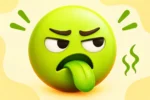
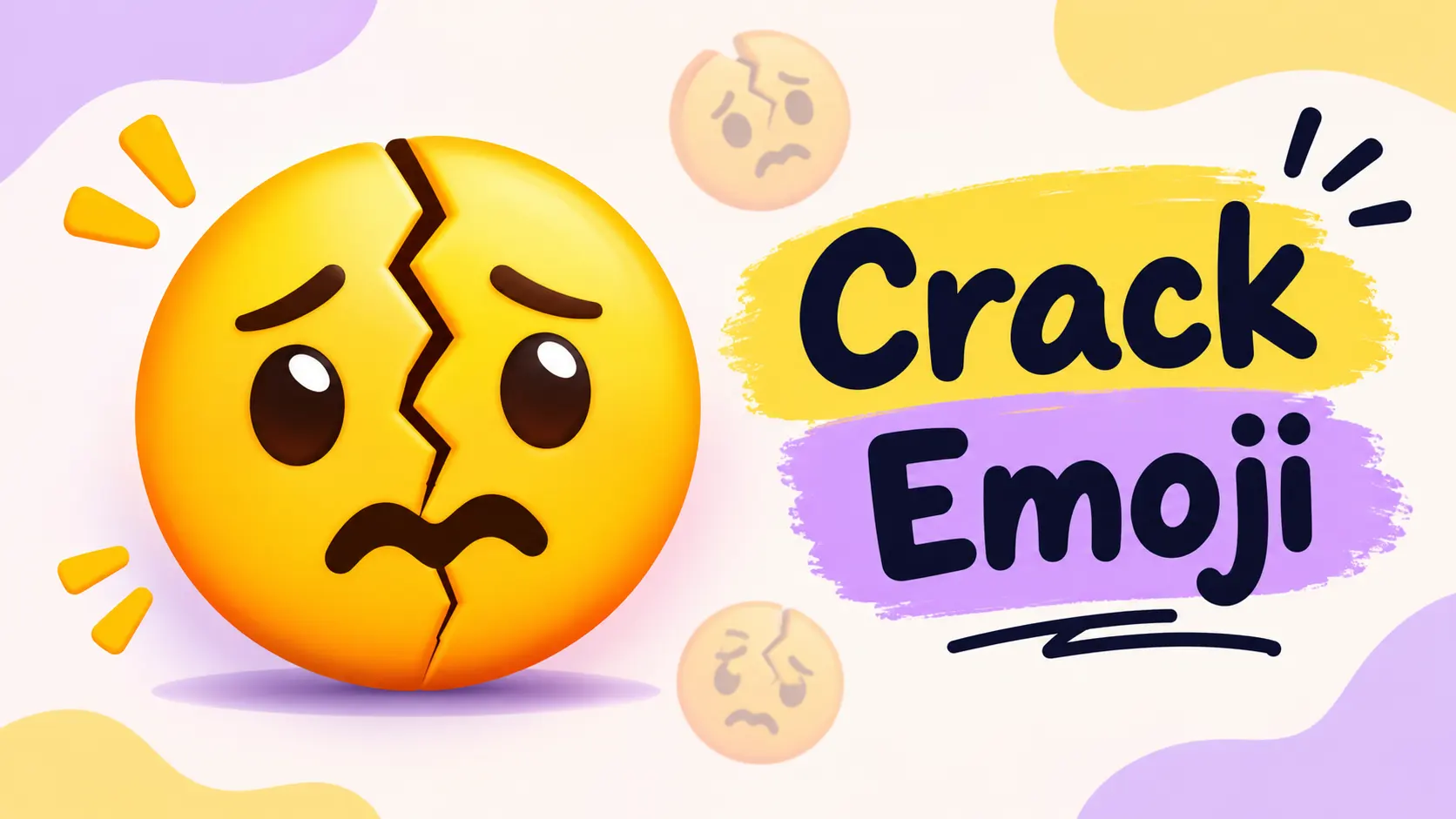
The crack emoji , officially called Cracking Face, represents the idea of something breaking, crumbling, or beginning to reveal what is underneath. Its associated concepts include breaking, masking, resilience, tension, and transformation. These ideas make it useful for conversations about emotional pressure, vulnerability, and moments when someone can no longer maintain a particular appearance.
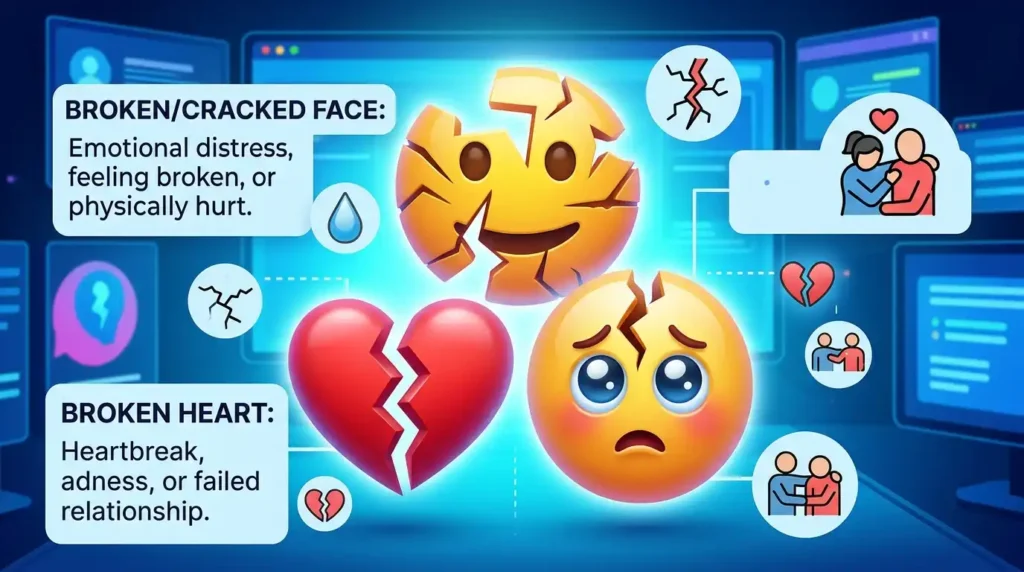
Unlike older smiley emojis, this character is particularly interesting because its interpretation is connected to the idea of a breaking expression. Someone might use it when they feel overwhelmed, embarrassed, emotionally exposed, or unable to keep pretending that everything is fine.
In texting, the emoji can communicate a feeling that is difficult to put into words. For example, someone might write, “I can’t keep acting like everything is okay .” In that situation, it adds emotional weight to the sentence.
It can also appear in humorous conversations. Imagine studying for an exam, dealing with a busy schedule, or trying to finish several assignments. A friend might send to express that the situation is becoming too much.
Other related emojis can help explain the surrounding emotion:
- 💔 Broken Heart: Emotional disappointment, heartbreak, or sadness.
- 🫠 Melting Face: Feeling overwhelmed, embarrassed, or exhausted.
- 😬 Grimacing Face: Awkwardness, nervousness, or discomfort.
- 😮💨 Face Exhaling: Relief, frustration, or emotional exhaustion.
- 🥺 Pleading Face: Vulnerability, sadness, or asking for understanding.
- 🤯 Exploding Head: Surprise, disbelief, or mental overload.
The crack emoji does not automatically communicate sadness. Depending on the wording, it might suggest a personal breakthrough, a funny situation, or an emotional turning point.
Relationship context matters, too. A close friend might use it jokingly, while someone sharing a personal experience might use it more seriously. A romantic conversation could give it a vulnerable tone, but that does not automatically make it a romantic symbol.
Ultimately, the best interpretation comes from reading the entire message rather than judging one emoji by itself.
Crack Emoji Meaning Table
The same emoji can communicate different feelings depending on the situation. Here is a quick guide to its related expressions.
| Emoji | Core meaning | Possible misread | Best used when |
| | Breaking, vulnerability | Confusion | Expressing emotional tension |
| 💔 | Heartbreak | General disappointment | Discussing emotional pain |
| 🫠 | Overwhelmed, embarrassed | Physical heat | Reacting to awkward moments |
| 😬 | Nervousness, discomfort | Anger | Describing an uncomfortable situation |
| 😮💨 | Relief, exhaustion | Disinterest | Expressing frustration or relief |
| 🥺 | Vulnerability, pleading | Romantic affection | Asking for sympathy |
| 🤯 | Shock, mental overload | Literal explosion | Reacting to surprising news |
| 🫣 | Embarrassment, nervous curiosity | Fear | Watching an awkward situation |
| 😵💫 | Confusion, dizziness | Physical illness | Expressing mental overload |
| 🧩 | Puzzle, missing pieces | Confusion | Discussing something incomplete |
10 Crack-Related Emoji Cards
Cracking Face
Meaning: Breaking, emotional tension, vulnerability, and transformation.
Example 1: I can’t pretend anymore
Example 2: Everything is finally coming out
💔 Broken Heart
Meaning: Heartbreak, emotional pain, and disappointment.
Example 1: That goodbye still hurts 💔
Example 2: I thought things would work out 💔
🫠 Melting Face
Meaning: Feeling overwhelmed, embarrassed, or emotionally exhausted.
Example 1: This week has been too much 🫠
Example 2: I wasn’t ready for that conversation 🫠
😬 Grimacing Face
Meaning: Awkwardness, nervousness, and uncomfortable situations.
Example 1: That was an awkward moment 😬
Example 2: I probably shouldn’t have said that 😬
😮💨 Face Exhaling
Meaning: Relief, frustration, tiredness, or letting out emotions.
Example 1: Finally finished everything 😮💨
Example 2: What a stressful day 😮💨
🥺 Pleading Face
Meaning: Vulnerability, emotional softness, and asking for understanding.
Example 1: Please understand what I mean 🥺
Example 2: I really needed to hear that 🥺
🤯 Exploding Head
Meaning: Shock, disbelief, and being mentally overwhelmed.
Example 1: I never expected that ending 🤯
Example 2: That information completely surprised me 🤯
🫣 Face with Peeking Eye
Meaning: Embarrassment, nervous curiosity, or watching something uncomfortable.
Example 1: I’m scared to read the reply 🫣
Example 2: I can’t believe that happened 🫣
😵💫 Face with Spiral Eyes
Meaning: Confusion, dizziness, and feeling mentally overloaded.
Example 1: I don’t understand this situation 😵💫
Example 2: Too many things happening today 😵💫
🧩 Puzzle Piece
Meaning: Missing information, incomplete situations, or putting things together.
Example 1: Now everything makes sense 🧩
Example 2: I’m still missing one important piece 🧩
How to Use the Crack Emoji the Right Way
The crack emoji can add emotional meaning to a message without requiring a long explanation. However, it works best when the surrounding words make your intention clear.
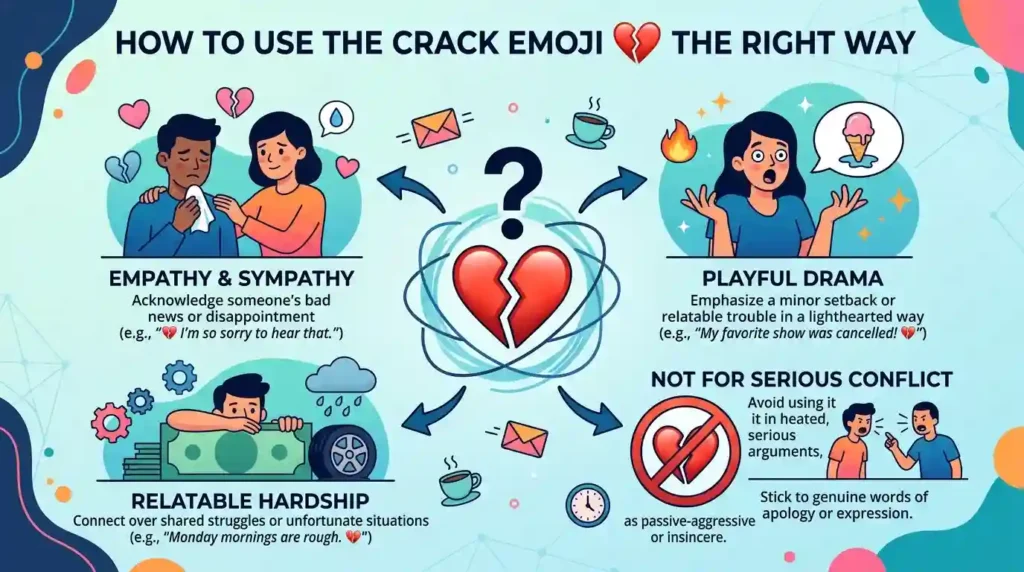
WhatsApp conversations are often personal, so this emoji can fit naturally into messages between friends and family.
– Personal chats: Use it when explaining that a situation is becoming emotionally difficult.
Example: “I have so much on my mind lately .”
– Family conversations: It can communicate vulnerability when discussing a challenging day.
Example: “It’s been a difficult week, honestly .”
– Friendships: Use it when joking about a situation that has become overwhelming.
Example: “Our plans are falling apart already .”
– Emotional messages: Add it when discussing feelings that are difficult to explain.
Example: “I think I need to be honest about everything .”
– Status updates: It can make a short status feel more expressive.
Example: “Some days reveal more than expected .”
Instagram is a visual platform where emojis often add personality to captions, comments, and short descriptions.
You can use in a caption about personal growth, emotional honesty, or a difficult experience. It can also fit posts about changing perspectives and leaving behind an old version of yourself.
Examples:
- “Not every smile tells the whole story .”
- “Learning to accept the imperfect parts of life.”
- “Some moments change everything .”
In comments, it can communicate surprise or an emotional reaction to someone’s post. For example, if a creator shares a relatable story, you might respond with “That hit differently .”
TikTok
TikTok content often uses emojis to add humor, personality, and emotional reactions.
The crack emoji may fit short videos about relatable struggles, unexpected situations, personal experiences, and dramatic moments.
Examples:
- “When the truth finally comes out .”
- “Me trying to keep everything together .”
- “That plot twist changed everything 🤯.”
Creators can also use it in captions when the video shows a character or person experiencing an emotional turning point.
On Facebook, the emoji can appear in personal posts, comments, and Messenger conversations.
For example, someone sharing a difficult day might write, “Sometimes life becomes a little overwhelming .”
A friend could respond with supportive words rather than assuming the emoji is simply a joke.
The main idea is to match the emoji to the message. A little context makes it easier for people to understand your intention.
Do’s and Don’ts
Do:
- Use when the message genuinely involves emotional tension or vulnerability.
- Consider your relationship with the receiver.
- Match the emoji with your words.
- Use it naturally in captions and conversations.
- Check whether the receiver’s device supports the newer character.
Don’t:
- Assume everyone knows this relatively new emoji.
- Use it randomly in every conversation.
- Assume it always represents sadness.
- Add it to a serious message without explaining what you mean.
- Expect everyone to interpret it in exactly the same way.
A simple sentence can prevent misunderstandings. If someone might not recognize , explain your intended meaning through the surrounding words.
Why Does the Crack Emoji Look Different on iPhone and Android?
Have you ever sent an emoji to someone and noticed that it looked different on their phone? This happens because emoji characters and emoji artwork are two different things.
The crack emoji belongs to the Unicode emoji standard. Unicode provides a common system that allows supported devices and applications to recognize and exchange emoji characters.
However, Unicode does not require every company to draw an emoji in exactly the same way. Apple, Google, Samsung, Microsoft, and other technology companies can develop their own visual designs.
Here are some differences you might notice:
- Shape: The facial design and details may look slightly different.
- Color: Different operating systems can use different colors and shading.
- Expression: Small design choices may change how an expression appears.
- Size: The emoji can look larger or smaller depending on the application.
- Style: Some platforms use softer designs, while others use more detailed artwork.
There is another important detail about . It is a newer Unicode 18.0 emoji, so its availability depends on operating system updates, application support, and font availability. Unicode 18.0 was released in September 2026, but implementation can take additional time across different devices.
Unicode+1
If someone receives an unsupported emoji, they might see an empty box or another placeholder instead of the intended design.
This does not necessarily mean the sender copied the wrong character.
For example, you might send from a recently updated device, while a friend using older software sees a missing-character symbol.
Neither platform automatically has the correct artwork. The important thing is that supported devices recognize the same underlying character, even when its appearance differs.
Best Crack Emoji Combos: Copy and Paste
Combining with related emojis can make a message more expressive. The best combinations depend on whether you want to communicate affection, embarrassment, emotional vulnerability, or a difficult moment.
Here are 15 combinations you can copy and use in your everyday conversations.
Romantic
- 🥺: For an honest and emotionally vulnerable message.
- 💔: For expressing a difficult relationship moment.
- 🫠🫣: For describing an embarrassing romantic situation.
Cute
- 🥺🫠: For a sweet but slightly overwhelmed reaction.
- 🫣🥺: For a shy or nervous message.
- 🧩🥺: For expressing that someone completes an important part of your life.
Flirty
- 🫣🫠: For reacting shyly to a sweet compliment.
- 🥺🫣: For a playful and slightly nervous response.
- 🫠💔: For joking about an emotionally overwhelming crush situation.
Missing Someone
- 💔🥺: For expressing that someone is missed.
- 😮💨: For describing the emotional weight of missing someone.
- 🧩💔: For expressing that something feels incomplete without someone.
Good Night
- 🫠😮💨: For expressing tiredness after a long day.
- 🥺🫣: For a shy, affectionate goodbye.
- 😮💨: For describing an emotionally exhausting day before resting.
These combinations are creative suggestions rather than official emoji definitions. Feel free to use them in WhatsApp messages, Instagram captions, and social media comments.
Trending Crack Emoji in 2026
The crack emoji is particularly interesting in 2026 because it belongs to the newer Unicode 18.0 emoji collection. Its arrival gives users another way to express breaking, emotional tension, vulnerability, and personal transformation.
Because it is relatively new, its adoption across devices and social platforms may take time. Not every user will recognize it immediately, and there is not enough verified evidence to call it the most popular or number-one trending emoji.
Nevertheless, its visual concept makes it suitable for several types of online conversations.
Here are four related emojis and how they can appear in everyday digital communication.
1. Cracking Face
This is the main emoji associated with the topic. It can appear in conversations about emotional pressure, personal struggles, and moments when someone reveals their true feelings.
2. Melting Face 🫠
This emoji is commonly used for awkward situations, embarrassment, and feeling overwhelmed. It works well in casual messages and humorous social media comments.
3. Exploding Head 🤯
People use this emoji when something is extremely surprising or difficult to process. It can fit reaction videos, unexpected announcements, and dramatic plot twists.
4. Broken Heart 💔
This familiar symbol appears in conversations about disappointment, heartbreak, and difficult emotional experiences.
Crack-Related Emoji Usage Table
| Emoji | Why trending | Who uses it | Platform |
| | New emotional expression | Early adopters and emoji enthusiasts | Supported messaging apps |
| 🫠 | Relatable awkward reactions | General social media users | Instagram, WhatsApp |
| 🤯 | Surprising reactions | Creators and viewers | TikTok, Facebook |
| 💔 | Emotional expression | Friends and general users | WhatsApp, Instagram |
Emoji usage continues to evolve as new characters become available and online communities develop their own ways of expressing emotions.
Crack Emoji Meaning in Different Contexts
The same emoji can communicate different things depending on the conversation. This is especially true of because its underlying ideas include breaking, vulnerability, and transformation.
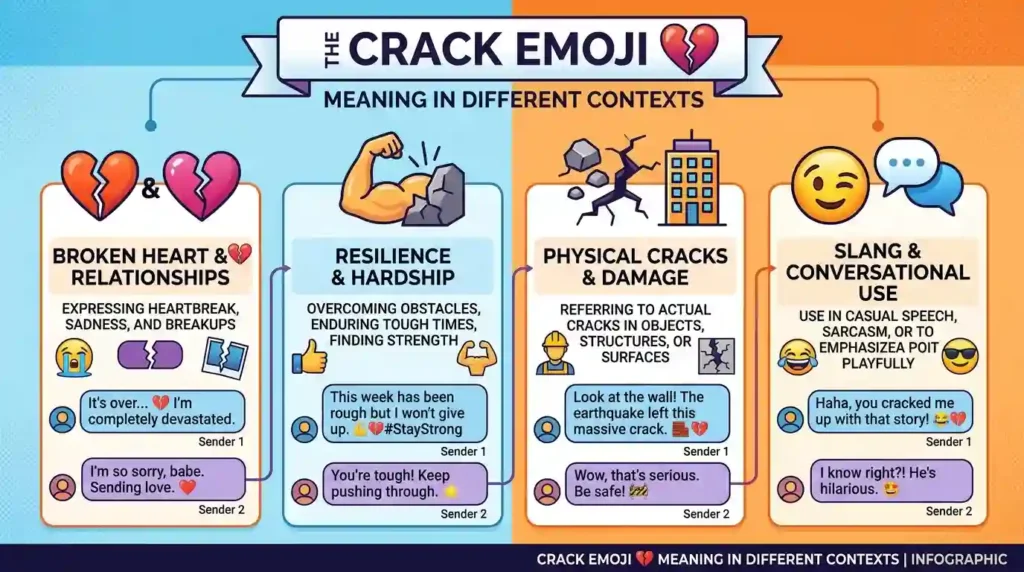
Let’s explore how its interpretation can change in different situations.
1. Romantic Conversations
In romantic conversations, might suggest emotional vulnerability or difficulty expressing feelings.
For example:
“Sometimes I don’t know how to explain what I’m feeling .”
It can communicate that someone is opening up emotionally. However, it is not an officially romantic symbol, so the surrounding message matters.
2. Friendship
Friends might use the emoji to describe stressful experiences or situations that have become difficult to handle.
Example:
“Our group project is testing everyone’s patience .”
Here, it can create a humorous or relatable tone.
3. Family Conversations
In family chats, the emoji might appear when someone wants to acknowledge a difficult experience.
Example:
“It’s been a challenging month, but we’re getting through it .”
Its tone can be serious, supportive, or reflective.
4. Professional and Casual Communication
In casual workplace conversations, it might express frustration with a difficult task.
Example:
“That presentation took much longer than expected .”
However, avoid relying on it in formal business communication, particularly when the receiver might not understand the symbol.
5. Texting
In ordinary text messages, can make an emotional sentence feel more expressive.
Example:
“I finally told them how I really felt .”
The emoji adds a sense of vulnerability without changing the basic message.
6. Social Media Comments
On Instagram and TikTok, it can work as a reaction to personal stories, relatable videos, and unexpected situations.
Example:
“That was an emotional plot twist .”
7. Captions
For captions, it can represent a personal change or a moment of honesty.
Examples:
- “Learning to accept every part of myself .”
- “Some chapters are harder to close than others.”
- “A little more honest, a little less afraid .”
The most important thing is to consider the audience. An emoji that feels meaningful to a close friend might be confusing to someone who has never seen it before.
How to Copy and Paste the Crack Emoji
Want to use the crack emoji in your next message? You do not need a special keyboard to copy the character from this page.
Copy Crack Emoji
Cracking Face
Copy Crack Emoji
Follow these simple steps:
- Select the character above.
- Copy it using your device’s copy option.
- Open WhatsApp, Instagram, TikTok, or Facebook.
- Choose a conversation, caption, or comment box.
- Paste the emoji wherever you want it to appear.
You can also save it in a personal notes document for future use.
If the emoji does not appear correctly, your device or application might not support its newer Unicode character yet. Updating supported software may help.
Frequently Asked Questions
1. What is the most popular crack emoji?
The main emoji associated with this keyword is , officially known as Cracking Face. It represents breaking, vulnerability, tension, and transformation.
2. What does the crack emoji mean when someone sends it?
When someone sends , they might be expressing emotional vulnerability, pressure, or a situation that feels like it is falling apart. The exact meaning depends on the conversation, relationship, and accompanying words, not the sender’s gender.
3. Why do emojis look different on iPhone vs Android?
Apple and Android manufacturers can create different artwork for the same Unicode emoji character. This means the design, colors, and details may vary even when both devices support the character.
4. Are crack emojis used differently in other countries?
Emoji interpretation can vary between languages, communities, and online cultures. The cracking face may be understood differently depending on local communication habits and personal experiences. It is best to consider the surrounding conversation rather than assume everyone interprets it identically.
Conclusion
The crack emoji offers a fresh way to express vulnerability, emotional tension, and moments of change. Its meaning can shift between serious conversations, humorous messages, and social media reactions.
Use it thoughtfully, consider your audience, and let your words provide the context. Sometimes, a small symbol can make an emotional message easier to understand.