One tiny heart can say “I love you,” “thanks, that’s sweet,” or “just being polite” and the trick is knowing which one you’re sending.
We’ve all typed a heart emoji without thinking twice, then wondered if it landed the way we meant. A text with ❤️ reads very differently than one with 🖤 or 💛, even if the words around it are identical. Maybe you sent a heart to a group chat and immediately worried it looked too much, or held back from using one at all because you weren’t sure how it would come across.
That small hesitation is more common than most people admit, and it’s usually because heart emojis carry more nuance than they seem to at first glance. This guide breaks down exactly what each heart emoji means, how they shift across WhatsApp, Instagram, and TikTok, and which ones people are actually using in 2026.
A single heart can carry more meaning than a whole paragraph if you pick the right one.
What Do Heart Emojis Mean? 💭
Heart emojis aren’t interchangeable. Each color and style carries its own tone, and using the wrong one can send a mixed signal without you realizing it.
The red heart ❤️ is the default for romantic or deep affection. It works for partners, close friends, or family, but it can feel too strong if you send it to a coworker.
The orange heart 🧡 leans warm and friendly, often used for close friendships or gratitude. It sits comfortably between platonic and affectionate.
The yellow heart 💛 signals friendship and happiness rather than romance, which is why it’s common between friends or in group chats.
The black heart 🖤 has shifted over the years. It’s less about sadness now and more about dark humor, edgy aesthetics, or quiet, understated affection.
The sparkling heart 💖 adds excitement and admiration, often used when someone is genuinely thrilled about a person or moment.
The green heart 💚 tends to show up around nature, wellness, or a calmer type of affection, while the blue heart 💙 leans more toward trust and steady support than romance.
Purple 💜 sits somewhere in between comfort and compassion, often sent to someone going through a hard time, and the white heart 🤍 has become shorthand for a quieter, more understated kind of care.
Context changes all of this fast. A ❤️ under a stranger’s photo reads as generic appreciation, but the same emoji in a private message to someone you’re dating carries real weight. Reading the room matters just as much as picking the right color.
Placement matters too. A heart dropped at the end of a message often feels like a soft, affectionate close, while one placed mid-sentence can feel more like emphasis, almost like underlining a word. Neither is wrong, but they send slightly different signals.
Frequency plays a role as well. Someone who sends a single ❤️ once in a while means something different than someone who tacks a heart onto nearly every message, where it starts to function more like punctuation than a deliberate expression of feeling.
Emoji Core meaning Misread as Best used when
❤️ Deep love, strong affection Too intense for casual chats Talking to a partner or close family
🧡 Warmth, gratitude, close friendship Romantic interest Thanking a friend or expressing warmth
💛 Friendship, happiness Lack of interest Chatting with friends, group texts
🖤 Edgy affection, dark humor Sadness or disinterest Aesthetic captions, dry humor
💕 Sweet, gentle affection Overly casual for serious topics Light romantic or close friend chats
💖 Excitement, admiration Overreaction Celebrating someone or something special
⭐ The 10 Most-Used Heart Emojis, Explained
❤️ Red Heart
Meaning: Deep love, affection, and emotional connection.
Example 1: I miss you ❤️
Example 2: You are my everything ❤️
🧡 Orange Heart
Meaning: Warmth, gratitude, and close friendship.
Example 1: Thanks for always showing up 🧡
Example 2: You’re one of my favorite people 🧡
💛 Yellow Heart
Meaning: Friendship and light-hearted happiness.
Example 1: Best friends forever 💛
Example 2: So happy we’re friends 💛
💚 Green Heart
Meaning: Nature, growth, and calm affection.
Example 1: This garden is so peaceful 💚
Example 2: Sending healthy vibes your way 💚
💙 Blue Heart
Meaning: Trust, loyalty, and calm support.
Example 1: I’ve got your back 💙
Example 2: Proud of you always 💙
💜 Purple Heart
Meaning: Compassion, admiration, and gentle care.
Example 1: Sending love and strength 💜
Example 2: You mean so much to me 💜
🖤 Black Heart
Meaning: Edgy affection, dry humor, or understated love.
Example 1: New profile pic 🖤
Example 2: That was actually hilarious 🖤
🤍 White Heart
Meaning: Pure, calm, and quiet affection.
Example 1: Simple things make me happy 🤍
Example 2: Grateful for today 🤍
💕 Two Hearts
Meaning: Sweet, gentle affection between people.
Example 1: Can’t wait to see you 💕
Example 2: Love spending time with you 💕
💖 Sparkling Heart
Meaning: Excitement, admiration, and joy.
Example 1: You did amazing today 💖
Example 2: This made my whole week 💖
How to Use Heart Emojis the Right Way 📱
Each platform has its own unwritten rules for hearts, and using the wrong tone can make a message feel off even if the words are fine.
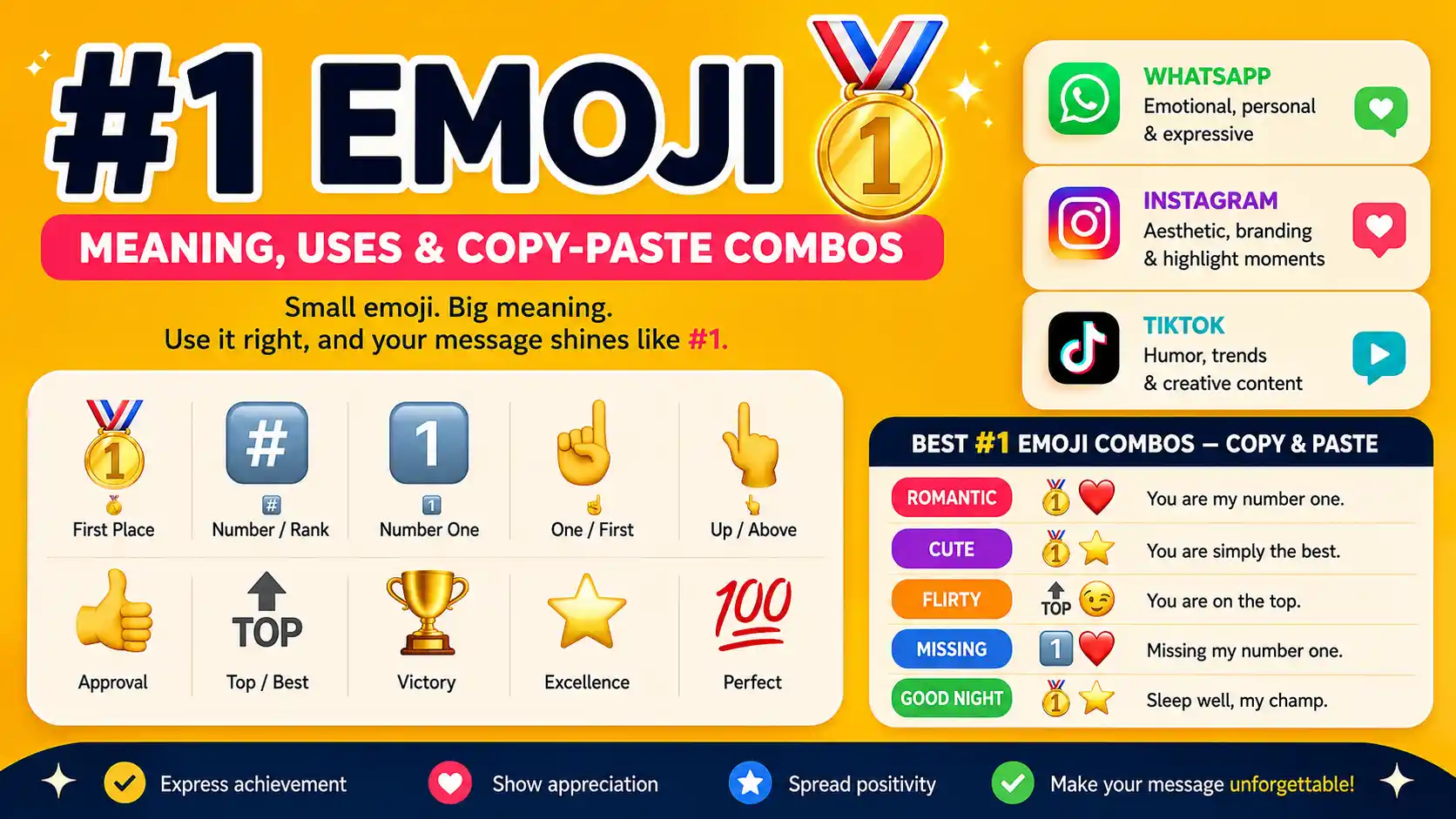
On WhatsApp, hearts tend to be personal and emotional. A ❤️ or 💕 fits naturally in a message to a partner or close friend, since the app is mostly one-on-one and intimate.
On Instagram, hearts lean aesthetic and brand-driven. Captions often use 🤍 or 💛 for a soft, curated look rather than a strong emotional statement.
On TikTok, hearts show up in humor and trend-driven ways. A 🖤 in a comment can be sarcastic or ironic just as easily as sincere, depending on the caption.
These differences exist because each app trains its users toward a different kind of communication. WhatsApp conversations are mostly private and ongoing, so hearts there carry emotional continuity, almost like an inside joke that builds over time.
Instagram is more of a performance space, where a caption and its hearts are designed to be seen by many people at once, which pushes users toward softer, more universal choices like 🤍 or 💛 instead of anything too personal.
TikTok comments move fast and lean into humor, so a heart there is often doing double duty as both a reaction and a joke, especially when it’s paired with a sarcastic caption or a trending sound.
Getting this right isn’t about memorizing rules. It’s about noticing how the people around you already use hearts, then matching that same rhythm instead of guessing.
Do:
Match the heart color to the actual relationship or tone
Use one or two hearts instead of stacking several for emphasis
Pay attention to how the other person uses hearts back
Don’t:
Send ❤️ to a coworker or someone you’re not close with
Assume 🖤 always means something negative
Overuse hearts to the point they lose meaning
Best Heart Emoji Combos Copy & Paste 💌
Romantic
1👉 ❤️🔥 for a message that’s affectionate and a little intense
2👉 💕😍 when you want to sound smitten without overdoing it
3👉 ❤️💫 a classic pairing for a heartfelt goodnight text
Cute
1👉 💛🥺 soft, wholesome, and a little playful
2👉 💕🐣 for something adorable or sweet
3👉 🧡🤍 a gentle, warm combo for a friend
Flirty
1 👉 💘😏 playful and a little cheeky
2👉 ❤️😘 a light, flirty close to a message
3👉 💖👀 teasing admiration without being too direct
Missing Someone
1👉 💔🥺 when you’re feeling the distance
2👉 ❤️🕯️ a quieter, more reflective way to say you miss them
3👉 💕📍 pairs well with “wish you were here”
Good Night
1👉 🖤🌙 calm and understated for a late message
2👉 💜✨ — soft and dreamy for a closing text
👉3 🤍😴 simple and warm before bed
Trending Heart Emojis in 2026 🔥
A few heart emojis have picked up new life recently, mostly because of how younger users and content creators are pairing them with other symbols.
🖤 has become popular in aesthetic and minimalist captions, often paired with dark or moody photo edits. It’s showing up a lot among content creators building a specific visual style.
🤍 is trending in a similar direction, used for calm, clean-looking posts. It tends to appear in lifestyle and wellness content where the tone is soft rather than loud.
💖 continues to gain traction in reaction comments and stitched videos, especially where someone wants to express genuine excitement without writing a full sentence.
None of this means the classic red heart ❤️ is fading. It’s still the default most people reach for, but the newer favorites are carving out their own space alongside it rather than replacing it. What’s changed is less about which heart is “winning” and more about people building small, personal habits around specific colors, the same way someone might always sign off with the same phrase.
This kind of shift tends to start with creators and spread outward through comments, duets, and captions, until a color that once felt niche starts showing up in everyday messages too.
Emoji Why trending Who uses it Platform
🖤 Fits moody, minimalist aesthetics Content creators, younger users Instagram, TikTok
🤍 Signals calm, clean visual style Lifestyle and wellness accounts Instagram
💖 Quick way to show genuine excitement Younger users, comment sections TikTok
Emoji trends tend to shift with visual style and humor rather than following a fixed pattern, so which hearts feel “current” will likely keep changing.
It’s worth remembering that trends like these move in waves rather than straight lines. A color that feels overused this year can quietly fade next year, only to resurface once the aesthetic it’s tied to comes back around, the same way fashion and slang tend to cycle.
For now, the safest approach is to treat trending hearts as an accent rather than a replacement. The classic red heart still does the heavy lifting for genuine affection, while colors like 🖤 and 🤍 are better suited to setting a mood or matching an aesthetic.
Frequently Asked Questions 🖤
What is the most popular heart emoji? The red heart ❤️ remains the most widely used across nearly every platform. It’s the default choice for expressing love or deep affection, and it’s usually the first heart people learn to use correctly.
What does a heart emoji mean from a girl or boy? Meaning depends more on the relationship and context than gender. A red heart from a close friend usually reads as platonic, while the same emoji from someone you’re dating carries romantic weight, so it’s worth looking at the full conversation before assuming intent.
Why do emojis look different on iPhone vs Android? Apple, Google, and Samsung each design their own emoji sets, so the same emoji code can render with slightly different shapes or shading. This is why a heart can look brighter, flatter, or more muted depending on the device it’s viewed on.
Are heart emojis used differently in other countries? Yes, cultural context shapes how hearts are read. In some regions, certain colors carry extra meaning tied to local traditions, sports teams, or trends, so the same heart can feel more casual or more intense depending on where the sender and receiver are based.
Conclusion
At the end of the day, a heart emoji is just a small way to say something you might not have the words for. Pick the one that actually matches how you feel, not just the one your thumb finds first. Once you know the difference, every heart you send will land exactly the way you meant it.